Voice Acting for Dubbing and Voice-Over
Behind the Scenes: ACMODASI: Voice Acting for Dubbing and Voice-Over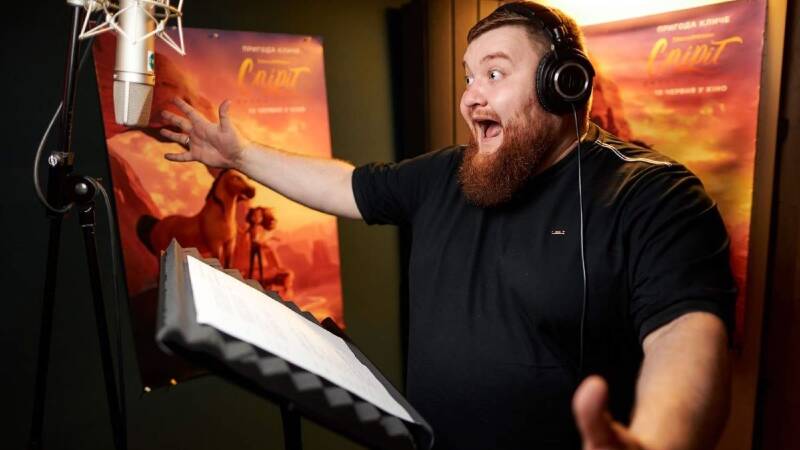
Voice Acting for Dubbing and Voice-Over
A voice without a body must carry everything within it: character, emotion, story. This is the paradox and the central challenge of voice acting — the performer works with a single instrument, but that instrument must replace everything else.
The Nature of Invisible Acting
When we watch a screen where another person speaks, or listen to an animated character, we rarely consider the work behind each line. Yet dubbing and voice-over constitute a complete acting discipline, demanding no less — and sometimes more — commitment than stage or screen performance.
The voice actor is stripped of familiar tools. There is no facial expression for the audience to see. No gesture, no gaze, no pause filled with movement. There is only the voice — and through it, one must convey everything that is usually distributed across dozens of expressive means.
Technical Foundations
Voice work begins with breath. Diaphragmatic breathing is the foundation without which neither sustained sound nor precise control of intonation is possible. The actor learns to breathe so that air becomes the support for sound rather than an obstacle.
Diction takes on particular importance in voice work. On screen, unclear speech can be compensated by lip movement, scene context, or subtitles. In pure audio, every word must be crystal clear. This does not mean mechanical precision — living speech allows for swallowed endings and merged words, but the actor must command these consciously, as instruments.
Vocal range is another key skill. This concerns not merely the ability to speak higher or lower, but mastery of all registers, transitions between them, and understanding how pitch connects to a character's emotional state.
Dubbing: The Art of Synchronisation
Dubbing presents the actor with a particular challenge — to inhabit another's body. On screen, another person's lips are moving, and the English text must fall upon those movements so that the viewer forgets the original exists.
This demands a developed sense of rhythm. The dubbing actor works with adapted scripts — text specially fitted to the original articulation. But even perfect adaptation leaves room for interpretation: where to place a micro-pause, which syllable to stretch, which to shorten.
Yet one cannot forget the essential matter — the character. Lip sync is important, but it should not turn the actor into a machine. The audience will forgive slight discrepancies with articulation, but will not forgive a dead, lifeless voice.
Building a Character
Creating a vocal portrait begins with analysis. Who is this character? What is their age, social position, temperament? How do they relate to the world, to themselves, to other characters? The voice actor asks these questions just as a theatre actor would.
But the answers are embodied differently. An aristocrat's haughtiness is a particular position of the larynx, a slightly elevated tone. Fatigue is a slowing of tempo, a light breathiness at the ends of phrases. Hidden menace is metal in the overtones, controlled volume. Every character trait finds its sonic expression.
The vocal mask is a term denoting a stable mode of voice production for a specific character. To create one means finding a manner of speech that will be natural for the character and that the actor can reproduce consistently throughout the work.
Emotional Authenticity
The paradox of voice acting is that for an emotion to sound authentic, the actor must experience it physically. When recording a cry of despair, one cannot remain relaxed in a chair — the body must engage, muscles must tense, posture must change. The audience will not see this, but they will hear the difference between a voice that comes from the body and a voice produced only by the throat.
This is why voice actors often work standing, actively gesticulate, and move at the microphone. This is not eccentricity — it is necessity. The voice is inseparable from the body, even when the body is invisible.
Genre Specifics
Animation offers the greatest freedom. Here the actor is not bound to real articulation, and the voice can be anything — grotesque, exaggerated, fantastical. Working on an animated film is an opportunity to create a voice that does not exist in nature.
Live-action film requires a different approach. Here there is a living actor on screen, and the dubbing artist's task is not to replace them but to complement them, to give them a new voice while preserving their individuality. This is a delicate balance between one's own presence and service to another's image.
Video games and interactive projects introduce yet another dimension — variability. A single line may exist in dozens of versions: neutral, joyful, irritated, exhausted. The actor must be able to switch rapidly between states while maintaining the character's unity.
Advertising and narration form a separate domain where persuasiveness and trust matter most. The voice becomes a tool of communication, and here the actor's craft is directed toward creating connection with the listener.
Professional Requirements
Vocal stamina is an essential condition of the profession. Sessions can be long, material extensive, and the voice must withstand the load. This is achieved through proper technique and regular training.
Flexibility and speed of work are highly valued in the industry. Studio time is expensive, and an actor capable of grasping a task immediately and delivering several good takes in succession will be in demand.
The ability to work with a director is part of professionalism. Voice acting is almost always collaborative work, and the capacity to understand direction, accept adjustments, and offer one's own alternatives is a necessary skill.
The Path to Mastery
Acting training remains the foundation. Understanding the nature of action, conflict, and objective applies to voice acting just as it does to any other form of the craft. Specific skills — microphone technique, synchronisation — are layered upon this base.
Practice is irreplaceable. Reading aloud, recording one's own voice and analysing it, working across different genres and styles — all of this builds craft gradually, layer by layer.
The voice is a remarkable instrument. Within it converge physiology and psychology, technique and art, craft and inspiration. To master it fully is the work of an entire professional life, but this is precisely what makes the voice acting profession so compelling.
Share


Author: Ananya Sengupta, platform editor
Publication date: 16 January 2026
Views: 4352
Comments
Other materials in this section

Learn how talent database searches work, why a skill without a proficiency level is useless, and which keywords help you land in the final selection.

A guide to the essential photo set, the ideal sequence, and common mistakes that can cost you a role in the competitive Indian entertainment industry.

Discover the complete process of building a character from script to stage. Learn how actors analyze text, create backstory, develop physical life, map emotional journeys, and transform written words into living, breathing characters.
 Auditions in India
 Casting calls in USA
 Castingi w Polsce
 Кастинги в Україні
