The Actor's Journey: From Script to Living Character
Behind the Scenes: ACMODASI: The Actor's Journey: From Script to Living CharacterA script is merely ink on paper until an actor breathes life into it. The transformation of written words into a believable human being represents one of the most complex creative processes in the performing arts. It demands intellectual rigour, emotional availability, and a systematic approach that balances analysis with intuition.

First Contact with the Material
The initial reading of a script should be approached with fresh eyes and an open heart. Many actors make the mistake of immediately hunting for their character's lines, missing the larger context that gives those lines meaning. The first read belongs to the story as a whole — its world, its conflicts, its themes.
Only after understanding the complete narrative should attention narrow to the specific role. Even then, the character cannot be understood in isolation. They exist in relationship to others, shaped by the world the playwright or screenwriter has created. Every entrance carries the weight of what happened before; every exit points toward what comes next.
This initial phase is about gathering impressions rather than making decisions. The actor notes what resonates, what confuses, what excites. These early instincts often prove valuable later, even when intellectual analysis suggests different directions.
Excavating the Character
Deep character work resembles archaeological excavation. The actor digs through layers of text, searching for evidence of who this person truly is. The explicit information — what the character says about themselves, what others say about them — forms only the surface layer.
Beneath lies the realm of implication. Why does the character choose these particular words? What do their speech patterns reveal about education, background, emotional state? Where do they deflect, evade, or lie? The gaps and silences often speak louder than the dialogue itself.
The actor constructs a biography extending far beyond the script's boundaries. Where was this person born? What shaped their childhood? What do they fear, desire, regret? Much of this invented history will never be explicitly communicated to the audience, yet it informs every moment of performance. The character becomes three-dimensional because the actor knows dimensions the audience will never see.
Finding the Physical Life
Character lives in the body before it lives in the mind. How does this person stand, walk, sit? Do they take up space boldly or minimize their presence? Is their energy concentrated or diffuse? These questions lead the actor toward physical choices that externalize inner reality.
The process often begins with observation. People in daily life offer endless material — the nervous habit of a colleague, the deliberate gait of a stranger, the way someone holds their coffee cup. The actor collects these details, synthesizing them into something new.
Experimentation follows observation. The rehearsal room becomes a laboratory where physical choices are tested, refined, or abandoned. A particular way of holding tension in the shoulders might unlock emotional truth. A characteristic gesture might emerge that captures something essential about the character's relationship to the world.
Voice and body intertwine. The physical choices affect breathing, which affects vocal production, which affects how words land. The character's sound grows organically from their physical reality rather than being imposed from outside.
Mapping the Emotional Terrain
Every role contains an emotional journey — sometimes subtle, sometimes seismic. The actor must chart this territory carefully, understanding not just what the character feels but why, and how those feelings shift across the arc of the story.
This requires identifying the character's core needs and how the events of the narrative threaten or fulfill them. Drama lives in the space between what characters want and what they actually experience. The actor traces these lines of desire and frustration, finding where the pressure builds and where it releases.
Emotional preparation varies widely among performers. Some draw on personal memories that parallel the character's experience. Others work purely from imagination, constructing emotional realities they have never personally known. Still others focus on physical states, trusting that authentic emotion will follow authentic physical engagement. No single approach works universally; each actor must discover their own reliable pathways.
The Work Between the Lines
Subtext represents the character's inner life that runs beneath the spoken words — the thoughts, feelings, and intentions that dialogue only partially expresses. A character who says "I'm fine" while clearly not fine creates dramatic tension through this gap between surface and depth.
The actor must know what their character is actually thinking at every moment, regardless of what they say aloud. This inner monologue drives behaviour, colours line delivery, and creates the sense of a mind at work behind the eyes. Without it, performance becomes hollow recitation.
Equally important are the moments of transition — the beats where something shifts internally. A piece of information lands. A realization dawns. A decision crystallizes. These turning points require precise attention. The audience must see the change happen, even when no words mark it.
Relationship as Foundation
No character exists alone. Even a solo performance implies relationships — to absent figures, to the audience, to the self. In ensemble work, the connections between characters form the engine that drives everything else.
The actor investigates each relationship thoroughly. What history exists between these people? What do they want from each other? Where is there attraction, repulsion, competition, dependency? These dynamics must be established and maintained through active engagement with scene partners.
Listening becomes as important as speaking. True listening means remaining genuinely affected by what the other actor offers, allowing their choices to influence your own responses. Performance becomes conversation rather than alternating monologues.
Integration and Instinct
After all the analytical work, something must release. The actor cannot perform while consciously tracking every choice they have made. The preparation must sink below conscious thought, becoming available without deliberate access.
This integration happens through repetition and trust. Running scenes again and again allows intellectual understanding to transform into bodily knowledge. The actor learns to trust that the work is present even when they are not actively thinking about it.
The goal is a state of heightened presence — fully alive in the moment while drawing on everything that came before. The character's responses feel spontaneous because the actor has so thoroughly internalized their reality that authentic reaction becomes possible.
The Living Role
A role is never truly finished. Each performance offers new discoveries, new possibilities. The audience's energy, the fellow actors' choices, the actor's own evolving understanding — all of these continue to shape the work.
This ongoing evolution distinguishes live performance from recorded media, but even in film, the actor remains in dialogue with their role across multiple takes and shooting days. The character continues to reveal themselves throughout the production process.
The relationship between actor and role resembles a long conversation — sometimes difficult, sometimes joyful, always deepening. The role asks questions of the actor; the actor asks questions of the role. Through this dialogue, something emerges that neither script nor performer could achieve alone.
Working on a role is simultaneously craft and mystery. The systematic work of analysis, research, and rehearsal creates the conditions for something less explicable to occur — the moment when a fictional person begins to live and breathe through a real human body.
This alchemy never becomes entirely predictable, which is perhaps why actors continue finding the work compelling across entire careers. Each role presents new puzzles, demands new solutions, reveals new aspects of the craft. The journey from script to living character remains endlessly renewable, always offering more to discover.
Share


Author: Ananya Sengupta, platform editor
Publication date: 16 January 2026
Views: 1528
Comments
Other materials in this section

Learn how talent database searches work, why a skill without a proficiency level is useless, and which keywords help you land in the final selection.

A guide to the essential photo set, the ideal sequence, and common mistakes that can cost you a role in the competitive Indian entertainment industry.
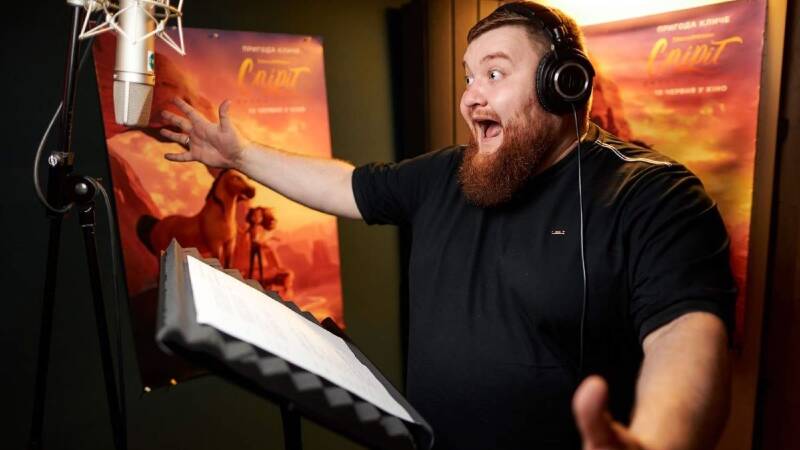
A voice without a body must carry everything within it: character, emotion, story. This is the paradox and the central challenge of voice acting — the performer works with a single instrument, but that instrument must replace everything else.
 Auditions in India
 Casting calls in USA
 Castingi w Polsce
 Кастинги в Україні
