What to expect and how to nail your background acting audition
Behind the Scenes: Guides: What to expect and how to nail your background acting auditionBackground work is the most accessible entry point to a film set and the most underrated way to understand the profession. At the same time, it is an area where vague schemes and broken promises are most common. Let's break down how it actually works in the industry.

Background vs. Atmosphere Artists: The Difference
Background (Extras) are the backdrop: cafe visitors, pedestrians, audience members in a hall, or a crowd in a square. The goal is to exist in the frame naturally without drawing attention. There are no lines and no close-ups.
Atmosphere (Featured Background) is a step up: the same people, but with a specific action. A waiter bringing a bill, a nurse walking down a corridor, or a police officer standing at a cordon. There is action, usually no lines, the rate is noticeably higher, and these people are selected in advance.
Separately, there is Background with lines — one or two phrases. This is a different payment category, and these roles usually go to those the coordinator has known from previous shifts.
How Recruitment Works
Recruitment happens quickly and almost always through background coordinators rather than directly from the production house. Announcements appear a few days or sometimes 24 hours before the shoot. Requirements are minimal: a suitable look, age, and sometimes your own wardrobe for a specific era.
An application usually consists of a recent full-length photo, a headshot, height, and measurements. No self-tapes or resumes are required. Speed is key: recruitment closes as soon as enough people are gathered.
What to Ask Before Agreeing
Five questions that eliminate almost all subsequent problems:
- The daily rate and shift duration. A shift is typically twelve hours and is counted from the call time on the call sheet, not from the moment you are placed in the frame.
- Payment method and timing. Cash at the end of the shift, bank transfer within a week, or a month later — the difference is fundamental.
- Overtime pay and the applicable rate.
- Wardrobe requirements. You are almost always asked to bring your own clothes, and requirements can be strict: no logos, no bright colors, or a specific historical era.
- Address, reporting time, and transport. Locations may be far from the city center (especially for shoots in outskirts of Mumbai, Hyderabad, Chennai, or Kochi), and transport is often your responsibility.
A coordinator who avoids questions about payment is a red flag. A professional will answer immediately and concretely.
Red Flags: When to Decline
- They ask for money. For "registration in the database," a photoshoot, or training. There is never a fee to enter background work.
- They don't name the project, location, or rate before you agree.
- They promise that you will be "spotted and given a role." That's not how it works — the transition to speaking roles happens through auditions, not through the number of background shifts.
- They demand passport or ID details before confirming the shift and without explaining why.
- Payment "after the movie is released." The movie might never be released.
How the Shift Goes
The day is structured roughly the same regardless of the project's scale.
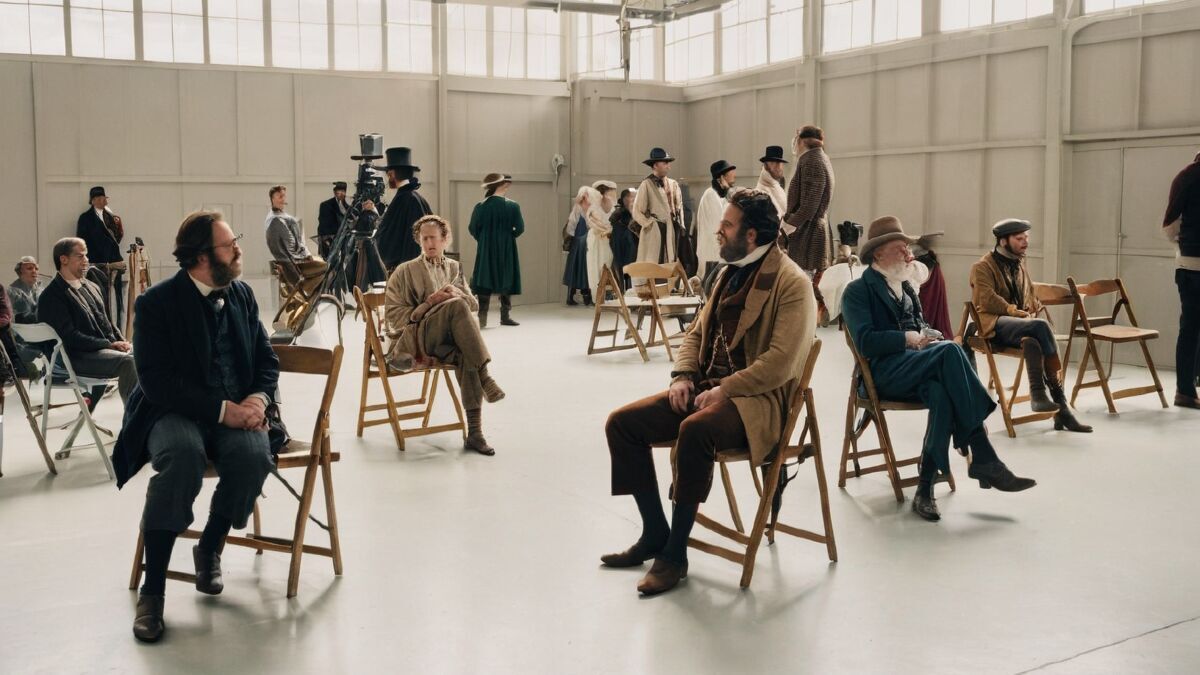
- Reporting. Arrive at the specified time, check in with the coordinator, and sign the attendance sheet.
- Costume and Makeup. If the production provides clothing, there will be a fitting. If it's your own wardrobe, there will be a check to discard unsuitable items.
- Waiting. The longest part of the day. It can take several hours before the first shot.
- Blocking. The second assistant director (2nd AD) explains where you go, where you stand, and what you do.
- Rehearsals and Takes. The same walk or action is repeated many times, sometimes from different angles.
- Waiting again. Between setups, lighting changes, or camera repositioning.
- Wrap. Return the costume, check out, and receive payment or confirmation of payment.
The ratio is roughly: twelve hours on set, with only twenty minutes to a couple of hours actually spent in front of the camera.
What to Bring With You
- Government ID (Aadhar, Passport, etc.) — you won't be processed without it.
- Water and food. Catering isn't always provided for background artists, and you can't just leave for a shop.
- Power bank. There are no available sockets on set for you.
- Something warm, even in summer: night shifts and air-conditioned studios can be exhausting.
- Change of shoes if you'll be standing for long periods.
- A book or headphones — but be ready to put them away at the first command.
- Your wardrobe as per the list, clean and neatly packed.
Rules of Conduct That Make a Difference
Background work is about working in a crowd. Coordinators remember not the "best actors," but those who caused no problems. This is the list they call from for featured atmosphere roles.
- Phones in frame are the main cause of ruined takes. Put them away completely, not just in a pocket.
- Do not look into the camera. Never, not even with one eye.
- Do not leave without warning. Even for five minutes: the shot must be consistent, and you are part of it.
- Repeat the same action. If in the first take you carried a bag in your right hand, do the same in all subsequent takes.
- Do not actually speak in the frame. Articulate silently; otherwise, you will ruin the clean audio track.
- Do not approach the lead actors or the director. All questions go through the coordinator.
- Do not film on set. This is almost always prohibited by contract and almost always noticed.
Money and Legalities
The rate for background work is the lowest in the production chain, and it should not be relied upon as a primary income. Atmosphere work pays more, and lines pay even more.
Payment structures vary. Be aware that for professional fees, TDS (Tax Deducted at Source) may be applicable. Depending on your earnings and status, you may also need to consider GST registration. Clarify in advance what you are signing and when the money will arrive. Delays are common, so keep the coordinator's contact details and a photo of the signed attendance sheet.
What Background Work Teaches (and What It Doesn't)
It teaches: how a set is organized, who is responsible for what, what the commands mean, how long the waiting lasts, how lighting works, and why scenes are shot in pieces. It is a cheap way to stop being afraid of the process and learn to exist before the camera without tension.
It doesn't teach: acting skills — there is nothing to "act" in the background. It also doesn't automatically open the door to roles: forty shifts in a crowd do not replace one self-tape. After your first few shifts, it is more useful to invest in professional headshots and a showreel and start applying for episodic roles, perhaps supplementing your training at institutes like NSD, FTII, or SRFTI.
In Short
- Background is the backdrop, atmosphere is the action, and lines are a different category.
- Before agreeing, clarify the rate, shift duration, payment terms, and wardrobe requirements.
- Any request for payment to join — decline immediately.
- The shift is long; you will be in the frame for only a small part of it.
- Phones, looking at the camera, and leaving without warning are three ways to never get invited back.
- After a few shifts, move on to building your portfolio and auditioning rather than just accumulating background days.
Castings for background and atmosphere artists are published in the castings section.
Share


Author: Aditya Kulkarni, editor
Publication date: 12 September 2026
Views: 26
Comments
Other materials in this section

Learn what to include in your resume and in what order, how to list credits when starting out, which skills are valuable, and the difference between a resume and a website profile.

Learn how to break down speech patterns by sound rather than stereotypes, where to find authentic references, and why clarity always beats phonetic perfection in the audition room.

What an invitation to a second round actually means, who will be in the room, and how to prepare for the final selection process.

From legal consents and shooting hours to spotting scams and managing the set—everything parents need to know before their child's first audition.

Why casting directors bring everyone into one room, what they are looking for in this format, and how to stand out without overshadowing others.

Where rejection actually comes from, how to survive the silence after an audition and what genuinely helps keep your footing in this profession.
 Auditions in India
 Casting calls in USA
 Castingi w Polsce
 Кастинги в Україні
