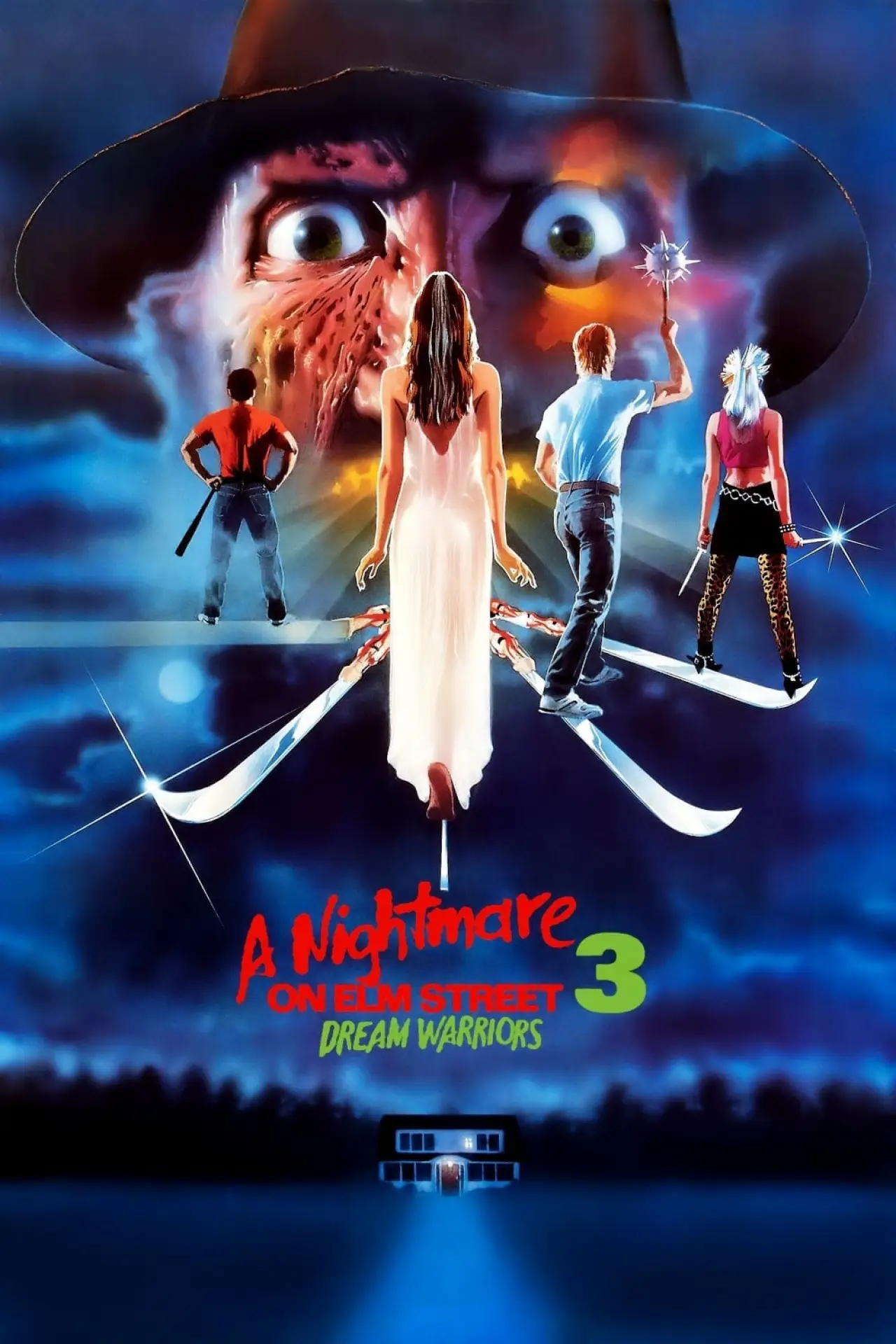
A Nightmare on Elm Street 3: Dream Warriors



All team (48)
Short description
A group of teenagers held in a psychiatric hospital refuse to sleep. Something is hunting them in their dreams, and the deaths that follow look like suicides. Nancy Thompson, a doctor training at the hospital who has encountered this killer before, recognizes the danger: Freddy Krueger, the clawed figure who attacks his victims while they sleep and has grown stronger over the years. With the staff skeptical, Nancy joins the patients in trying to fight back in the dream world, where their own abilities might give them a chance.
The third entry in the Nightmare on Elm Street series was directed by Chuck Russell, who wrote the screenplay with Frank Darabont and Wes Craven, and was produced by Robert Shaye for New Line Cinema. Heather Langenkamp returns as Nancy, Patricia Arquette appears as Kristen Parker, Craig Wasson plays Dr. Neil Gordon, and Robert Englund again plays Freddy Krueger. It was the first feature Russell directed in a career that continued with The Blob, The Mask and Eraser, among others.
Made for about 5 million dollars, the film took roughly 45 million dollars worldwide, a strong return for a horror release of its time. On IMDb it holds 6.7/10 from about 99,000 votes and on TMDB 6.7/10 from a smaller number of votes, while critics gave it 5.9/10 from 65 reviews, so audiences have rated it slightly higher than critics did.
What's left behind the scenes
- Freddy's glove, which was stolen during the filming of this movie, was discovered in another film: it hangs on the wall of a basement in "Evil Dead 2" (1987), becoming part of another playful jab between Wes Craven and Sam Raimi. Various references to Raimi's films can be noticed in "The Hills Have Eyes" (1977) and "A Nightmare on Elm Street" (1984). References to Wes Craven's films are contained in "The Evil Dead" (1981) and "Evil Dead 2" (1987).
- Initially, “Freddy’s Snake” turned out to be too phallic, so it was painted dark green.
- "Dream Warriors" is Patricia Arquette's film debut.
- Robert Englund wrote a treatment for the film, but the producers rejected it.
- In the original script version, Nancy was supposed to return to the group, and Dr. Gordon was to die.
- After becoming the screenwriter for this series, Craven wanted to realize the idea of a 'film within a film' already in the third installment, but ultimately succeeded only seven years later.
- Wes Craven insisted on a trilogy. But the film proved very successful, and a fourth part received the 'green light.' Craven returned to his brainchild only in 1994 during the filming of the seventh installment – 'Wes Craven's New Nightmare.'
- The scene where Freddy Krueger throws Neil Gordon (Craig Wasson) into a grave and partially buries him is a reference to "Body Double" (1984), where Craig's character was also buried alive.
- Shortly before her death, Jennifer is watching "Critters" (1986).
- Initially, Sally Kellerman was written into the script as a guest on Dick Cavett’s show in the very scene where Jennifer dies.
- Ken Sagoes recounted in an interview that he didn't want to audition for the role of Kincaid, but his agent persuaded him to go. On the day he was supposed to audition, he walked to the bus stop in pouring rain without an umbrella. He arrived at the studio soaking wet and had to sit in the waiting room with other hopefuls for several more hours. When his turn came, director and screenwriter Chuck Russell simply said, "Show me something. Whatever you want." Sagoes became so enraged that he yelled, "Go to hell, all of you!", and then launched into a personal attack, cursing Russell specifically. Russell immediately cast Sagoes as Kincaid.
- It is well known that Freddy's glove was stolen from the set. Apparently, two ardent fans of the franchise infiltrated the set disguised as day laborers. No one paid them any attention, and they, seizing the moment, snatched the glove during a lunch break and disappeared.
- Wes Craven had absolutely nothing to do with the first sequel – it was Jack Sholder’s horror film, *A Nightmare on Elm Street 2: Freddy's Revenge* (1985) – because he didn't want his film to become an entire franchise. He also disliked *Freddy's Revenge*, which he found to have an insufficiently compelling script, and its authors had taken certain liberties with the original plot premises (in this film, Freddy appears not only in dreams). When the box office receipts for the second film exceeded those of the first, but the film itself received criticism, the studio executives did not immediately reach a consensus regarding the expediency of continuing the franchise. They turned to Craven for new plot ideas, and he agreed to participate in the project with the intention of expanding the original concept and ending the franchise. He was busy filming the science fiction horror film *Deadly Friend* (1986) at the time and declined an offer to take the director's chair and shoot a new film in the franchise. Ironically, Craven's script was rewritten, and many of the reasons he had decided to return to the project became irrelevant. Moreover, the success of *Dream Warriors* led to the creation of four more sequels and a crossover with the *Friday the 13th* franchise – the film *Freddy vs. Jason* (Ronny Yu, 2003).
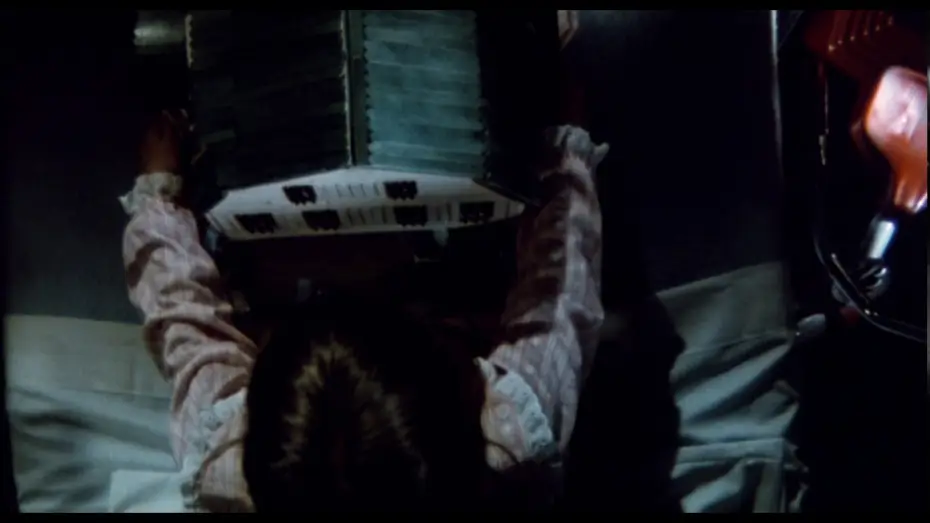
- To film the scene with the “sexy nurse”, the set had to be turned on its side so that when Roddy Eastman’s character (playing Joey) was standing, it looked like he was lying tied to the bed. The actor remained in this position for so long that he fell asleep.
- To film the clay doll’s face transforming into Freddy’s face, special effects artist Doug Beswick used stop-motion animation (where objects are physically manipulated, slightly moved and altered from frame to frame, so that when played back they appear to move or change on their own), and then played the footage in reverse.
- For a while, Robert Englund worked literally 24 hours a day: during the day he filmed the series 'Downton Abbey,' and at night – this film. Once, after another night shift, he fell asleep in his makeup, and when he woke up and looked in the mirror, he frightened himself.
- For the scene with the Dick Cavett television interview, he was offered to choose himself the guest who would be attacked by Freddy Krueger. The host chose actress and socialite Zsa Zsa Gabor, who had recently married for the ninth time, and whom he considered “the dumbest person” he had ever met, and was therefore quite willing to hand her over for dismemberment.
- In the scene where Freddy kills Jennifer, he was supposed to say: “This is it Jennifer, your big break on TV!” Robert Englund repeated this line in the first two takes, but on the third, he decided to improvise, saying: “Welcome to Prime Time, bitch!” Chuck Russell couldn't decide which line to keep, so both versions made it into the final cut.
Similar movies


 Auditions in India
 Casting calls in USA
 Castingi w Polsce
 Кастинги в Україні
