Tommy



Short description
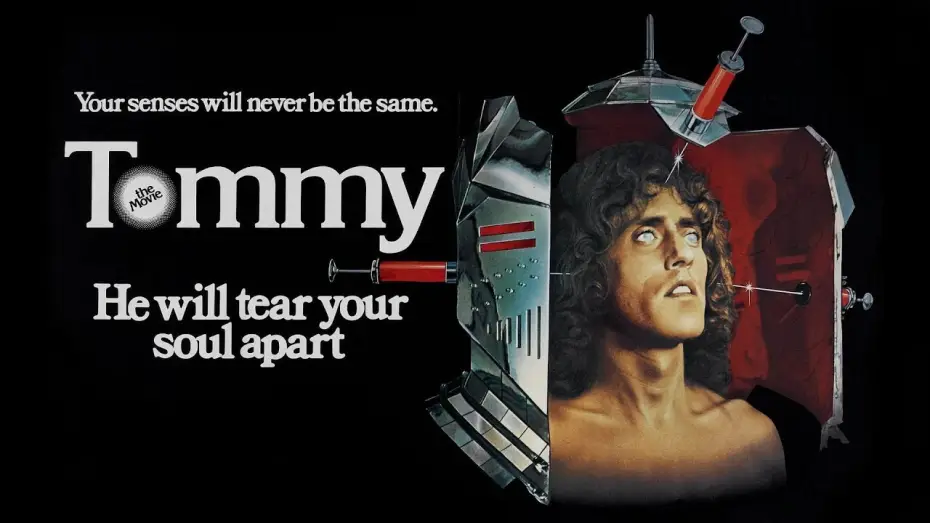
Based on the Who's 1969 rock opera of the same name, Tommy follows a boy who withdraws from the world after a traumatic event in his childhood, losing his sight, hearing and speech. His mother and her partner try various treatments without success, and he remains shut off from everyone around him. He discovers a pinball machine and shows a remarkable talent for the game, eventually drawing crowds as a public figure, and his followers begin to treat him with a reverence that goes well beyond his achievements as a player.
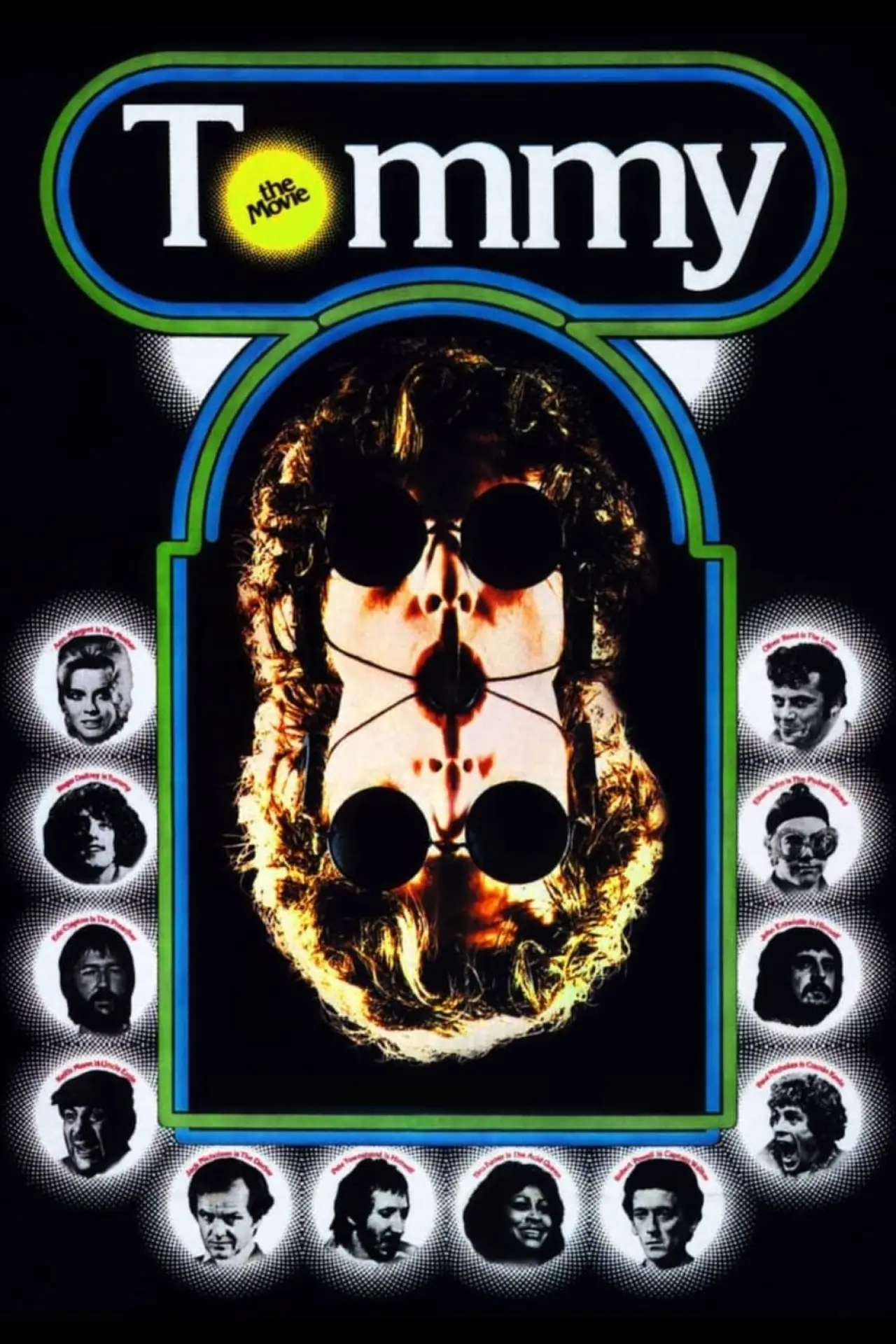
Ken Russell directed and wrote the screenplay, producing alongside Robert Stigwood. It was the sixth film of the fifteen he directed, arriving between Mahler and Valentino. Roger Daltrey, the Who's lead singer, plays the title role, with Ann-Margret as his mother and Oliver Reed as Frank. Elton John appears as the Pinball Wizard, and Eric Clapton and Arthur Brown are among the credited cast of forty-two. Made for about five million dollars, the film returned roughly thirty-four million worldwide.
The film holds a rating of 6.6 on IMDb from about 22,200 votes and 6.5 on TMDB from 384 votes, while the critics' rating stands at 6.8 from thirty-five reviews, placing critical and audience responses fairly close together.
What's left behind the scenes
- The film is based on the rock opera of the same name by The Who.
- Initially, David Bowie (1947-2016) was considered for the role eventually played by Tina Turner.
- According to Pete Townshend, Oliver Reed found it extremely difficult to record his part of the soundtrack, as he couldn't sing at all. He only managed it by recording in short fragments. Townshend was very nervous when it became known that Jack Nicholson was chosen for the role of the doctor, but calmed down only when Nicholson sang his parts without any problems.
- Elton John initially refused the role he eventually played. For some time, David Essex, who played Tommy in the 1973 stage production, was seriously considered for the part of the Pinball Wizard, but producer Robert Stigwood (1934-2016) insisted on Elton John, who ultimately agreed, but only on the condition that he would get to keep the enormous shoes provided for the role by the costume designers.
- It took three days to film the scene in which Mrs. Walker hallucinates soap, beans, and chocolate coming from the television. According to director Ken Russell (1927-2011), the scenes with beans and detergent (and the advertising parody of Red Baked Beans) were a kind of "revenge" for the commercials for beans and detergents that he had to shoot at the beginning of his career. Ann-Margret, who played Nora, improvised practically all the time. Russell simply told her that her character was having a nervous breakdown and that she could play it however she wanted. Unfortunately, during filming, she accidentally hit her hand on a broken television screen, and Russell had to rush her to the hospital, where she received stitches.
- In the early 1970s, George Lucas was offered the opportunity to direct this film, but he declined the offer because he was busy filming 'American Graffiti' (1973) at the time.
- The building on fire that the viewer sees is actually burning. The fire started accidentally, and it was decided to film it for use in the movie. The firefighters and fire engines are all real. Everything damaged by the fire was subsequently rebuilt.
- Pete Townshend helped Eric Clapton overcome his drug addiction, and in gratitude, Clapton played a cameo role in the film.
- The entire film was shot to a pre-recorded soundtrack, with the exception of the scene with the Pinball Wizard character, where the band The Who actually performed in front of the audience (although the soundtrack features Elton John). At the end of the scene, fans are shown running onto the stage. This wasn't in the script; the audience simply couldn't contain themselves, having just seen The Who perform live, and then Peter Townshend began smashing his guitar.
Similar movies



 Auditions in India
 Casting calls in USA
 Castingi w Polsce
 Кастинги в Україні
