Windtalkers







Short description
During the Second World War, American forces in the Pacific found their radio traffic vulnerable to Japanese code breakers. The military responded by recruiting Navajo men to send messages in their own language, which the Japanese could not decipher. Because the code could never be allowed to fall into enemy hands, each Navajo radio operator was assigned a Marine bodyguard whose orders included killing his charge rather than letting him be captured. Sergeant Joe Enders, recovering from wounds, is given that duty for Private Ben Yahzee, and the two are drawn into the fighting on Saipan, where the bond between them comes into conflict with the orders Enders has been given.
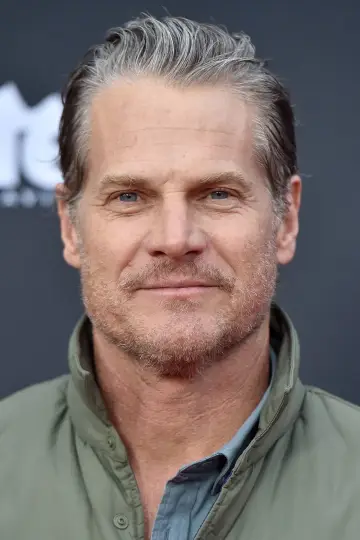
John Woo directed the film, the fourteenth of the twenty-two features listed for him, following Mission: Impossible II and preceding Paycheck. John Rice and Joe Batteer wrote the screenplay, and Woo produced with Terence Chang and Tracie Graham-Rice. Nicolas Cage plays Enders, with Adam Beach as Yahzee; Peter Stormare, Noah Emmerich, Mark Ruffalo and Brian Van Holt are among the large credited cast of ninety-nine.
The production carried a budget of 115 million dollars and returned about 78 million dollars worldwide. On IMDb the film holds 6.1 out of 10 from more than 72,000 votes, while on TMDB it stands at 6.4 from a much smaller number of ratings. A critics' rating of 5.2 from 166 reviews places it slightly below the audience scores.
What's left behind the scenes
- To add more authenticity to the film, MGM Studios purchased several rare radios from the World War II era from a private collector in Ohio.
- Weapons and military equipment coordinator Robert Galotti assembled over 500 rare firearms from World War II, adding 700 rubber replicas previously used in film shoots. Real American Sherman and Stuart tanks, and Japanese Hago tanks were also utilized.
- The film's release was scheduled for the fall of 2001, but the tragic events of September 11th forced the studio to postpone the premiere until the summer of 2002. All posters and other promotional materials previously sent to theaters were recalled and later became rare collector's items.
- Filming of scenes at the Tarawa Marine Corps training camp, located on the Hawaiian Islands, took place on the grounds of Point Mugu Naval Air Station in California.
- Immediately before filming, the majority of actors and extras involved in the film underwent intensive week-long training in a specially created training camp. Producers secured the support of the Ministry of Defense, which authorized the use of a marine infantry base on the Hawaiian island of Oahu for training.
- Steve J. Tremat was initially invited for the role of Private Neville, but later his plans changed, and he decided to step away from his acting career and devote some time to serving in the army. As a result, Martin Henderson was invited to replace him.
- The role of artillery sergeant Hjelmstad, in addition to Peter Stormare, could also have gone to Mikael Persbrandt.
- Initially, the film featured a dentist character. In one episode, he approached the body of a deceased soldier and, saying "Go to your daddy," pulled out his gold teeth. However, according to a consultant for the U.S. Armed Forces, such behavior did not correspond to the image of a paratrooper.
- The film is based on real events concerning U.S. Marines assigned to guard Navajo Native American code talkers during the Battle of Saipan.
- In one scene, Sergeant Hjelmstad tells Joe Ender: "As long as Hitler and Yamamoto are alive, we must fight." This takes place during the Battle of Saipan in the summer of 1944. But Admiral Isoroku Yamamoto died more than a year earlier: in April 1943, his plane was met by American fighters and shot down after a long special operation to intercept him. This fact became widely known and acknowledged by the Japanese side, and the Americans used it to boost troop morale.






 Auditions in India
 Casting calls in USA
 Castingi w Polsce
 Кастинги в Україні

