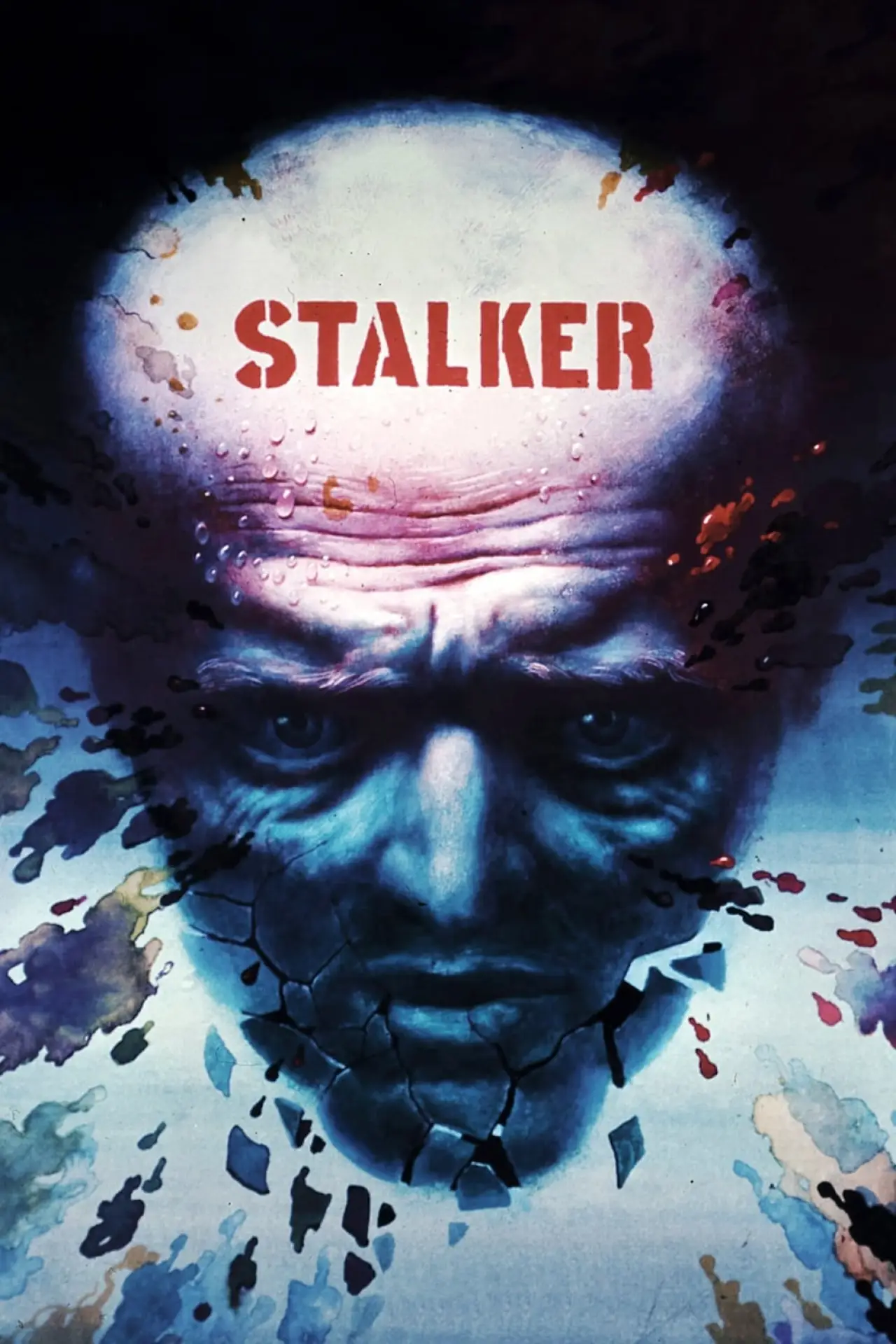
Stalker



All actors and roles (9)
All team (26)
Short description
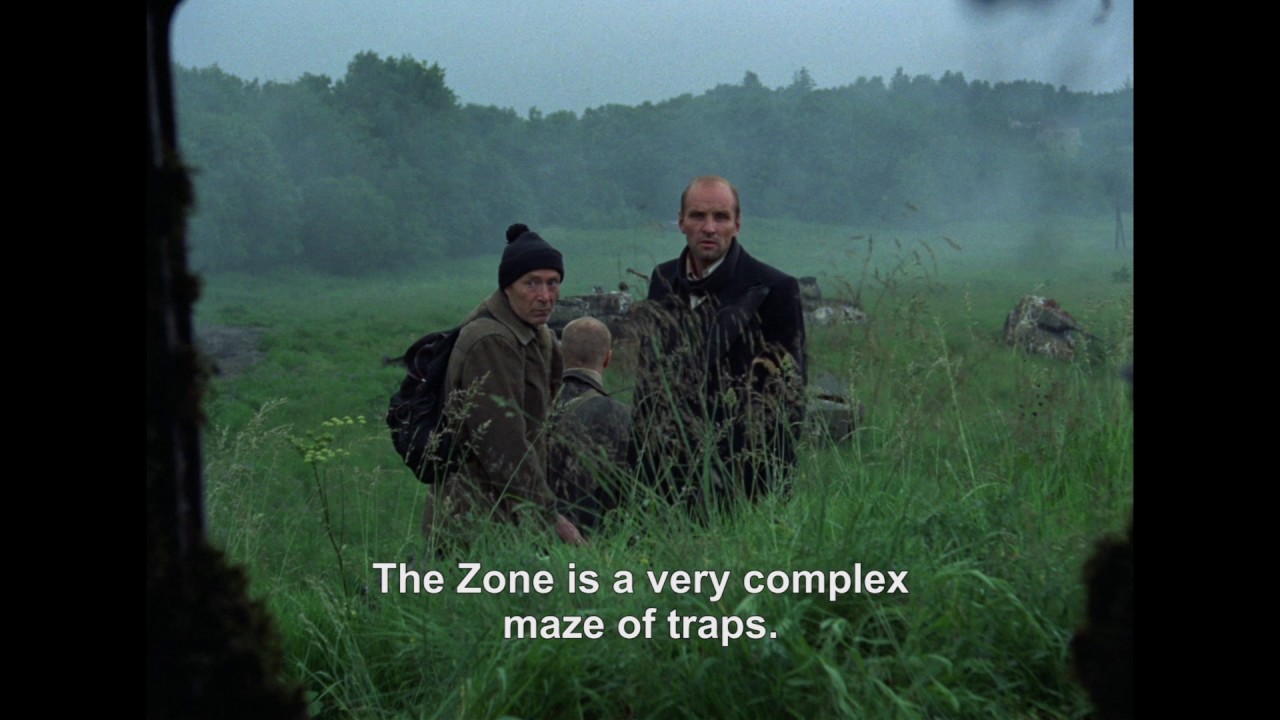
In an unnamed country, a restricted area known as the Zone lies sealed off behind barbed wire and guarded by soldiers. It was created, according to the various accounts, by the impact of a meteorite, and inside it the usual laws of nature no longer seem to hold. Rumours speak of a room within the Zone where a person's deepest wishes are granted. Because the way is dangerous and impossible to follow directly, only a guide known as a Stalker can lead anyone there, slipping past the patrols for payment. This time he takes two clients: a Writer and a Professor, each with his own reasons for wanting to reach the room, and the journey becomes a long, roundabout passage through terrain where time and physics behave unpredictably. The film is based on the novel Roadside Picnic by Arkady and Boris Strugatsky.
Andrei Tarkovsky directed and co-wrote the film with the Strugatsky brothers, placing it between Mirror and Nostalgia in the sequence of films he made. Aleksandr Kaydanovskiy plays the Stalker, Anatoliy Solonitsyn the Writer and Nikolay Grinko the Professor, with Alisa Freyndlikh as the Stalker's wife. It was produced by Mosfilm with a budget of about 6 million dollars.
The film holds an 8/10 rating on IMDb from around 156,000 votes and 8.1/10 on TMDB from roughly 2,600 votes. A critics' rating of 8.8/10 from 47 reviews places it somewhat higher than those audience scores.
What's left behind the scenes
- In April 1978, Tarkovsky suffered a heart attack and resumed work with the third team in a row.
- The working title of the script was “The Machine of Desires”.
- 'Stalker' was Tarkovsky's last film made in the USSR; he then worked abroad.
- The director's fastidiousness exhausted the crew. Just staging a scene lasting only a few seconds on screen took the film's artists several days. Tarkovsky insisted that only green be visible on the lawn that would appear in the frame. Every blade of grass of the wrong shade was meticulously removed one by one.
- The prolonged stay in the ecologically contaminated filming area negatively affected the health of all members of the film crew, including Andrei Tarkovsky himself. Only one person actually avoided illness and complications – the composer Eduard Artemyev, as he never visited the filming locations, working on the film's music in Moscow.
- The film is based on the novel "Roadside Picnic" (1972) by Arkady and Boris Strugatsky.
- Working on the film was fraught with great difficulties, accompanied by numerous problems, and took about three years.
- Although Tarkovsky was not credited as a screenwriter, he was considered one of three co-authors, and his role consisted mainly of rejecting material. Boris Strugatsky recalled that no other work had taken as much effort from them as the film's script, and he described the work as endlessly exhausting. Work on the novella 'The Beetle in the Anthill' was postponed due to 'Stalker'. The Chairman of the USSR State Film Committee, Ermash, warned Tarkovsky before final approval that the brothers had a reputation for being 'unfilmable', especially after the failure of the previous attempt to adapt 'The Devil from the Underworld'. However, Tarkovsky firmly stood his ground.
- Filming was completed on December 19, 1978. Ultimately, the film's budget was overspent by 300,000 rubles, exceeding one million rubles.
- In 2008, it was proposed to name one of the road sections in the Rottermann Quarter in Tallinn Stalker's Lane (Estonian: Stalkeri käik) in honor of the film "Stalker", which was partially filmed in these locations.
- The film was reshot three times, with three different cinematographers and production designers, and the script continued to be rewritten during filming. As a result, the budget was significantly overspent due to constant revisions.
- The film was shot on Kodak film stock, which was scarce in the Soviet era and was only issued to select directors.
- Actor Alexander Kaidanovsky, known for his fiery temper, had a fight with Tarkovsky on the set of “Stalker,” but was forgiven, and the film was still completed.
- Due to a conflict with director Andrei Tarkovsky, the name of the chief cameraman Georgy Rerberg was not included in the film's credits.
- The Stalker was filmed in the vicinity of Tallinn (Estonia) in 1977–1978.
- On August 9, 1977, several thousand meters of filmed material were irrevocably lost in the laboratories of Mosfilm during film development. Various versions were put forward: from the substitution of the film by ill-wishers to a tactical move by Tarkovsky, who wanted to completely remake the film that did not suit him. The film crew suspected that the film might be shut down, but as early as July, the director was able to obtain permission from Goskino to increase the budget.
- On February 15, 1977, the first (studio) scene of the film was shot – Stalker's house. Location shooting in Estonia took place in May-August. Individual scenes were filmed near Leningrad, and studio shooting at the Mosfilm studio. The final scenes, as well as views of the industrial landscape from the open door of the bar, were filmed in Moscow, in the Zagorodnoye Shosse area. The pipes of TEC-20 are visible in the background.
- In February 1976, Tarkovsky officially received approval to begin filming from the Chairman of the State Cinema Committee of the USSR, Filipp Yermash.
- In 1973, while still working on "Mirror", Andrei Tarkovsky left a note in his diary stating that he was interested in a new work by the Strugatsky brothers. In 1974, Tarkovsky first contacted the writers and informed them that he was interested in adapting the novella "Picnic on the Side of the Road".
- Tarkovsky himself, his wife Larisa (the film's second unit director), and the lead actor Anatoly Solonitsyn died from the same disease - bronchial cancer.
- Where the scene with the UN checkpoint was filmed, near the boiler room of the old Tallinn power plant, the inscription “UN” remains on the chimney to this day. In 2006, a commemorative plaque in Estonian and English was hung on the chimney stating that the film 'Stalker' was filmed in this location.
- Initially, the required natural setting was found near the city of Isfara, in Tajikistan, but the city was destroyed by an earthquake. This circumstance did not interfere with the filming itself, but the film crew had nowhere to live.
- The premiere of the film took place in May 1980 at the Mir cinema on Tsvetnoy Boulevard. In Moscow, the film was shown in only three cinemas, and 196 prints were distributed throughout the country. In the first months after the premiere, the release of the film was not noted in the Soviet press. The first reviews and critiques appeared only in 1981 – after the film was shown at the Cannes Film Festival.
- In two episodes of the film, a page from a tear-off calendar is fleetingly visible – “December 28th”. The director was unable to explain to anyone why this episode was needed, or what it had to do with that date. Andrei Tarkovsky died on December 29, 1986.
Similar movies


 Auditions in India
 Casting calls in USA
 Castingi w Polsce
 Кастинги в Україні
