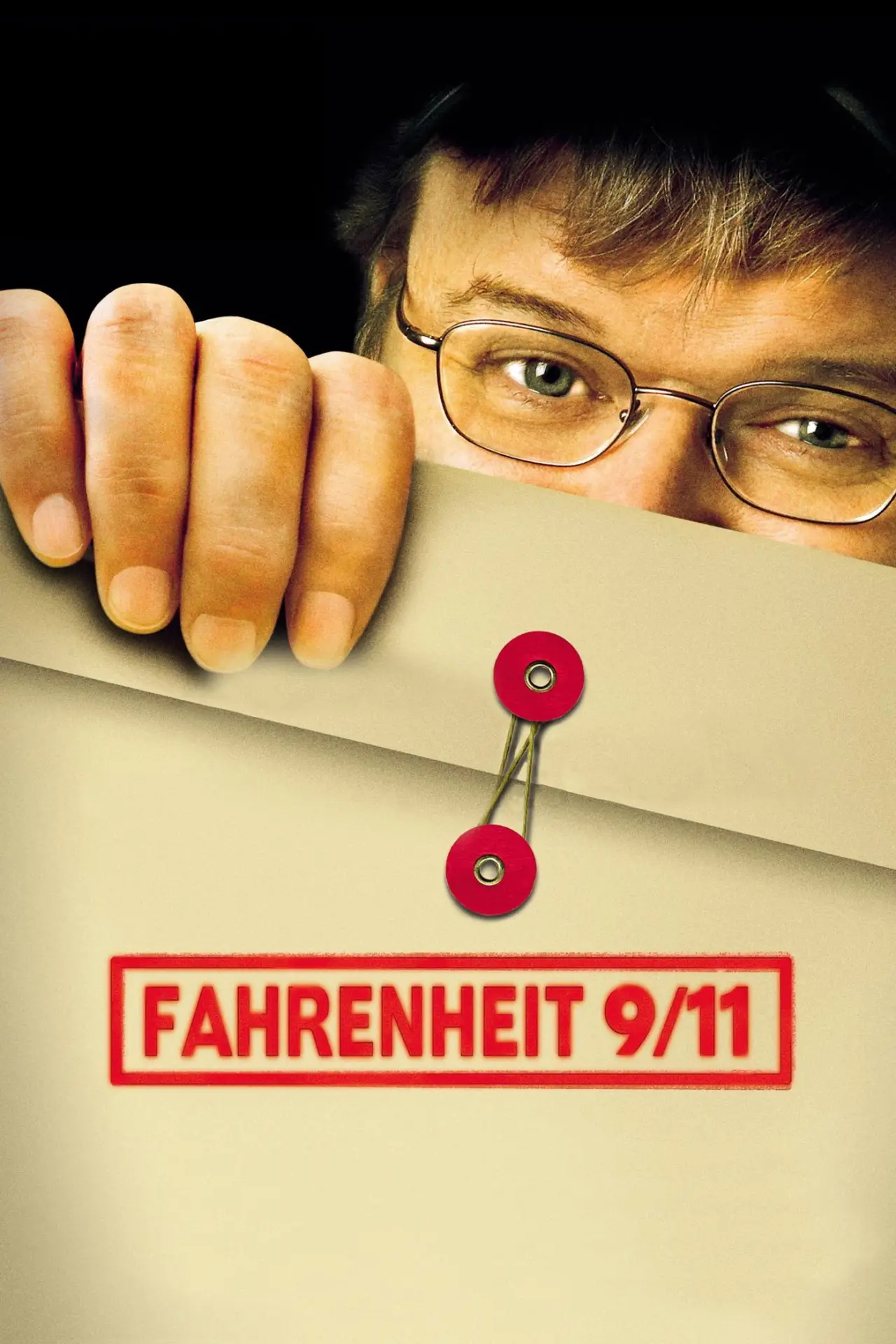
Fahrenheit 9/11
Controversy... what controversy?



Country
Genre
Budget
$6 000 000
Revenue
$222 446 320
Director
Actors
Scenario
Producer
Operator
Mike Desjarlais
Composer
Artist
Audition
Editing
Short description
Michael Moore's view on how the Bush administration allegedly used the tragic events on 9/11 to push forward its agenda for unjust wars in Afghanistan and Iraq.
What's left behind the scenes
- For the first time, a documentary film topped the list of the weekend's highest-grossing films. Previously, no documentary film had even made it into the top five.
- During filming, Moore shot an interview with American contractor Nicholas Berg, who was subsequently kidnapped and killed by Iraqi terrorists, but decided not to include this conversation in the final version of the film. Michael stated that the interview would never be released to the public, as he decided to hand over all the original footage to Berg’s family.
- Documentary films have never been shown on such a large number of screens before. The first weekend (June 25-27) – 868 screens, the second weekend (July 2-5) – 1725 screens, the third weekend (July 9-11) – 2011(!) screens.
- In May 2004, Michael Moore made an official statement that Walt Disney Pictures (owner of distributor Miramax) was hindering Miramax from promoting his latest documentary. Disney representatives, in turn, responded that the decision had been made back in May 2003, and they had advised Miramax to abandon the distribution of the film at that time.
- Following its screening at the Cannes Film Festival, the film received perhaps the longest ovation in the entire history of the film forum. The exact time could not be established, but the media reported a figure of 15 to 25 minutes.
- In his official press release, Michael Moore stated: "My film is primarily aimed at the 50 percent of people who never vote. Have they become the elite in that time? Have they become richer? Are they well-educated? No! They are still poor. Who are these 50 percent? They are, first and foremost, the working class, single mothers, uneducated youth, and the overwhelming majority of African Americans."
- Ray Bradbury, author of the science fiction work “Fahrenheit 451,” expressed his indignation regarding the title of Moore’s film. “He stole my idea,” the distraught writer told the press.
- The film was initially given an 'R' rating. Michael Moore tried to convince the MPPA that the film should be seen by 15-year-old teenagers, who in a few years could very well end up in military service in Iraq. He filed a protest, suggesting that the commission soften the rating to 'PG-13'. However, the protest was rejected, and the film was released with an 'R' rating due to "the presence of violent and disturbing scenes in the film, as well as an abundance of profanity."
- Documentary films have never before been shown on such a large number of screens. The first weekend (June 25-27) — 868 screens, the second weekend (July 2-5) — 1725 screens, the third weekend (July 9-11) — 2011(!) screens.
- Only the second documentary film managed to win the main prize of the Cannes Festival – the "Palme d'Or". The pioneer in this regard was the film by famous traveler Jacques-Yves Cousteau, “Monde du silence, Le” in 1956.
- Executive Director Michael Eisner sarcastically noted that Moore had deliberately inflated a public scandal in order to attract the attention of film critics at the Cannes Film Festival. In turn, Moore stated that Eisner was simply a coward and afraid of increased taxes levied on Disneyland and the numerous hotels located in Florida. As is known, Florida Governor Jeb Bush – the younger brother of US President George W. Bush – severely criticized in Michael Moore’s film.
- For the first time, a film that was shown on the fewest screens compared to its competitors topped the box office.
- Executive Director Michael Eisner sarcastically noted that Moore deliberately inflated a public scandal to attract the attention of film critics at the Cannes Film Festival. In turn, Moore stated that Eisner was simply a coward and feared increased taxes levied on Disneyland and the numerous hotels located in Florida. As is known, Florida Governor Jeb Bush – the younger brother of US President George Bush – harshly criticized in Michael Moore's film.
- Until recently, the highest-grossing documentary film was considered to be Michael Moore’s “Bowling for Columbine.” In 2002, this film grossed $24 million. “Fahrenheit 9/11” demonstrated this result already in its opening weekend.
- Only the second documentary film has managed to win the main prize of the Cannes Festival – the Palme d'Or. The pioneer in this regard was the film by the famous traveler Jacques-Yves Cousteau, "Monde du silence, Le," in 1956.
- Michael Moore didn't even try to fight the spread of pirated versions of the film online, because the goal of the film is not to collect as much money as possible, but to educate every potential American voter on the eve of the 2004 US presidential election.
Similar movies
8.5/10
8.3/10
8.2/10
8.2/10
8.1/10

8.1/10
8/10

8/10
8/10
8/10


 Auditions in India
 Casting calls in USA
 Castingi w Polsce
 Кастинги в Україні
