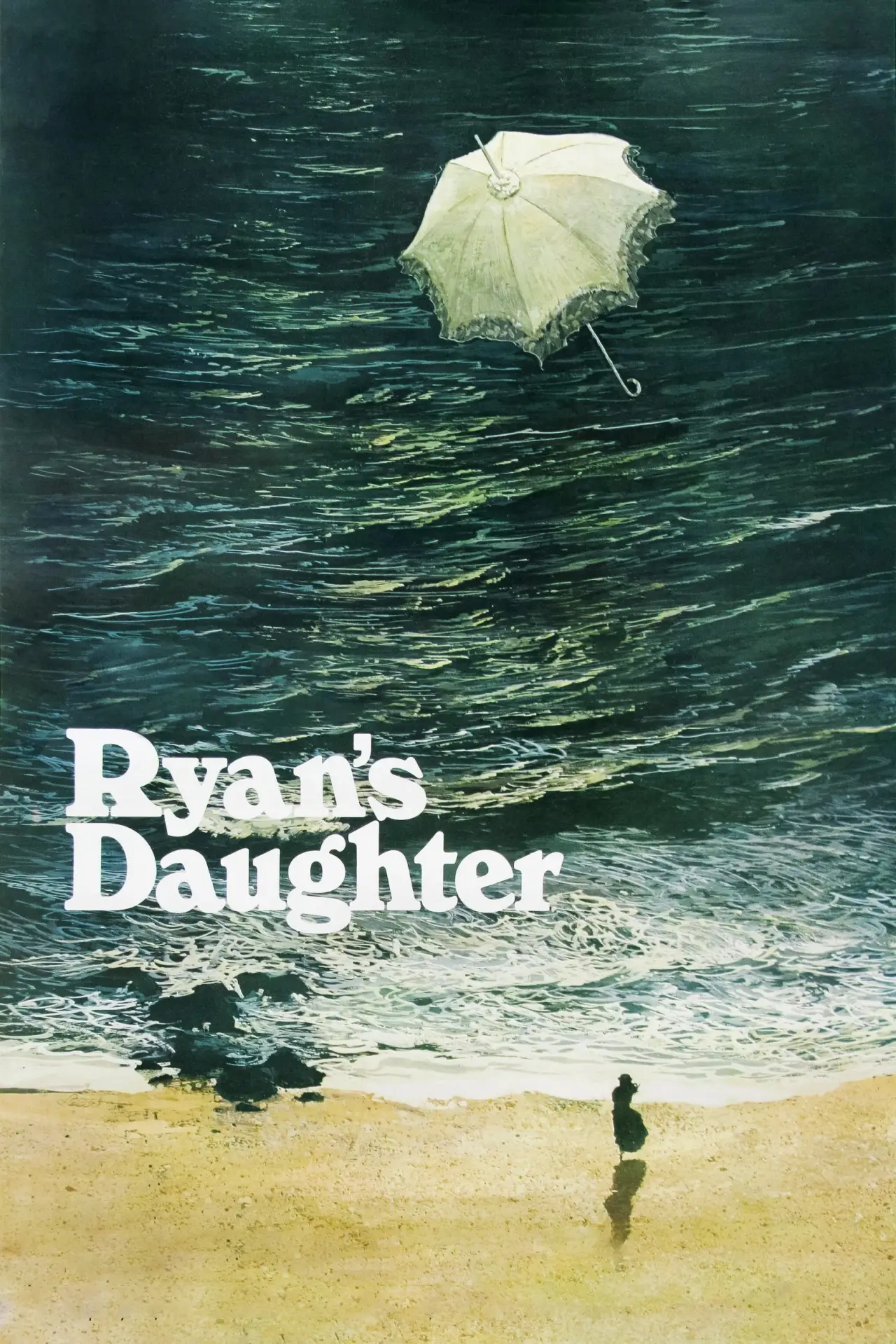
Ryan's Daughter
A story of love...set against the violence of rebellion
Ryan's Daughter (1970)


Production
Budget
$15 000 000
Revenue
$8 358
Director

Scenario
Robert Bolt
Composer

Producer
Anthony Havelock-Allan
Actors

Robert Mitchum
Charles

Trevor Howard
Father Collins
Christopher Jones
Major Doryan

John Mills
Michael
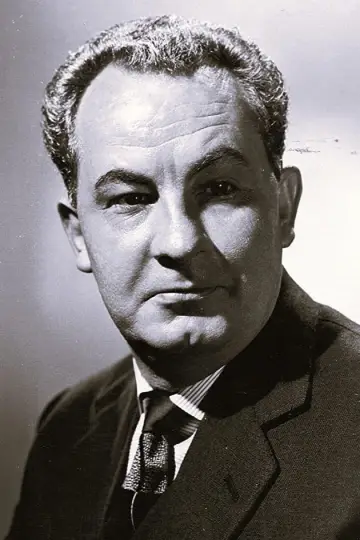
Leo McKern
Thomas Ryan

Sarah Miles
Rosy
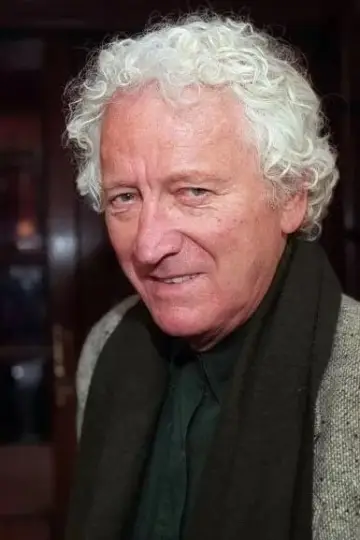
Barry Foster
Tim O'Leary
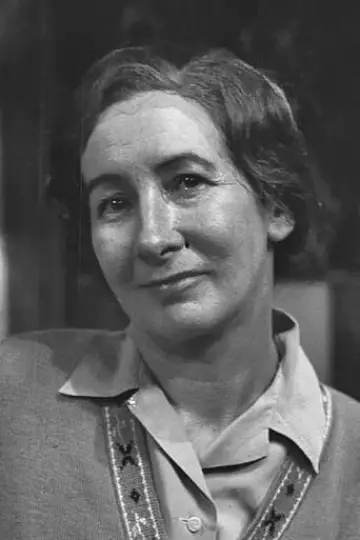
Marie Kean
Mrs. McCardle
Short description
In the wake of the 1916 Easter Rising, a married schoolteacher in a small Irish village has an affair with a troubled British officer.
What's left behind the scenes
- The full version of the film has a runtime of 206 minutes.
- Some scenes were filmed a few kilometers from Cape Town, South Africa (filming in Ireland had to be stopped due to the weather). In these scenes, the sky is very bright and clear, and the sand on the shore is noticeably whiter and finer.
- Christopher Jones (1941-2014) and Sarah Miles did not get along. Jones was grieving for Sharon Tate (1943-1969)—she had been a close friend of his, and they may have had a romantic relationship in the past—and Tate was murdered precisely during the filming of this movie. At the same time, he was engaged to Olivia Hussey (an engagement that was later broken), and he simply did not like Miles. At one point, Miles even conspired with Robert Mitchell (1917-1997), who slipped pills into Jones's breakfast before a scene in the forest; however, Mitchell miscalculated the dosage, and Jones was practically in a stupor during filming, later deciding that he had suffered a nervous breakdown. The longing for Tate and the negative emotions associated with filming this movie forced Jones to leave the profession. After these events, he appeared in only one more film. As for this movie, Jones's performance became one of the reasons for the negative reception of the film by critics and audiences.
- Director David Lean (1908-1991) had to wait an entire year for a storm strong enough to hit the coast of Ireland so that he could film the key scene in which villagers enter the sea to drag a shipment of weapons intended for the IRA (Irish Republican Army) onto the shore.
- During the beach shoots, David Lean and the cinematographer struggled with reshooting the same sequences because Atlantic sea spray settled on the camera lenses, causing them to fog up. Cinematographer Freddie Young (1902-1998) brought this problem to Panavision, where they devised a solution using a special lens cap connected to the camera shutter.
- David Lean struggled to find an actor for the role eventually played by Christopher Jones. Lean wanted to work with Marlon Brando (1924-2004), but Brando was never offered the part. Lean cast Jones after seeing him in Frank Pierson's (1925-2012) drama Mirror War (1970). However, he was unaware that Jones's voice had been dubbed in Pierson's film. Filming the scenes with Jones cost Lean a great deal of stress. This explains the laconic nature of his character and, conversely, the talkativeness of his aide, who had to step in to fill the pauses. In the end, Jones's voice was dubbed by Julian Holloway.
- The village shown in the film was built specifically for the shoot and dismantled once filming ended. Two hundred workers were employed for this task. Twenty thousand tons of granite from a dozen nearby quarries were used; nothing less durable could have withstood the Atlantic winds blowing across the coast. As for the buildings constructed in this manner, they featured interior lighting, plumbing and sewage pipes, and even functioning fireplaces and chimneys.
- The film crew was plagued by misfortunes. Christopher Jones crashed his sports car on a narrow, winding road. Trevor Howard (1913-1988) fell off a horse and ended up in the hospital. Something went wrong during the filming of a fishing scene, and Trevor Howard and Sir John Mills (1908-2005) nearly drowned. Two cars sank in the peat bogs. During the filming of the storm scene, Leo McKern (1920-2002) nearly died and almost lost his glass eye.
- Due to censorship, David Lean could not film erotic scenes in the 1945 drama Brief Encounter or the 1965 melodrama Doctor Zhivago. By the 1970s, however, the rules had changed, and Lean was permitted to film an erotic scene involving the actors, but Christopher Jones categorically refused the offer to participate in such a scene. This is why all the eroticism in the film is reduced to close-ups of the actors involved, interspersed with shots of trees and foliage.




 Auditions in India
 Casting calls in USA
 Castingi w Polsce
 Кастинги в Україні

