Kill Bill: Vol. 2





Short description
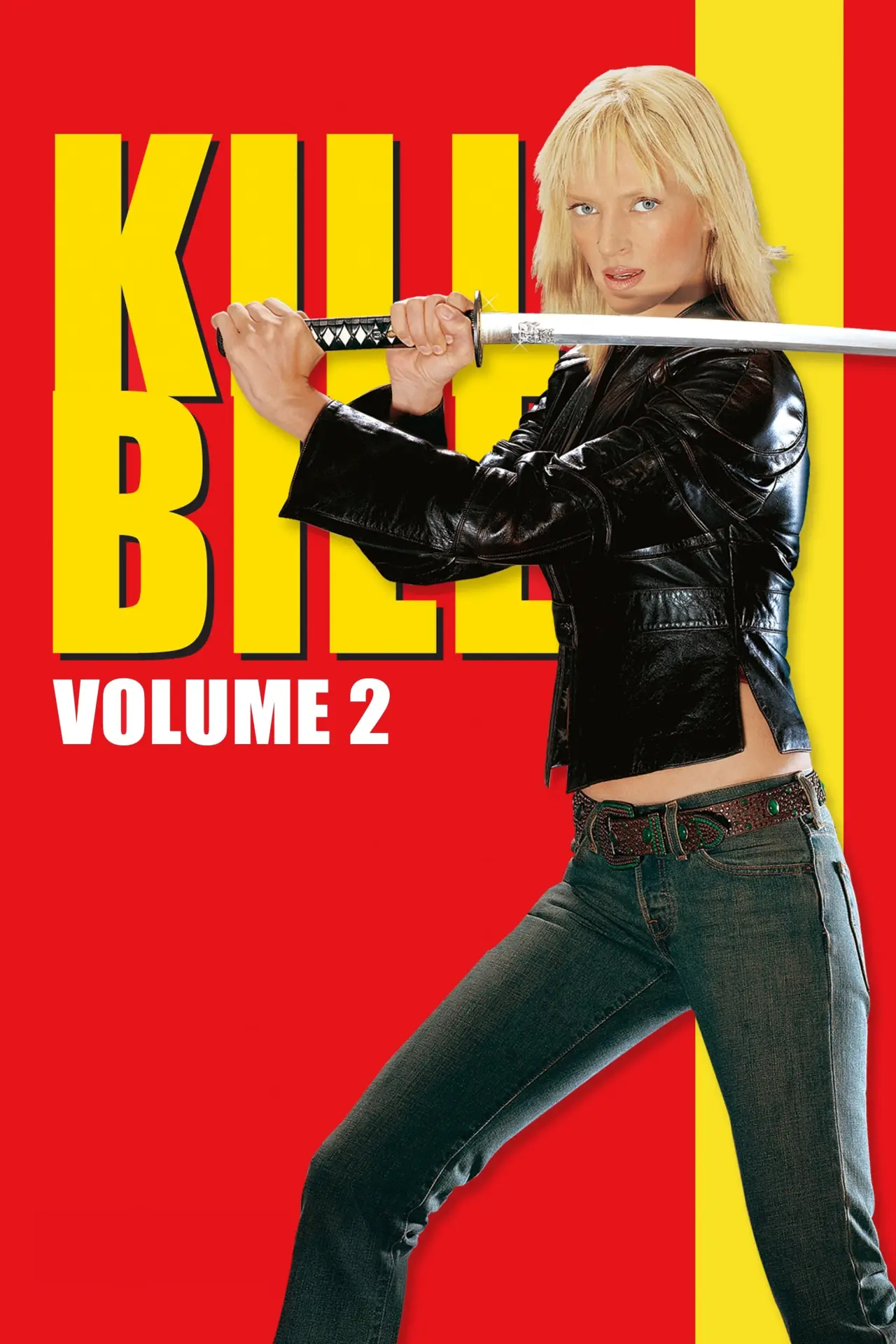
Beatrix Kiddo, the Bride, has already crossed two names off the list of people who tried to kill her on her wedding day. In this second part of her vengeance, she moves on to the remaining members of the Deadly Viper Assassination Squad: Budd, who has left the killing life behind and lives quietly in Texas, and Elle Driver, who has reasons of her own for wanting the Bride gone. Only after those encounters can she reach the man at the top of the list, Bill, her former employer and lover.
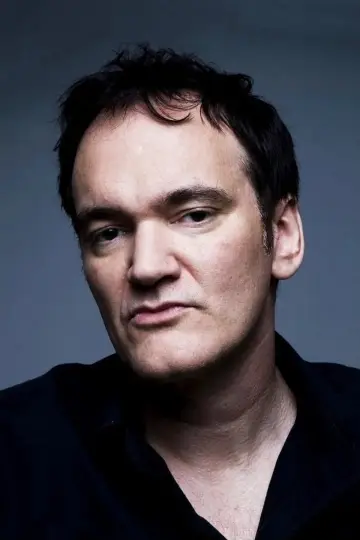
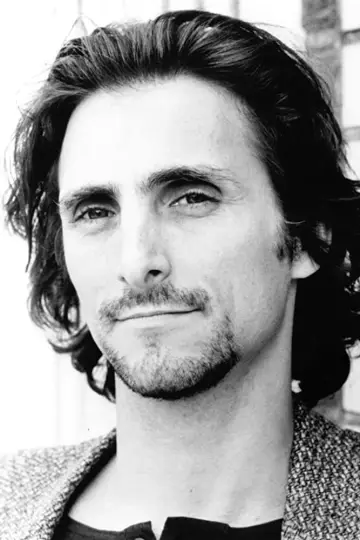
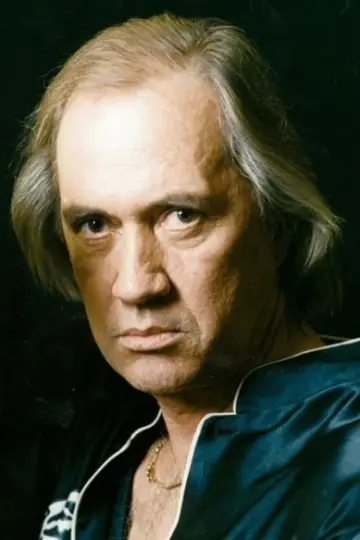
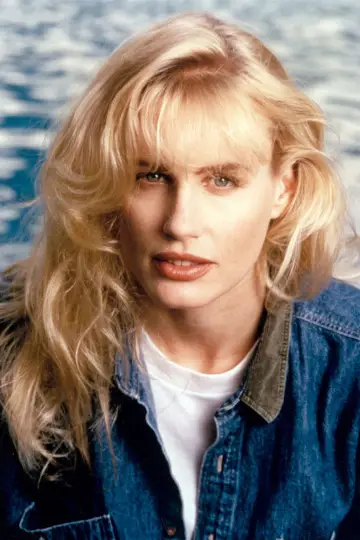
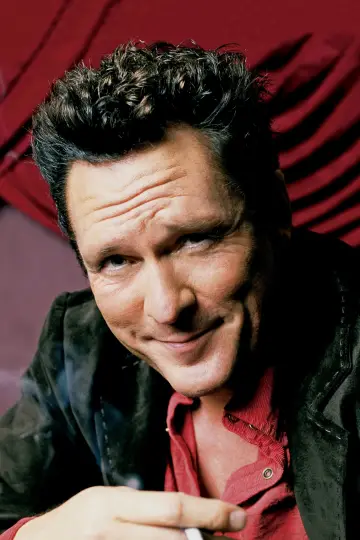
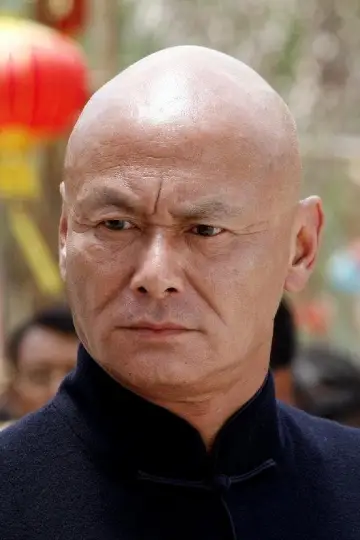
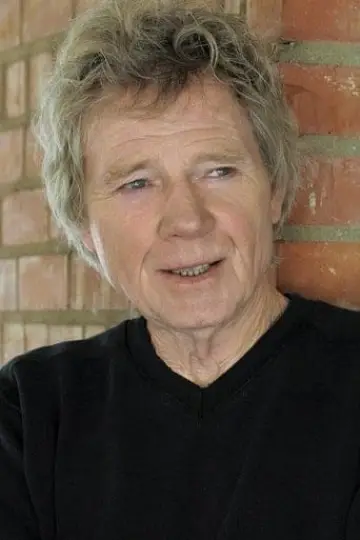
Quentin Tarantino wrote and directed the film, which follows Kill Bill: Vol. 1 from 2003 and is the seventh of the sixteen features he has directed. Uma Thurman returns as the Bride, with David Carradine as Bill, Daryl Hannah as Elle Driver, Michael Madsen as Budd and Gordon Liu Chia-hui and Michael Parks in supporting roles. Lawrence Bender produced. The 136-minute film was made for about 30 million dollars and took roughly 152 million dollars worldwide.
On IMDb it holds 8 out of 10 from around 865,000 votes, and on TMDB 7.9 out of 10 from more than 15,000 votes. A film critics' rating of 8.1 out of 10 from 247 reviews places it slightly above both audience scores.
What's left behind the scenes
- In real life, Elle Driver's car – a 1980 Pontiac Trans-Am – belongs to Daryl Hannah.
- The film contains several references to "Pulp Fiction" (1994), including: — In the scene where The Bride talks to the hitman sent to her, she says: "I am the most dangerous woman in the world." In the pilot episode of the series featuring Mia Wallace (Uma Thurman), her character was described in exactly the same way.
- Before the sixth chapter's title was changed from "Can She Bake a Cherry Pie?" to "Massacre at Two Pines," Samuel L. Jackson's wife, LaTanya Richardson, was supposed to play the casino owner who dies at the hands of Bill.
- The white “Honda” that Butch crashed in “Pulp Fiction” (1994) and which also appeared in “Jackie Brown” (1997) can be seen in the parking lot near the strip club where Budd works.
- Quentin wrote one of the scenes already during filming. It replaced a rather risky moment involving L.F. O'Boyle. This scene in the final version of the film became the Bride's memories of one of the first murders committed by Bill himself.
- Ellie says: 'Now listen carefully, because this concerns you.' Samuel L. Jackson's character says the exact same phrase in the film 'Jackie Brown' (1997).
- The initial posters for the film read: 'Quentin Tarantino's Fifth Film'. On subsequent posters, this slogan was replaced with 'Quentin Tarantino's New Film'.
- The 'Revenge of Yuki' chapter was cut from the film to make way for another chapter – 'Massacre Between Two Pines', which details the attack on the Bride.
- There are two references to 'The Searchers' (1956): — The Bride walks onto the porch of a church before meeting Bill. — The Bride walks out of Budd's trailer after the fight with Elle Driver. This shot is identical to the final shot from 'The Searchers', where John Wayne walks into the desert before the door of the house closes.
- Quentin Tarantino is known for his dislike of product placement, so he always uses fictional brands in his films. However, this film was an exception: the bread Bill uses for sandwiches while telling the story about Emilio – BIMBO – is a real, very popular bread brand in Mexico.
- During the wedding rehearsal, Bill says to the Bride: 'I don't care who marries my girl.' This is a reference to 'His Girl Friday' (1940), where the same phrase is spoken by Cary Grant's character.
- When the Bride and Bill are lying in bed, the series "Shane" (1966), featuring David Carradine in one of the roles, is playing on television.
- The cartoon that B.B. and The Bride watch together at the end of the film is "The Talking Magpies" (1946).
- Among the options for the final battle, Bill suggests a traditional sword fight on the beach at sunrise to The Bride, which is a reference to the last duel in Hiroshi Inagaki's samurai trilogy, "Samurai 3: Duel on the Island" (1956).
- The story of Master Pei Mei's fate is told with the help of a flute, set to music from Prokofiev's fairy tale 'Peter and the Wolf'. Pei-Mei means 'White Brow'.
- Ellie Driver's eye patch is a reference to Jack Hill's film “Switchblade Sisters” (1975). Sid Haig, who often appeared in Jack's films, played the role of a bartender in the strip club where Budd works in this film.
- In Budd’s trailer, a poster for the film "Mr. Majestic" (1974) can be seen. In "True Romance" (1993), which Quentin Tarantino wrote the screenplay for, Drexel (Gary Oldman) calls Clarence (Christian Slater) "Fucking Charles Bronson. Mr. Majestic."
- According to Quentin's idea, choreographer Woo-Ping Yuen was supposed to play the role of Master Pei Mei, but due to health reasons, he was unable to cope with the task. Ultimately, Gordon Liu played the role, having previously played Johnny Mo, the head of the Tokyo assassins' clan, in the first part.
- In the original version of the script, the final showdown between Bill and The Bride was to take place on a beach under the moonlight. The Bride was to be wearing her wedding dress. When it became clear that filming was taking an unacceptably long time, Harvey Weinstein demanded that Tarantino rewrite the ending to shorten the shooting period. In the finished film, Bill only briefly mentions such a duel, and on the film's posters, The Bride is depicted in a wedding dress holding a sword.
- The turquoise car that the Bride drives is a Volkswagen Type 14 "Karmann-Ghia." Based on its appearance, the car should have been manufactured around 1970 by the Brazilian division of "Volkswagen."
- As the Bride walks onto the church porch, music from the film 'The Good, the Bad and the Ugly' (1966) plays.
- In the first draft of the script, the Bride did not gouge out Elle Driver's only eye, but slit her throat.
- In the final scene of the film, Uma Thurman sits on the couch in the same way as her character did in "Pulp Fiction" (1994).
- The license plate of Bill's jeep when he brings the Bride to Pai Mei is "THX 1169," which is a reference to George Lucas's film "THX 1138" (1971).
- When the elementary school teacher takes attendance, she calls out Marty Kitrosser among other names. Marty Kitrosser was the supervisor for all of Quentin Tarantino's screenplays.
- The image of Pay May is based on the actor Kung Fu Pan.
- In all scenes between Budd and the Bride, the latter never utters a single word.
- The protagonist is buried alive and, to escape, begins to beat on the coffin lid with her fists. The blows leave traces of her blood on the lid due to the torn bones in her fingers. When the protagonist finally manages to escape, she goes to a cafe, where she places her hands on the bar, and it can be noticed that the bones in her fingers are not damaged at all.
- Larry calls Budd useless, like an ass on an elbow. Larry Bishop uttered the exact same phrase in "The Savage Seven" (1968).
- In this version, The Bride does not have the 'Pussy Wagon', as in the original script, Yuki Yubari, Go-Go's sister, destroys it some time after the murder of Vernita Green.
- Bill's car, which he drives to Budd's, is an Italian concept car, the 'De Tomaso Mangusta'.
- As the Bride walks into Bill's room, she passes several clerks from the staff. One of them is Lawrence Bender, the film's producer.
- The name of Bill's truth serum – “Undisputed Truth” – echoes the name of a 1970s soul group.
- The music playing in the scene where The Bride climbs out of the grave is taken from the film "Mercenario, Il" (1968).
- According to Bill (David Carradine), the Bride (Uma Thurman) is a natural-born killer. Quentin Tarantino wrote the screenplay for 'Natural Born Killers' (1994).
- Julie Dreyfus offered two musical compositions for the film. The first, "The Chase," plays during the scene where Elle drives to Budd; the second, "The Sunny Road To Salina," accompanies the Bride's walk across the desert to Budd's trailer.
- Chapter number 8 proudly bears the title 'Paula Schultz's Lonely Grave'. The chapter is named after the 1968 film 'The Incredible Dream of Paula Schultz', a romantic comedy in which Elke Sommer played the role of Paula and Bob Crane played the role of Bill.
- Bill (David Carradine) plays a large wooden flute. It's the same flute that David's character played in the 'Kung Fu' series (1972).
- Esteban (Michael Parks) tells The Bride that Bill's villa is on the road to Salina. This is a reference to Rita Hayworth's film "Road to Salina" (1971).
- The music playing during Bill's death scene is the main musical theme from the film "Navajo Joe" (1966), which can also be heard in "Reservoir Dogs" (1992).
- In the final conversation between The Bride and Bill, she says she was ready to jump onto a moving train on a motorcycle. This is a reference to a stunt performed by Michelle Yeoh in "Police Story 3: Supercop" (1992).
- Bill's gun is a Colt Single Action Army, the 'Peacemaker'.
- The film contains several references to "Reservoir Dogs" (1992), including: — The Bride pulls a blade from her cowboy boot. Mr. Blonde (Michael Madsen) does the same in "Reservoir Dogs." — In a conversation between The Bride and Bill, the latter says that a gunshot wound to the knee is very painful. In "Reservoir Dogs," Mr. White (Harvey Keitel) tells Mr. Orange (Tim Roth): "Wounds in the knee and stomach are always the most painful wounds." — Budd (Michael Madsen) stands in the doorway of his trailer in the same pose as Mr. Blonde in "Reservoir Dogs" (1992).
- Several scenes with Michael Jai White were filmed for the film, but they did not make it into the final cut. The only scene featuring his character is available on the DVD in the "Deleted Scenes" section.
- Initially, Quentin Tarantino intended to create an imitation of a bad dub of Pay May: while he speaks Cantonese, the audience hears a dubbed English version. Tarantino was going to provide his own voice for the dubbing, but ultimately decided that Pay May should speak his native language, and the audience should read subtitles.
- On her way to Budd's trailer (after climbing out of the grave), the Bride walks through the desert. Her figure gradually transforms from a blurry image into a clear silhouette. This is a reference to Henry Fonda in "Once Upon a Time in the West" (1968).
- Unlike previous Quentin Tarantino films (including 'Kill Bill Volume 1'), the end credits do not begin with the title 'directed and written by Quentin Tarantino'. His name appears last, before the regular end credits begin to roll.
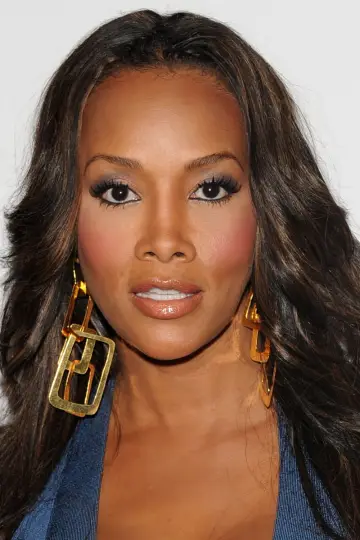
- After the film's release, Quentin Tarantino stated that he would definitely make two more films about the "Kill Bill" universe someday. The first would tell the backstory of "DiVAS" and would be made as an anime. The second would take place in the future, where Vernita Green’s (Vivica A. Fox) grown-up daughter, Nikki (Ambrosia Kelley), attempts to avenge her mother’s murder by taking revenge on the Bride.
- Bill's apartment number in Mexico is 101. The same apartment number was used for Neo in "The Matrix" (1999). Yuen Woo-ping choreographed the fight scenes for both films. Furthermore, room 101 is a reference to George Orwell's book "1984," where the room is inhabited by what you fear most. Room 101 in Orwell's novel is a torture chamber located in the Ministry of Love. The Party uses it to subjugate prisoners by using their greatest fears and phobias as punishment.
- Bill's reasoning about Superman is partly based on Jules Feiffer's book 'The Great Comic Book Heroes'.
- In one interview, Quentin Tarantino confirmed that the image of Elle Driver was based on Christina Lindberg's character in "Thriller – en grym film" (1974).
- We learn that Bill was five years old when he watched "The Postman Always Rings Twice" (1946) in the cinema, therefore, it can be assumed that he was born in 1941.
- When Bill begins to tell the legend of Pai Mei, he says: "Once upon a time in China..." (Once upon a time in China...). One of Jet Li's films is called "Once Upon a Time in China" (1991).
- Uma Thurman wears a Rolex Daytona watch.
- The brothers played by David Carradine and Michael Madsen are named Bill and Budd. The main character of Herman Melville's novel was named Billy Budd.
- The music playing during the moment Budd shoots the Bride is borrowed from the film 'A Fistful of Dollars' (1964).
- Wait until the end of the credits, as there is a short scene afterwards.
- The cigarettes smoked in the film are "American Spirits." Their logo can be noticed in close-ups of various characters. The film also features a fictional cigarette brand, "Red Apple," which Tarantino uses in all of his films.
- Robert Rodriguez received a fee of $1 for several musical compositions for the film. Quentin Tarantino received the exact same fee for his work on "Sin City" (2005).
- The film was first shown in a city called Austin, Texas. It concluded with a five-minute storm of uninterrupted applause. The impression was so great that producer Harvey Weinstein refused to make any changes to the final version of the film.
- The schnapps bottle that Budd holds during his conversation with Bill is called "Black Death".
- After the fight between Elle and The Bride, Elle, writhing in pain on the floor, screams and throws objects almost exactly as Pris from "Blade Runner" (1982) did, a role also played by Daryl Hannah.
- In Pei Mei's script, she is a master of ten-finger technique, breaking hearts; in the film, she is a master of five-finger technique, breaking hearts.
- Pay May appears in several films by the Shaw brothers, including 'Clan of the White Lotus' (1980).
- Bill's car license plate is JE2336. It isn't shown in the film itself, but is clearly visible in photos from the set.
Similar movies


 Auditions in India
 Casting calls in USA
 Castingi w Polsce
 Кастинги в Україні
