The Mist
Fear changes everything.



Country
Genre
Budget
$18 000 000
Revenue
$57 293 715
Director
Actors
Scenario
Producer
Frank Darabont, Liz Glotzer, Bob Weinstein, Harvey Weinstein, Denise M. Huth, Randi Richmond, Anna Garduno, Richard Saperstein
Operator
Rohn Schmidt
Composer
Artist
Gregory Melton
Audition
Deborah Aquila, Jennifer L. Smith, Tricia Wood
Editing
Hunter M. Via
All team (68)
All team (68)
Short description
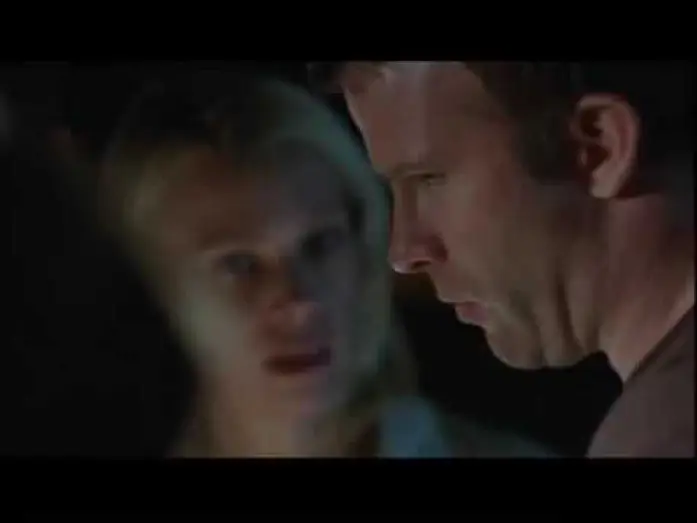
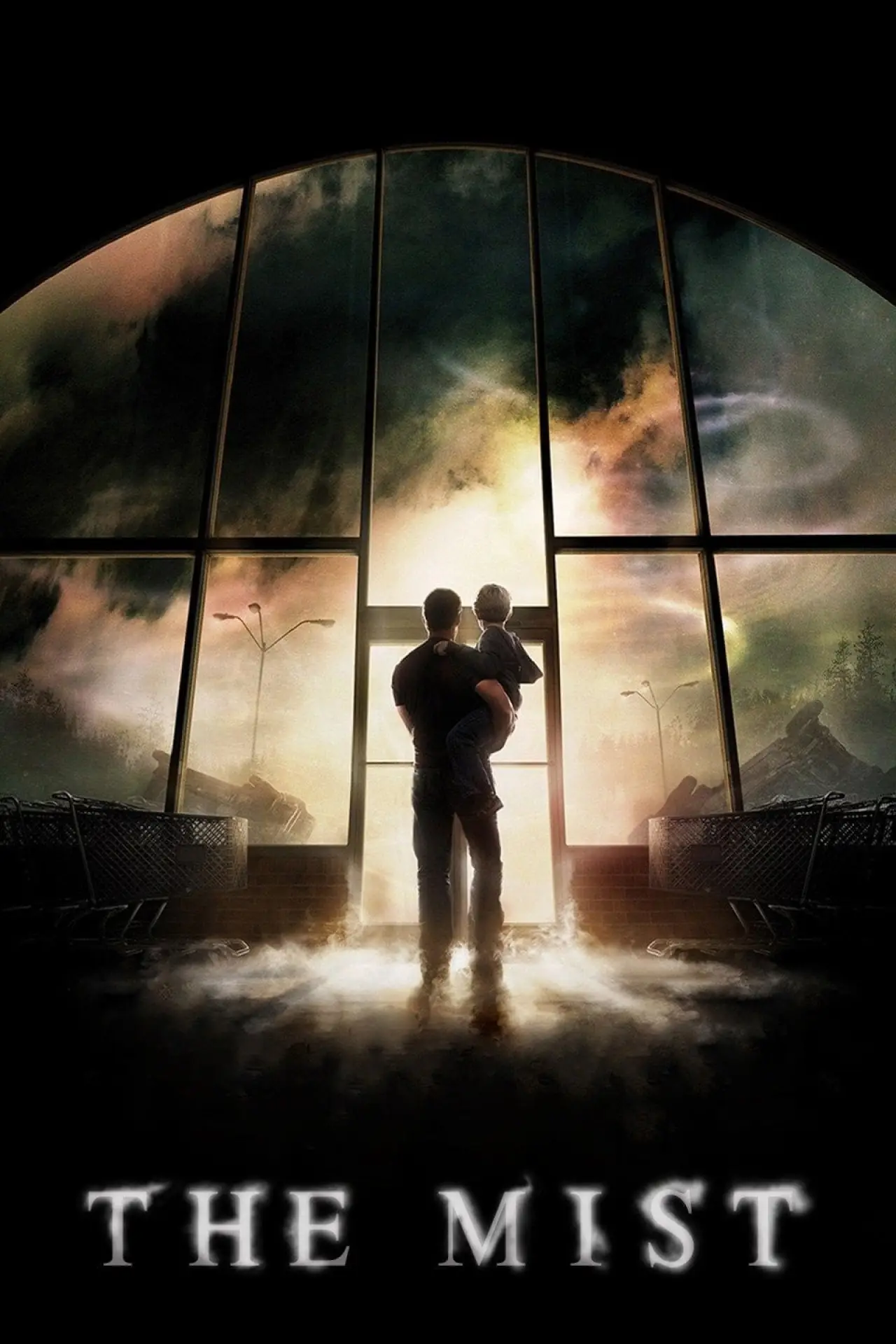
After a violent storm, a dense cloud of mist envelops a small Maine town, trapping David Drayton and his five-year-old son in a local grocery store with other local residents. They soon discover that the mist conceals deadly horrors that threaten their lives, and worse, their sanity.
What's left behind the scenes
- William Sadler voiced David Drayton in the audiobook version of the novel.
- Initially, Frank Darabont wanted to make the film in black and white. The second disc of the American two-disc gift edition contains a black-and-white director's cut of the film.
- Frank Darabont wanted Stephen King to play a cameo role in the film – a biker was envisioned for him. However, the King of Horror declined the offer, and Brian Libby ultimately played the part.
- The film, like much of Stephen King's work, takes place in the state of Maine. However, all the outdoor scenes were not shot in Maine, but in Minden, Louisiana. To Frank Darabont's great delight, when Stephen King watched the film, he did not notice that it was not filmed in Maine.
- Frank Darabont's original script included an introductory episode showing a military scientist, mentioned by Corporal Jessup, accidentally opening a portal to another dimension, allowing the mist and monsters to enter our world. During lunch one day, actor Andre Brouwer asked the director if this episode was really necessary. Frank Darabont seriously considered this and, a week later, decided to remove the episode, leaving the nature of the mist and monsters less clear.
- The film's ending, which provoked a mixed reaction from viewers, is actually based on Stephen King's original novella: it contains a moment where David Drayton suggests such a development of events. Frank Darabont decided that the novella’s ambiguous ending was unsuitable for the film and expanded the story to a tragic climax. After watching the film, Stephen King was satisfied and confirmed that it was precisely the ending implied in the novella.
- Although the film is implied to take place in the state of Maine, the overturned patrol car that David drives past on the highway is painted yellow and white, the colors of the Illinois State Police. Police cars in Maine use blue coloring.
- The film is based on Stephen King's novella "The Mist" (1980).
- There is a geographical error in the film. The fire truck passing by the supermarket is labeled "Caddo Parish." However, Caddo Parish is not located in Maine (where the film takes place), but in Shreveport, Louisiana (where the filming took place).
- William Sadler, Jeffrey DeMunn, and Brian Libby appeared in all three films directed by Frank Darabont based on the works of Stephen King ("The Shawshank Redemption", "The Green Mile", "The Mist").
- At the beginning of the film, a poster for "The Thing" can be seen with Thomas Jane's character, and he himself draws a poster – an illustration for Stephen King's famous "The Dark Tower" cycle. In particular, Roland and Eddie can be seen there. This is a reference to Drew Struzan, the artist who drew many posters and artwork for all of Darabont’s films, as well as the poster for "The Thing".
- Mrs. Carmody’s line, “My life for you,” is a reference to several Stephen King books featuring the embodiment of cosmic evil named Randall Flagg. This phrase is spoken by different characters when pledging allegiance to Flagg in the books "The Stand" and "The Eyes of the Dragon", as well as in novels from "The Dark Tower" cycle.
- The pharmacy next to the supermarket is called “King’s Pharmacy” – a reference to the author of the original novella, Stephen King. King himself once played the role of pharmacist Dr. Bangor in the film adaptation of his novel "The Thinner".
- Frank Darabont wanted to adapt King’s novella “The Mist” since 1980, when he first read it as part of the collection “Night Shift”. He wanted this film to be his directorial debut, but he had to start filming "The Shawshank Redemption" based on another of King’s novellas.
- In the novel, the married protagonist, David Drayton, has a sexual affair with a married woman named Amanda Dumfries. Darabont did not want their affair to be depicted on screen. The film's characters, played by Thomas Jane and Laurie Holden, have a much stronger, emotional connection. Jane says of the characters, "We kind of create a new family—Amanda becomes my wife and Billy's mother. This nightmare that we’re trying to get out of together bonds us."
- Although the monsters were described in just a few lines in the novel, it was important to Darabont to create monsters with a memorable design. Greg Nicotero carefully studied the history of the genre to avoid repetition and similarity. After the designers finished their work, the creators of the monsters showed the puppets to the actors with their "mimicry"—the movement of their eyes and mouths. This later helped the actors perceive the monsters more vividly and, from an acting perspective, believably.
- Initially, Frank Darabont decided not to film an episode from the original novella in which David Drayton and those traveling with him in the car see a gigantic six-legged monster pass overhead, fearing that the scene could not be made convincing; this episode was not in the original script. However, during filming, several special effects artists from "Café Effects" studio persuaded the director to still include this episode in the film, managing to convince him that they could handle this difficult task.
- During the first encounter with the monsters in the store, Joe Eagleton knocks over a rotating ornate bookshelf filled with books. All the books on it are editions of Stephen King's works (the novel 'Cell' and others).
- Frank Darabont decided he wanted to minimize the use of music and sound effects to convey a far more "oppressive ending" to the film than the original ending of the novel. The director explained this by saying that, in his view, "silence can be more frightening than strange noise; a whisper is scarier than a bang, and we wanted to bring this ratio into harmony. We minimized the sounds so that, in the perception of viewers, the film would appear almost documentary-like." For the film's ending, Darabont used the composition "The Host of Seraphim" performed by Dead Can Dance—music based on stylized Gregorian chant. As a fan of the band, Darabont stated that this composition would be a kind of "requiem for all mankind."
Similar movies
8/10
7.9/10
7.9/10
7.9/10
7.9/10
7.8/10
7.7/10
7.6/10
7.5/10
7.5/10


 Auditions in India
 Casting calls in USA
 Castingi w Polsce
 Кастинги в Україні
