Crimson Tide









Short description
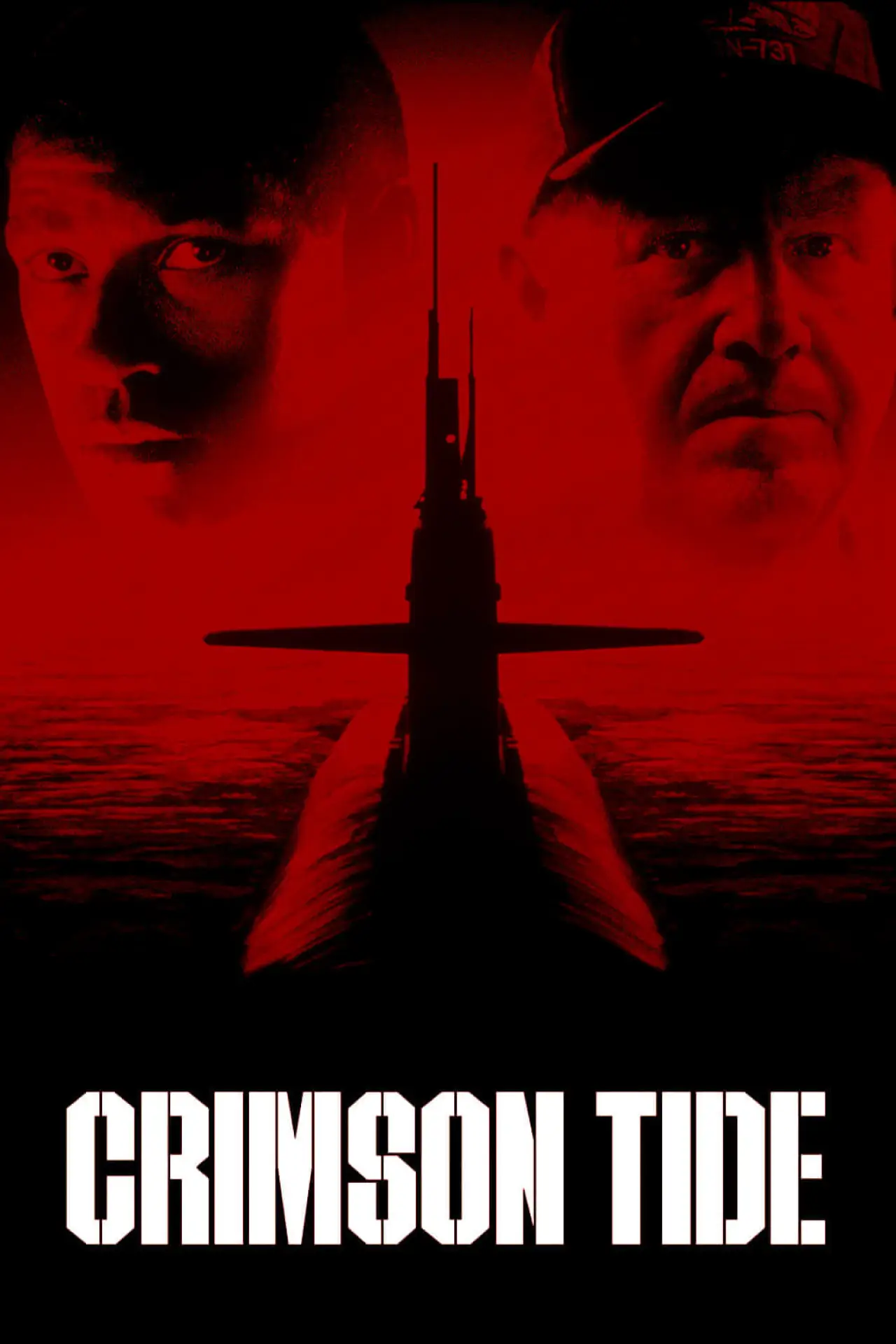
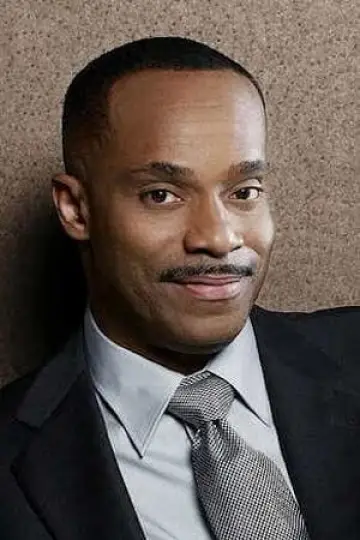
Set aboard the U.S. nuclear submarine USS Alabama, Crimson Tide follows the escalating conflict between its seasoned commanding officer, Captain Frank Ramsey, and his newly assigned executive officer, Lieutenant Commander Ron Hunter. When a breakaway Russian republic threatens the world with captured nuclear weapons, the Alabama receives an order to launch missiles. A second, partially received message leaves the order open to question, and the two men disagree sharply over whether to act. Their standoff spreads through the crew, splitting the boat.
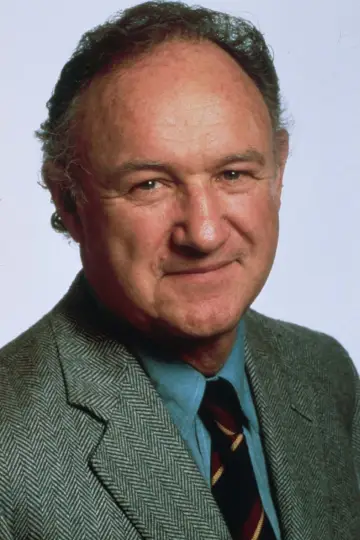
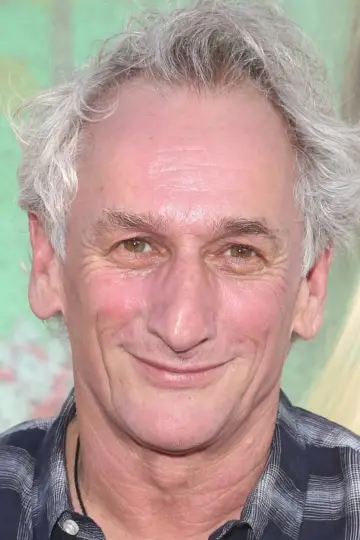
Tony Scott directed this eighth of his sixteen films, following True Romance and preceding The Fan, from a screenplay by Michael Schiffer and Quentin Tarantino. Denzel Washington plays Hunter opposite Gene Hackman as Ramsey, with Matt Craven, George Dzundza, Viggo Mortensen and James Gandolfini among the supporting cast. Produced by Jerry Bruckheimer and Don Simpson for roughly 53 million dollars, it took about 157 million dollars worldwide.
Audience response has stayed solid: it holds a 7.3 on IMDb across some 120,000 votes and a 7.2 on TMDB, indicating a widely seen film that viewers rate favorably. A critics' rating of 7.5 from 55 reviews places it somewhat above those audience scores, though all three sit close together, suggesting broad agreement rather than sharp division.
What's left behind the scenes
- The submarine featured in the film, the 'AKULA', can be interpreted as either Project 971 'Shchuka-B' (NATO: 'Akula-B') or Project 941 'Akula' (NATO: 'Typhoon'), but its appearance identifies it as a Project 971.
- At the beginning of the film, the correspondent reports on the situation in Russia. In the "chronicle" footage, interspersed with shots from Chechnya and other "hotspots" of the former USSR, one can notice American AH-64D 'Apache' helicopters (with the narrator saying “militants seized an area near Vladivostok”), a landing of troops from a C-5 'Galaxy' aircraft, and a stealth bomber F-117 departing from an aerial tanker.
- Director Tony Scott (1944-2012) illegally obtained footage of the US Navy submarine 'Alabama' departing from Pearl Harbor. In violation of all instructions and regulations, a civilian source informed him of the day and time of the 'Alabama's' departure to sea. To film the submarine surfacing, Scott had a helicopter and a filming crew with cameras at the ready. It is claimed that the captain of the 'Alabama' requested shore services to remove the filmmakers, but then simply gave the order to surface. The US Navy attempted to legally contest the filming of the submarine without official permission, but was unsuccessful. In fact, Scott simply hoped to film some 'Ohio'-class submarine on the surface, and no one expected it to be the 'Alabama' specifically.
- The US Navy considered the film's plotline highly dubious and inaccurate and refused to provide any assistance to the filming.
- The situation with the executive officer's refusal to agree to the decision to launch nuclear missiles based on an incomplete order is based on an incident that occurred in the Soviet Navy. During the Cuban Missile Crisis, the Soviet submarine B-59 (Project 641 or Fox Trot class) attempted to break through the island's blockade while submerged. At the depth the submarine was operating, there was no communication with command. American destroyers began dropping depth charges to force the boat to surface, and its captain, Valentin Savitsky, decided that military action had begun between the USSR and the USA. He was supported by political officer Ivan Maslennikov, while Savitsky's deputy, Vasily Arkhipov, held a different opinion. Launching nuclear missiles required the consent of all three senior officers and coordinated action. Arkhipov convinced Savitsky to give the order to surface, and on the surface the submarine found itself surrounded by American destroyers. Communication with Moscow was restored, and the submarine received orders to return to base. This is how a nuclear exchange was prevented.
- Screenwriters Don Simpson (1943-1996) and Jerry Bruckheimer one evening called Robert Towne regarding a key scene involving Denzel Washington and Gene Hackman. They asked Towne to rewrite the dialogue about the nature of war between the two characters. The matter was so urgent that Towne had to dictate a new version to Simpson and Bruckheimer over the phone.
- The sets for the bridge of the USS Alabama were constructed on a huge hydraulic suspension. When required by the script (for example, to show diving), the set was tilted as much and in the direction as needed.
- The sonar panels shown in the film have nothing to do with the real instrument. They were made that way solely for visual effect.
- In the film, Russia is consistently referred to as the "Russian Republic." Such a state never existed—after the collapse of the USSR, the Russian Federation was formed.
Similar movies








 Auditions in India
 Casting calls in USA
 Castingi w Polsce
 Кастинги в Україні
