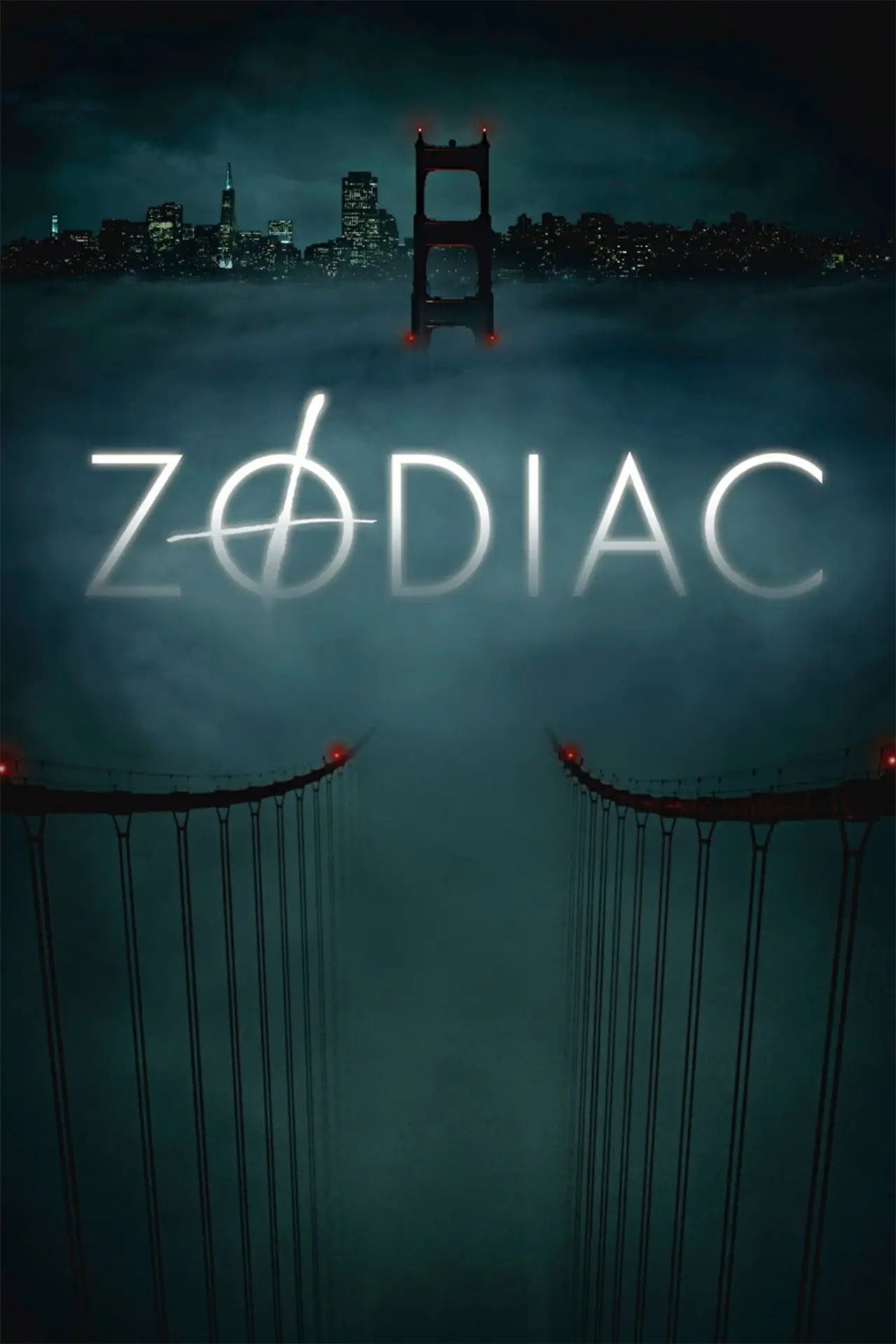
Zodiac
There's more than one way to lose your life to a killer.



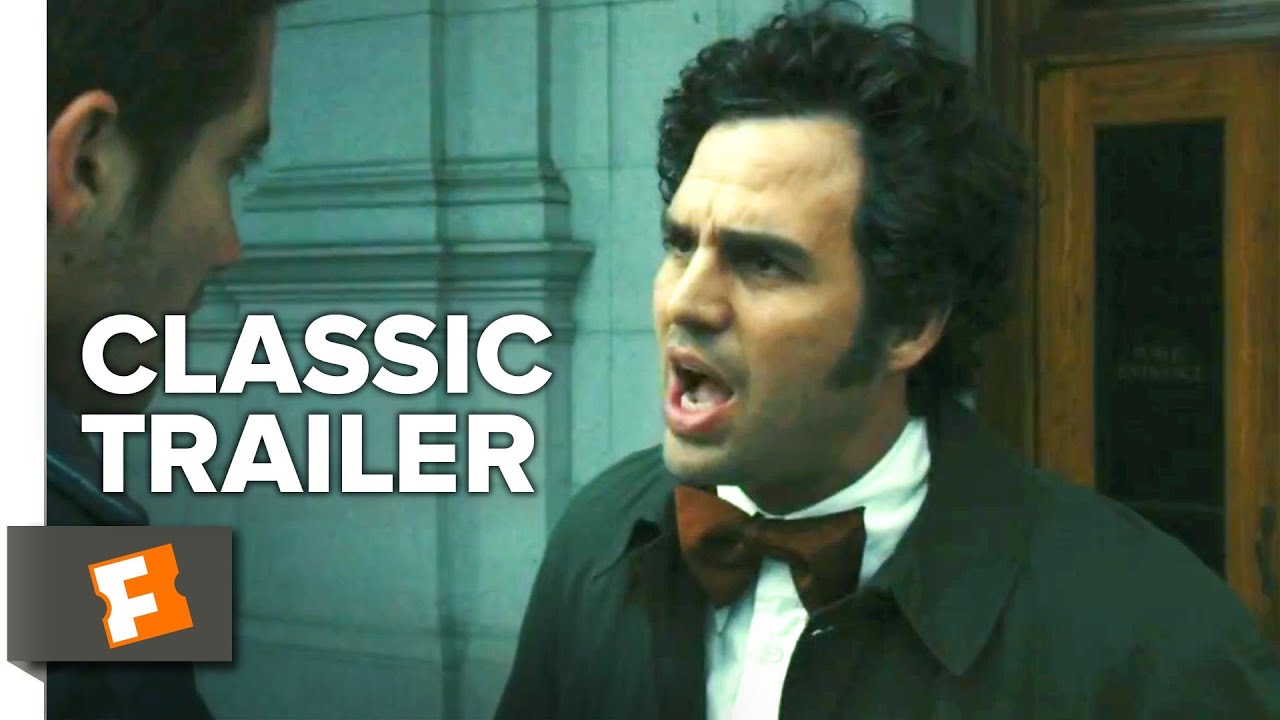
Country
Production
Budget
$65 000 000
Revenue
$84 785 914
Director
Actors
Scenario
Producer
Operator
Composer
David Shire
Artist
Donald Graham Burt
Audition
Laray Mayfield
Editing
Short description
Over the course of a decade, editors of the San Francisco Chronicle entice themselves in the murders of the Zodiac Killer. However, as time runs its course, interest in the case dwindles in the eyes of the professionals. The Killer stops interacting with the public. However, believing he has the answers, an amateur cartoonist from the initial sightings races against time to prevent what he believes is another murder.
What's left behind the scenes
- The producers hired a private detective to locate Michael Mageau – a surviving victim of the real Zodiac Killer.
- Robert Graysmith and Inspector Toschi watch Don Siegel's film "Dirty Harry" (1971) in a cinema. This is followed by an obvious hint that the story of the Scorpio killer from the film was borrowed from the Zodiac case.
- The parents of co-producer and actor Anthony Begonia studied in San Francisco in the same class as one of the future Zodiac victims.
- To save time, David Fincher decided to add all the blood in the murder scenes using computer graphics.
- From the history of events: The Salinas couple deciphered his message. But it was Robert Graysmith, a shy cartoonist, a lover of charades and ciphers, working at the “San Francisco Chronicles” publishing house, who managed to understand the killer’s coded reference to a 1932 film called “The Most Dangerous Game.”
- David Fincher, screenwriter James Vanderbilt, and producer Bradley J. Fischer spent 18 months conducting their own investigation into the Zodiac case. During this time, they interviewed witnesses, family members, suspects, investigators—including those who were already retired—two surviving victims, and the mayors of San Francisco and Vallejo.
- Robert Graysmith and Paul Avery were not actually friends. Their friendship was invented for the film.
- When Mark Ruffalo met David Toschi, the investigator whose role he played in the film, he was very impressed by how perfectly Toschi remembered all the details of each case.
- Filming began on August 8, 2005.
- From the history of events: A month later, on October 11th, the killer appeared in San Francisco. Taxi driver Paul Lee Stine was found dead from a single gunshot to the back of the head in a prestigious district of San Francisco. Three days later, the fifth and most ominous letter arrived at the editorial office: Zodiac informed the police that he could have been caught the previous night. But worse, schoolchildren had come into his field of vision. He said he wanted to blow up a school bus. The city was literally gripped by panic.
- Bryan Calvin Hartnell, a surviving victim of the real Zodiac Killer, made a cameo appearance with his wife in the police station (when Dermot Mulroney's character asked Mark Ruffalo's character if he wanted a hug on the stairs). Bryan and his wife were walking in the background at that moment.
- From the history of events: Three letters addressed to the newspapers “San Francisco Chronicles,” “San Francisco Investigator,” and “Vallejo Herald” brought the entire editorial staff to a standstill. “Dear Editor, it was I who shot…” On December 20, 1968, David Faraday and Betty Lou Jensen on the road to Lake Herman in Solano County, and on July 4, 1969, fatally wounded Darlene Ferrin and attempted to kill Michael Mageau in a parking lot in Vallejo, heading towards Rock Springs. The killer did not reveal their name at the time, but provided a complete list of details that only they and the police could know. Fragments of a cipher were sent to each newspaper, which were supposedly capable of shedding light on the killer’s identity. The text ended with a threat – the letter must be published or new victims will follow.
- The film begins and ends with the Zodiac's surviving victim – a character played by Michael Mageau.
- The American Blu-Ray was released by Paramount Home Video in a very limited edition. For a time, this Blu-Ray became one of the rarest on the market, with used copies in online stores costing around one hundred dollars until Warner Home Video acquired the rights in 2012 and re-released the Blu-Ray the following year.
- Around the 55th minute, on the evening of her abduction, March 22, 1970, Kathleen Johns is driving her car on the highway while Lynn Anderson’s song “Rose Garden” plays on the radio. However, this song was recorded on September 10, 1970, and released as a single only on October 8, 1970.
- David Fincher surpassed many of his colleagues on this project with his perfectionist passion for recreating the smallest details of the depicted era. For example, if you listen closely, during the scene where Robert drives his son to school, you can hear a free Rolling Stones concert on the radio, given on the very day the scene takes place.
- Scenes where David Toschi and Robert Graysmith watch the film "Dirty Harry" (1971) were filmed inside the Mann National Theatre in Westwood, California. The cinema’s vibrant color schemes were not added with graphics – the interior remained unchanged since 1969, when the theater was built. Notably, "Zodiac" was shown at the National in mid-March 2007. Thus, true cinephiles were watching on the National’s big screen, just as the film’s characters sat in that same National. The theater was later demolished.
- Although the film states that the Zodiac cipher was mailed to the "Chronicle", in reality it was sent to the "Examiner".
- The taxi scene at the intersection of Washington and Cherry Streets in San Francisco could not be fully filmed in San Francisco due to filming restrictions and opposition from local residents. Therefore, the production constructed a replica of the intersection in the Downey studio near Los Angeles, including the street, apartments, and crime scene. San Francisco was inserted into the background using computer graphics. The film actually contains only a few seconds of footage from the real crime scene.
- Bijou Phillips initially played the small role of Linda del Buono. However, when it became necessary to reshoot the scene with her, the actress was unable to be present on set. Thus, the role went to Clea DuVall.
- Philip Baker Hall, who played the graphologist Sherwood Morrill, had previously appeared in another film about the Zodiac Killer – "Zodiac" (2003). There, he played the role of Frank Perkins.
- Around the 52-minute mark, on one of Robert Graysmith's books (from 1969), there is a barcode on the back cover. Barcodes did not yet exist; they were not present in any store until the summer of 1974, and most products were without barcodes for several years afterwards.
- Anthony Edwards auditioned for the role of Armstrong because David Fincher wanted the role to be played by a deeply decent person. By that time, Fincher knew him not so much for his work on ER (1994) as for their neighborhood proximity.
- Young screenwriter Shane Salerno began working on the script based on Robert Grace Smith's book when he was 19 years old. Together with Smith himself, he developed and presented several script options to Touchstone Pictures. The project might have come to fruition, but at that time, the company was undergoing continuous personnel changes. Ultimately, all of Salerno's work was scrapped.
- The film was shot in 110 days.
- Jake Gyllenhaal was David Fincher's first choice for the role of Robert Graysmith, and if he had turned it down, the role would have been offered to Orlando Bloom.
- Dave Toschi in real life inspired Steve McQueen when he played his role in the film "Bullitt" (1968). In the film, Graysmith notes that Toschi carries his gun like Bullitt. Avery replies that Bullitt picked it up from Toschi.
- Jake Gyllenhaal was somewhat puzzled when David Fincher gave him a doll and an old-fashioned diaper to prepare for the role of a young father.
- In real life, Melvin Belli never touched the letter sent to him by the Zodiac.
- From the history of events: On September 27, 1969, Zodiac reminded everyone of himself again when, dressed in a hood and carrying a gun and a knife, he fatally stabbed Cecilia Ann Shepard and nearly killed her husband, Bryan Hartnell, during a picnic that the young couple had arranged near Lake Berryessa in Napa County.
- South Korean director Bong Joon-ho called David Fincher's film a masterpiece, adding that it contains no flaws.
- The first murder attributed to the Zodiac, committed on a road along Lake Herman, was excluded from the film because there were no surviving victims to corroborate the details. For greater accuracy, the filmmakers decided not to include the murders at that lake and instead begin with the July 4th crime, considered the Zodiac's second murder.
- The trees had to be delivered to Lake Berryessa by helicopter, as the landscape had changed drastically since 1969, and David Fincher wanted it to resemble the crime scene as closely as possible.
- The working title under which the film was delivered to theaters was “Gemini,” which translates to “The Twins” (a zodiac sign).
- David Fincher had to study approximately 10,000 pages of documents – evidence and witness testimonies; personally speak with those who survived, and talk about those they loved but who did not make it, as well as with the relatives of the main suspect (a former teacher suffering from pedophilia who was fired and imprisoned for showing inappropriate interest in elementary school students).
- Actress Aion Sky appeared in one of the minor roles; her name is not in the credits. The film also features her father Donovan’s song “Hurdy Gurdy Man.”
- In one of the scenes of the morning show, host Jim Dunbar mentions Melvin Belli's appearance in "Star Trek" (1966). But Belli was a guest actor in the 4th episode of the 3rd season of this series, which aired only on October 11, 1968.
- Alan J. Pakula’s "All the President's Men" (1976) served as a model for David Fincher’s film.
- Before approving Robert Downey Jr. for the role of Avery, David Fincher wanted to give the role to Brad Pitt.
- In 2004, the San Francisco Police Department closed the investigation into this case, but reopened it after the film's release in early 2007.
- Dermot Mulroney had to wear a thick suit because David Fincher thought he was in too good shape for his character.
- To achieve the realism of the cityscapes of those years, modern buildings that appeared in the frame were removed in post-production.
- The victims' costumes were meticulously recreated based on materials from the court case, which were borrowed for the production.
Similar movies
9/10
8.7/10
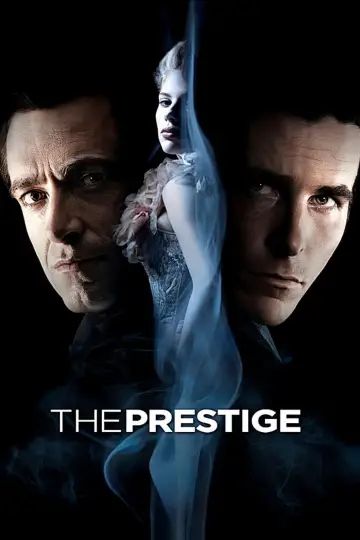
8.5/10
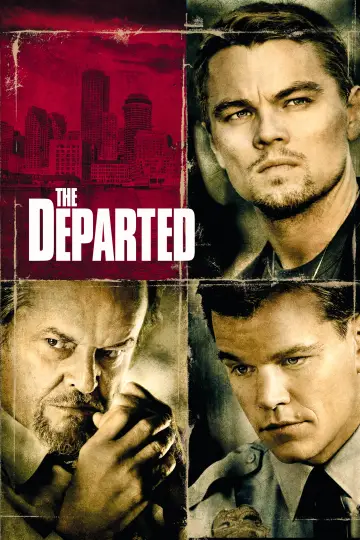
8.5/10
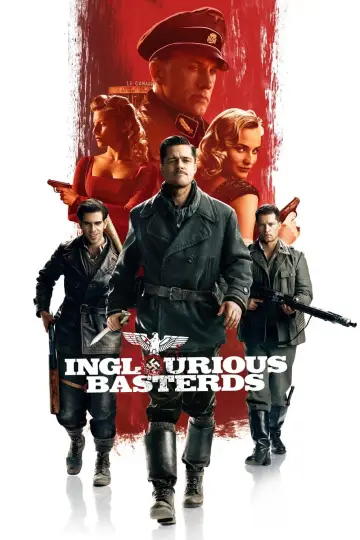
8.3/10
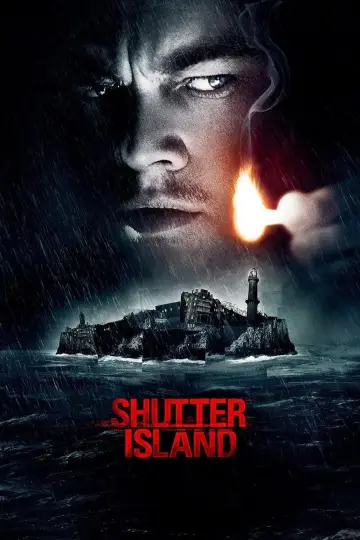
8.3/10
8.3/10
8.2/10
8.1/10
8.1/10


 Auditions in India
 Casting calls in USA
 Castingi w Polsce
 Кастинги в Україні
