The Theory of Everything





Short description
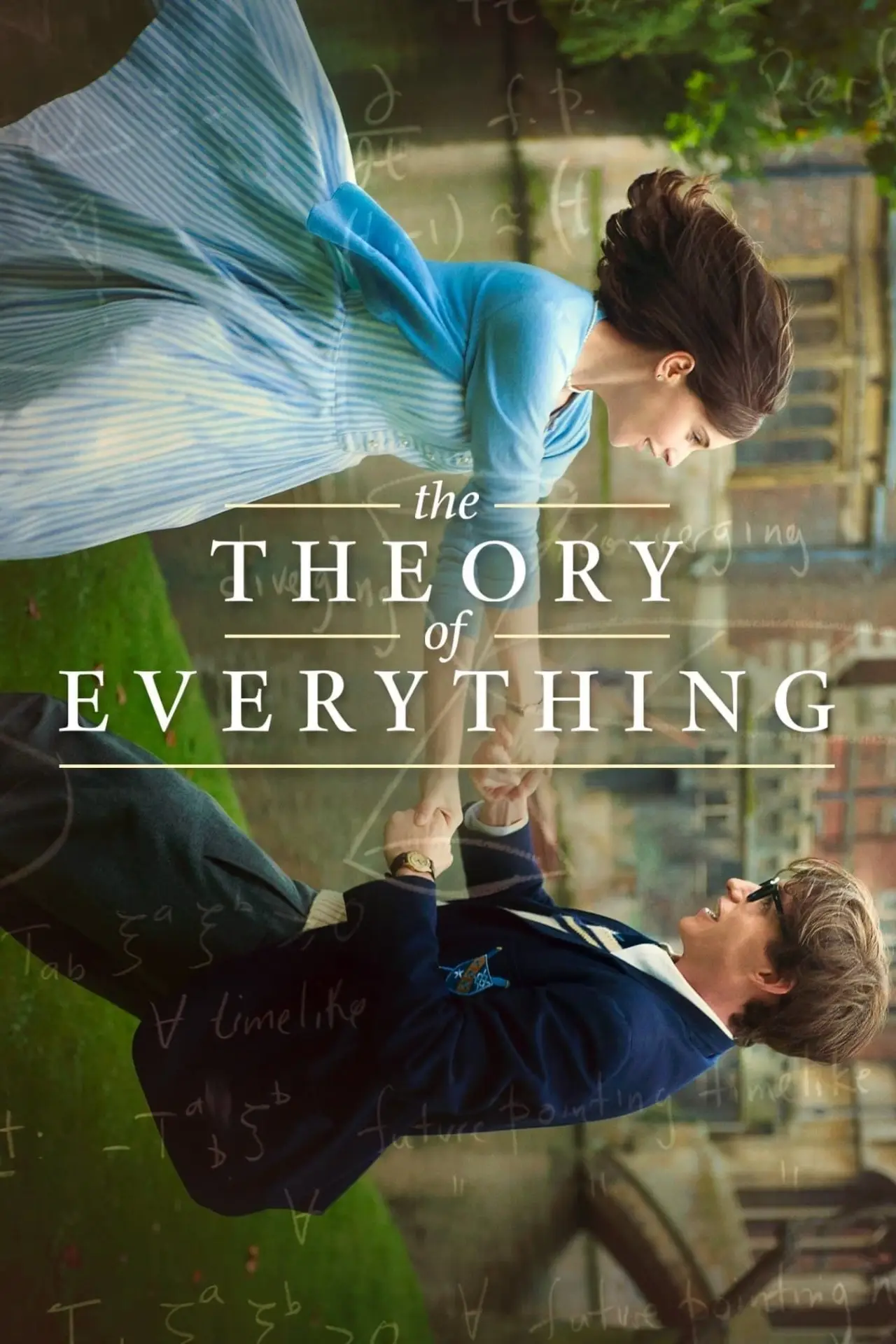
The Theory of Everything is a British-American drama about the physicist Stephen Hawking and his relationship with Jane Wilde. They meet as students at Cambridge in the 1960s, where he is absorbed in cosmology and the nature of time, and she is studying languages. Their growing romance is disrupted when, at twenty-one, he is diagnosed with a degenerative nerve disease and told he has only a short time to live. Jane stays with him and becomes his wife, supporting him as his body progressively fails while his scientific reputation grows.
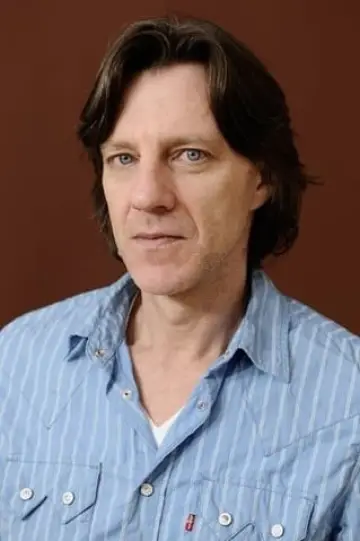
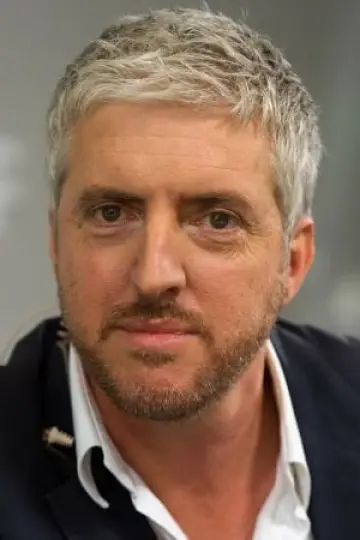
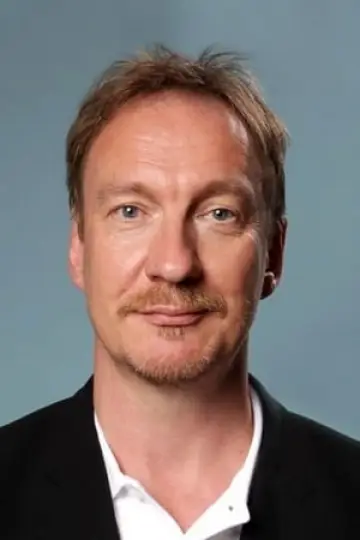
James Marsh directed the film, working from a screenplay by Anthony McCarten. It sits between Shadow Dancer and King of Thieves in Marsh's filmography. Eddie Redmayne plays Hawking and Felicity Jones plays Jane, with Charlie Cox, Emily Watson, Simon McBurney and David Thewlis in supporting roles. The production had a budget of 15 million dollars and took in about 124 million dollars worldwide, a strong return.
Audience responses were warm: on IMDb it holds 7.7 from roughly 507,000 votes, and on TMDB 7.8 from over 11,000. A critics' rating of 7.3 from 269 reviews places it somewhat below the audience scores, though all three measures indicate broadly favourable reception. Running 123 minutes, the film focuses on the marriage and the illness rather than on Hawking's scientific ideas in detail.
What's left behind the scenes
- After watching the film, Stephen Hawking sent director James Marsh an email, in which he praised Eddie Redmayne’s portrayal of him, saying that at times it felt as though he was seeing himself on screen.
- In addition to his voice (which is copyright protected), Stephen Hawking also provided the filmmakers with his Medal of Freedom and his dissertation.
- Before filming began, Eddie Redmayne met Stephen Hawking only once. During their three-hour conversation, Redmayne was unable to ask Hawking a single personal question. Ultimately, he found other ways to prepare for his role. The actor lost around 7 kilograms and trained with a dance instructor for four months to learn how to control his body. He visited 40 people suffering from amyotrophic lateral sclerosis. And during filming, he remained motionless with a hunched back even between takes, which ultimately led to the actor developing a curvature of the spine.
- It took screenwriter Anthony McCarten 10 years to bring this story to the big screen. Of those, he spent three years trying to convince Jane Hawking to agree to a film adaptation of her book.
- Just like Stephen Hawking, Eddie Redmayne studied at Cambridge University.
- The film's soundtrack was recorded at Abbey Road Studios.
- Initially, Lesley Manville was cast in the role of Queen Elizabeth II, but her character was ultimately removed from the film.
- The phone number on the napkin begins with the Cambridge telephone code – 0223 – which was only introduced several years after the events depicted in the film.
- During the lecture in London, three requirements of the Hawking-Penrose theorem can be seen on the upper board behind Penrose. This theorem was not published until 1970.
- When Jane receives a letter from Stephen, a microphone reflection can be seen in the upper right corner of the screen.
- When Stephen looks at the napkin on which Jane wrote her number, it can be noticed that the handwriting differs in different frames.
- When Stephen Hawking's life is rewound in reverse, it is visible that the scenes of him falling ill at the Wagner concert and the footage of his surgery are mixed up.
- In the scene at the summit, after the release of his book, Stephen Hawking sees a young woman drop her pen. Afterwards, in his imagination, he gets up from his wheelchair to pick up the pen. However, in the overall shot he picks it up with his right hand, while in the close-up – with his left.
- When the train traveling from Cambridge to London is shown, it features liveries from the southern region, which are not found on trains running the Cambridge-London route.
- When Jane is talking to Stephen on the phone, a ring can be seen on the ring finger of her left hand. Later, during the croquet game, the ring appears on the ring finger of her right hand, after which it disappears completely until the scene of their wedding.
- During the ball, the constellations Sagittarius and Scorpio are visible in the night sky, however, at the latitudes of Cambridge, these constellations cannot be seen at such an altitude above the horizon.
- When Hawking is shown the laboratory in Cambridge, he is told that it was there that Rutherford became the first person to split the atom. In reality, this happened when Rutherford was head of the physics department at the University of Manchester.
- In the scene where family members drive to Bordeaux in a car, they are driving a Volvo 740 (745) station wagon. At the same time, the film shows that Timothy was still a very young child at that time. This car only went into production in 1984, while Timothy Hawking was born in 1979.
- In the scene where Jane helps Stephen put on a sweater, at the moment Stephen is filmed from the back, the sweater is already on his shoulders, and in the next moment, when filmed from the front, the sweater is only on his neck.
- The film is based on Jane Hawking’s memoir, “Travelling to Infinity: My life with Stephen” (2007).
- Actor Adam Godley, who played the episodic role of a doctor at Cambridge Hospital, played Stephen Hawking’s father in “Hawking” with Benedict Cumberbatch, which was released ten years before this film.
- Harry Lloyd, playing one of Stephen’s friends, is the great-great-great-grandson of writer Charles Dickens. Felicity Jones played the leading female role in the Dickens biopic “The Invisible Woman” (2012).
- The original title of the film is “The Theory of Everything”.
- The phrase “Daisy, Daisy, give me your answer, do,” which Hawking uses while experimenting with his new speech device, is taken from the lyrics of “Daisy Bell (Bicycle Built for Two),” written by Harry Dacre in 1892. This song was used for the very first demonstration of computer-synthesized speech in 1961.
- When Jane Hawking looks at Jonathan Jones standing on the runway, another aircraft (with separate turbofan engines) can be seen in the foreground – it’s a modified Boeing 747 that was used in the film “Casino Royale” (2006). This aircraft is not airworthy and is located at the airfield in Dunsfold (Surrey, UK). Before Jane boards the plane, snowy mountain peaks can be seen in the background, which were clearly added using computer graphics, as there are no mountains in Dunsfold.
Similar movies







 Auditions in India
 Casting calls in USA
 Castingi w Polsce
 Кастинги в Україні

