Strike
Down with autocracy! Long live the democratic republic!
Стачка (1925)


Production
Director
Scenario
Valerian Pletnev
Producer
Boris Mikhin
Actors

Maksim Shtraukh
Police Spy

Grigori Aleksandrov
Factory Foreman
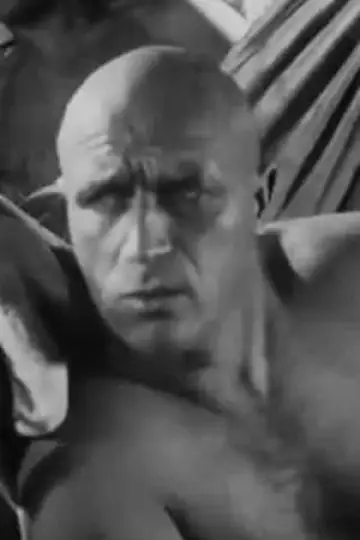
Mikhail Gomorov
Worker
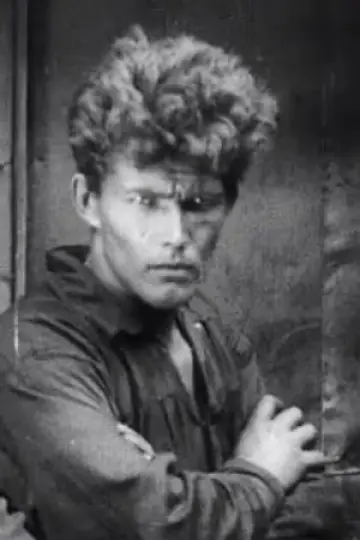
Ivan Klyukvin
Revolutionary
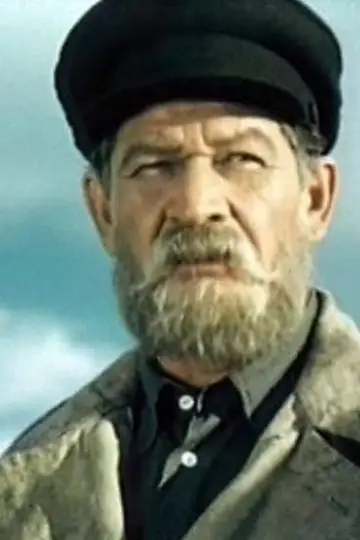
Aleksandr Antonov
Member of Strike Committee

Vladimir Uralskiy
Worker
I. Ivanov
Chief of Police
Yudif Glizer
Queen of Thieves
Short description
Workers in a factory in pre-revolutionary Russia go on strike and are met by violent suppression.
What's left behind the scenes
- The film was restored in 1969.
- 'Strike' was Eisenstein's first feature-length work.
- Students from Proletkult studios and young workers from Moscow factories participated as extras.
- Eisenstein brought the completed script for 'Strike' to the 'First State Cinema Factory,' located on Zhitnaya Street in Moscow in the former studio of Alexander Khanzhonkov. There, he was granted two screen tests. Both were unsuccessful: they were shot too 'theatrically' and in long takes. During the first test, Eisenstein filmed the extras; during the second, a scene featuring the interrogation of a revolutionary. The senior management of Goskino feared that Eisenstein would turn 'Strike' into a plotless 'montage of attractions,' which could cause the film to fail. Consequently, after the failed tests, Goskino was eager to part ways with the director. At that point, Boris Mikhin and Eduard Tisse secretly wrote a letter to the factory management requesting a third test for him under their own financial responsibility, describing Eisenstein as a 'very interesting person' in whom they had full confidence. The third attempt proved successful. The footage shot was even included in the original film: it was the scene where thugs emerge from numerous barrels buried in the ground at the whistle of their 'king'.
- The complete screenplay for 'Strike' spanned exactly 10 pages, four of which were the prologue. The prologue itself was not filmed. In the movie, only the final words remained, used as a title card: 'Everything is calm at the factory. But...'. The entire screenplay was divided into 235 points (146 in the first version), marked by sequential numbers. Each point corresponded to one specific shot in the film. On one of the pages of the screenplay, Eisenstein wrote in French: 'Menager les effets' (Eng. Be careful with the effects).
- The film was originally conceived as the fifth part of an eight-film cycle about the revolutionary struggle titled 'Towards the Dictatorship.' However, the other parts were never realized. The director considered this particular episode to be the 'most mass-oriented' and 'effective,' which is why it was the first to be filmed. In his concept, 'Towards the Dictatorship' was intended to cover the following themes (each theme corresponding to a specific film): 1) smuggling of literature; 2) underground printing; 3) collective work ('Work among the Masses'); 4) May Day demonstrations; 5) the strike ('Strike'); 6) arrests and searches; 7) exile and imprisonment; and 8) prison escapes. This division was developed by Eisenstein himself. It is known that the series was to include films titled 'The Struggle' and 'The Struggle Continues'.
- Eisenstein began filming with the epilogue, which ultimately did not make it into the movie. It was intended to include a documentary episode: a May Day demonstration on Red Square. Thus, on that day in 1924, Eisenstein captured his first shots as a film director. The footage was documentary, recording the first May Day demonstration of workers in the history of the USSR. The filming of the 'factory' scenes began closer to autumn. The Kolomna plant was chosen as the location, which Leon Trotsky visited at the time. Eisenstein filmed his speech. These shots were also intended for the epilogue. In the director's vast archive, there are no materials regarding the filming of Trotsky. According to Eisenstein scholar Vladimir Zabrodin, the director himself destroyed these materials after 1929, when the anti-Trotskyist campaign began.
- Filming was conducted primarily on location—in Moscow and its suburbs—with the exception of some episodes filmed in the studios of the 'First State Cinema Factory.' It is also known that one of the film's final scenes was shot in the House-Ship on Pskovsky Lane.
- For Alexander Antonov, the role in the film marked his cinematic debut.
- The film was divided into six acts, which was quite characteristic of Soviet cinematography in the 1920s. This was due to the insufficient development of the film industry at the time: cinemas had only one projector, and mechanics were forced to change reels every 10 minutes, interrupting the screening.
- In 2008, Strike was ranked 26th on the list of the '100 Best Russian Films,' compiled by the Russian edition of Empire magazine based on the opinions of 50 film critics and journalists.
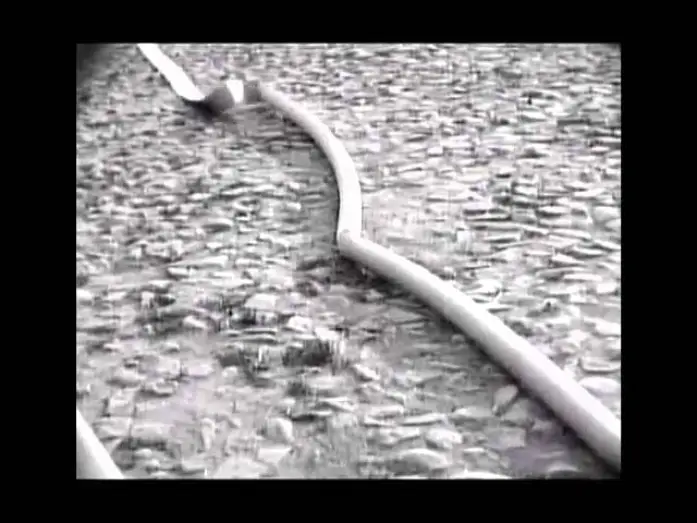
- For one of the most important episodes in the film, according to Eisenstein, where firefighters disperse a demonstration by spraying workers with water hoses, the director demanded a crowd of over a thousand people. However, the studio management refused to recruit so many people for the shoot, arguing that it would be impossible to use them rationally. Mikhin then 'resorted to a trick,' ordering only five hundred people to be brought in, while telling Eisenstein that he was fulfilling his request.






 Auditions in India
 Casting calls in USA
 Castingi w Polsce
 Кастинги в Україні

