Apollo 13




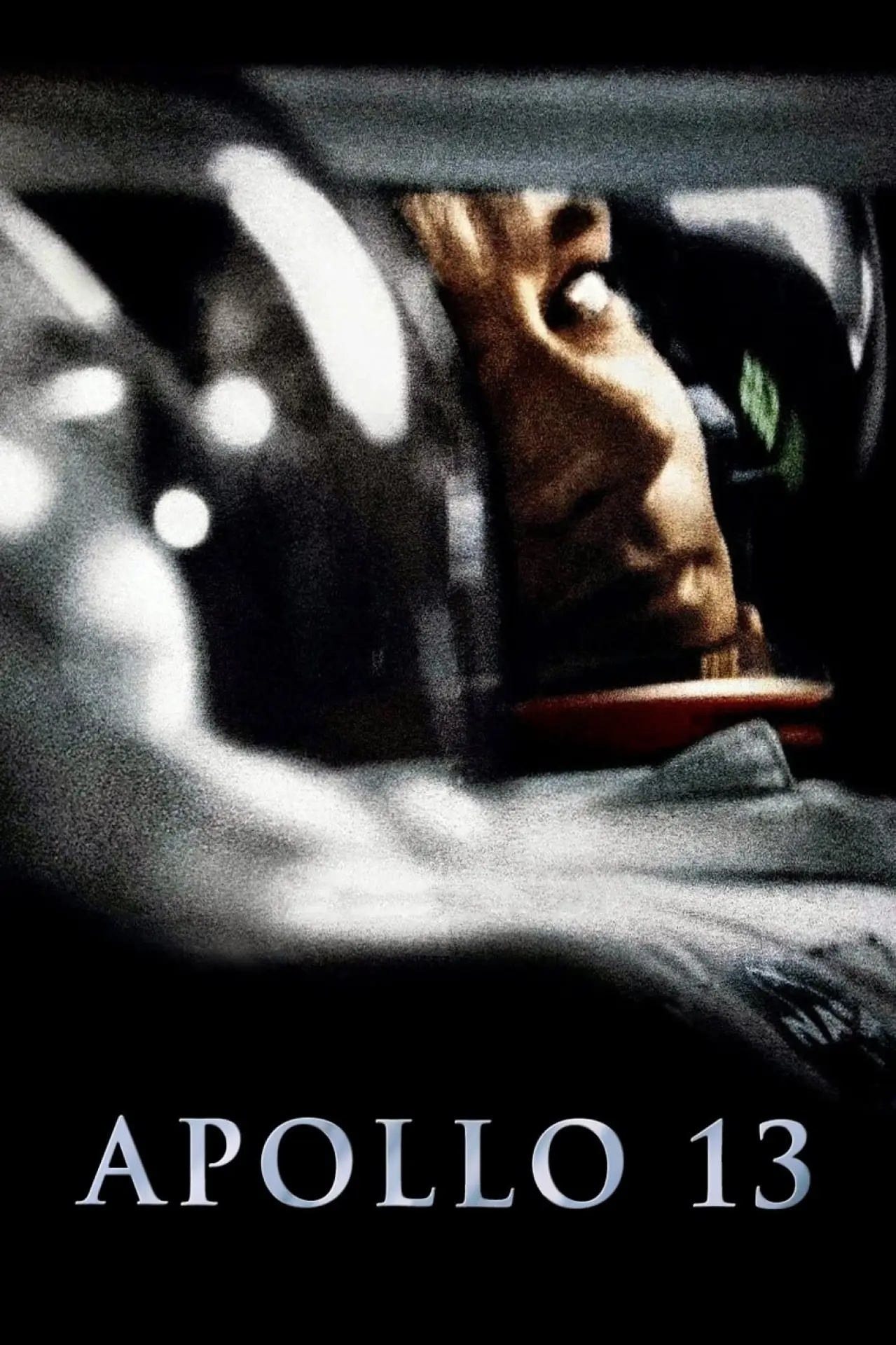











Short description
Apollo 13 dramatizes the 1970 lunar mission that turned into a rescue effort. Jim Lovell and his crew are bound for the Moon when an explosion aboard the spacecraft cripples it, leaving the astronauts short of oxygen and power and far from home. With the landing abandoned, the flight controllers in Houston work against time to bring the men back safely, while the astronauts improvise with the equipment they have left.
Ron Howard directed the film, the tenth of the thirty-two features he has directed to date, following The Paper and preceding Ransom. William Broyles Jr. and Al Reinert wrote the screenplay, and Brian Grazer produced it for Universal Pictures and Imagine Entertainment. Tom Hanks plays Lovell, with Bill Paxton as Fred Haise, Kevin Bacon as Jack Swigert, Gary Sinise as Ken Mattingly, Ed Harris as flight director Gene Kranz and Kathleen Quinlan as Marilyn Lovell. The production cost about 52 million dollars and earned roughly 355 million worldwide, a strong return. It runs 140 minutes.
On IMDb the film holds 7.7 out of 10 from around 335,000 votes, and on TMDB 7.5 out of 10 from a much smaller number of votes. A critics' rating of 8.6 out of 10 from 157 reviews places it higher than those audience scores. The credited cast numbers 89 and the credited crew 318, reflecting a large production.
What's left behind the scenes
- The film depicts an episode of transferring equipment from the lunar module to the command module. Such an operation did indeed take place, but the reason for it is stated incorrectly. The film states that the spacecraft is following an incorrect trajectory because it is “too light.” In reality, the deviation from the ballistic trajectory was caused by the lunar module's electronics cooling system. Water leaking into the vacuum created an uncompensated reactive force. The command module was loaded with equipment for another reason – the landing program of the 'Odyssey' onboard computer contained a specific weight, including 45 kilograms of lunar rocks.
- As the spacecraft approaches the Moon and disappears behind the lunar limb, causing a loss of radio contact with Earth, the film shows the Sun also disappearing behind the lunar horizon. This would only be possible if the Moon had been in its full phase that day. However, the Moon was actually in the 'waxing gibbous' phase (9 days after the new moon, or approximately 2 days after the first quarter). The landing time was chosen specifically to ensure a low Sun angle over the horizon in the landing area near the Fra Mauro crater.
- Scenes on the spacecraft requiring weightlessness were filmed in actual zero-gravity conditions during flights on a parabolic trajectory laboratory aircraft (descent-ascent-descent, etc.). Two cramped cabins – exact replicas of the interior spaces of the Apollo spacecraft – were equipped on board the aircraft for filming.
- In the scene showing the final trajectory correction of the spacecraft, the orientation is depicted incorrectly. In reality, the ship's axis was pointed not toward Earth, but perpendicular to it. The correction itself lasted 14 seconds, not 39.
- After the film's release, Lovell stated that his character was portrayed very implausibly.
- Apollo 13 commander Jim Lovell himself appeared in a cameo role in the film. In the film's finale, he, as one of the officers on the deck of the aircraft carrier Hornet, shakes hands with Tom Hanks, who is playing him.
- Of the nine swing arms attached to the spacecraft, three lower arms and one upper arm are retracted long before launch. The remaining five arms move away from the rocket simultaneously just before liftoff. The film showed eight arms retracting from the rocket one by one immediately before launch.
- The film is based on the book “Lost Moon,” written by astronaut Jim Lovell in collaboration with Jeffrey Kluger. Like the book, the film tells the story of real events that occurred in April 1970.
- Actor Ed Harris, who played Gene Kranz, the Flight Director in the film "Gravity" (2013), voiced the Flight Director.
- During the departure from low Earth orbit, while the S-IVB third-stage engine is firing, the film shows the rocket-spacecraft assembly pointed with its longitudinal axis toward the Moon. In reality, the launch takes place from a point in Earth orbit opposite the Moon, and the rocket's axis is perpendicular to the spacecraft-Moon line (meaning the astronauts could not see the Moon at the moment of launch, as it was obscured by Earth).
Similar movies












 Auditions in India
 Casting calls in USA
 Castingi w Polsce
 Кастинги в Україні
