The Good Dinosaur



All team (64)
Short description
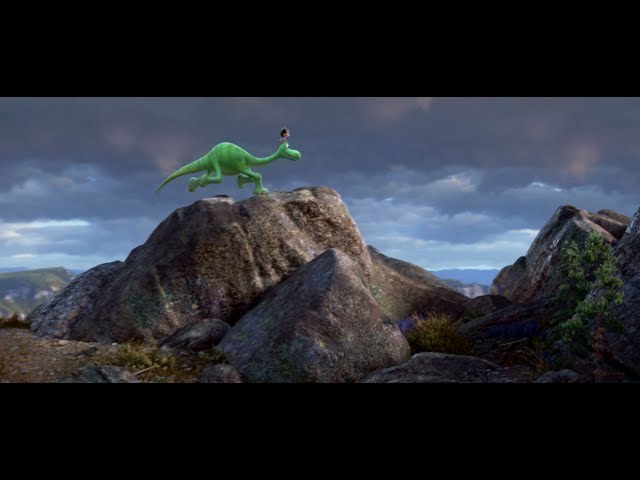
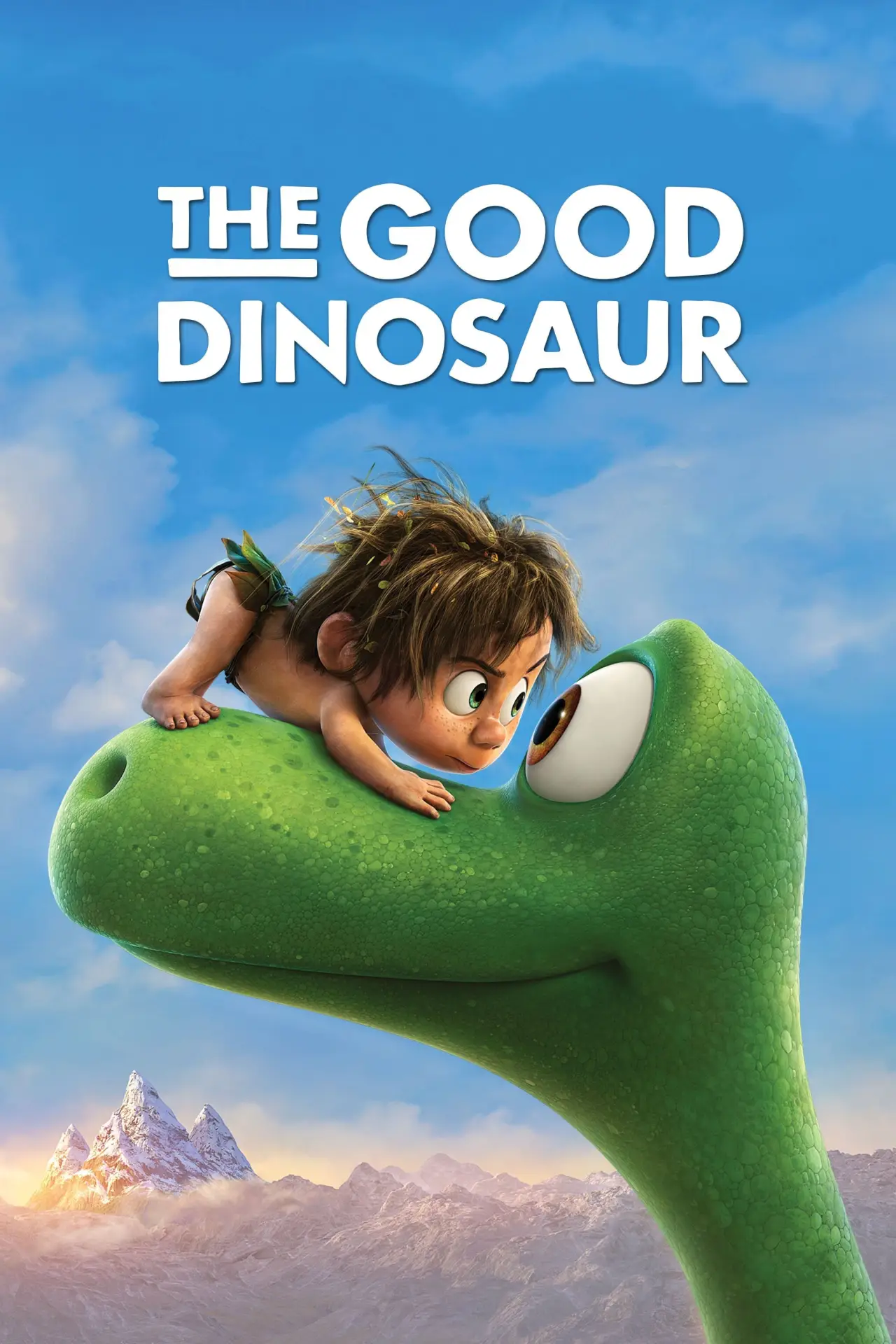
The Good Dinosaur takes place in an alternate world where the asteroid that would have wiped out the dinosaurs never struck Earth. Dinosaurs evolved into intelligent, farming beings, while humans remained primitive. Arlo, a small and fearful Apatosaurus, is separated from his family after being swept away by a river and must find his way home across a harsh landscape. Along the way he befriends a human boy, and the bond between them helps Arlo face the dangers of his journey.
The film is directed by Peter Sohn, following his short Partly Cloudy and preceding Elemental in his filmography. Meg LeFauve wrote the screenplay, Denise Ream produced, and Pixar made the film with Walt Disney Pictures for a budget of 175 million dollars. Raymond Ochoa voices Arlo, with Frances McDormand and Jeffrey Wright as his parents, and Sam Elliott, Anna Paquin and Steve Zahn among the supporting cast.
Released in 2015, the film earned 332 million dollars worldwide, a modest return against its cost. It holds a 6.7 rating on IMDb from 139,000 votes and a 6.8 on TMDB from just over 6,000 votes, while its critics' rating stands at 6.6 from 219 reviews. Audience and critical responses are thus closely aligned.
What's left behind the scenes
- While working on the tyrannosaur family, the artists drew inspiration from a farming family from the northwestern Pacific coast of the United States. The filmmakers stumbled upon this family's home during a research trip and were captivated by their appearance and outlook on life.
- To make the film's setting look realistic, the team of artists and technicians at Pixar thoroughly studied the American Wild West, from the town of Junction City, Oregon, to Jackson Hole Valley, Wyoming. It was in that area, according to the screenwriters, that Arlo got lost.
- To immerse themselves in the pristine wilderness, a research horseback expedition was organized in Wyoming. The filmmakers’ route ran along the Teton Range and the Snake River. The expedition reached southern Montana, experiencing challenging climatic conditions. To transfer all the beauty seen during the expedition onto the screen, the filmmakers turned to Pixar’s technical specialists, as they needed to process a huge amount of information. Data on Wyoming was found online. The American Geological Survey helped the filmmakers with the other territories, providing comprehensive landscape data for all the United States. Most of the information was presented as aerial photographs. Information about the altitudes of the terrain became the starting point for subsequent research and the development of a computer landscape generation system.
- Satellite photographs were used to create the terrain. A special plugin was written for the program that indicated that any green spot on the map was trees and other vegetation. By the same analogy, other types of terrain were mapped: brown – earth and dirt, blue – a body of water or river.
- During a research expedition in Wyoming, filmmakers decided to raft down the Snake River. The journey was filmed with a GoPro camera. At one point, the camera mount loosened, and it fell into the river. Fortunately, an experienced guide who knew the river was able to calculate where the current would carry the valuable equipment. The camera was found and continued to operate. The film crew obtained invaluable footage capturing the entire swim from start to finish, including underwater shots.
- While preparing to film, artists and technicians from Disney/Pixar created an entire library of various rain and cloud effects that could be modified and combined to produce original combinations. Usually, clouds are drawn in two dimensions, but in this film, for the first time in animation history, they were made entirely volumetric. They are mobile and can be lit from any angle, creating a very realistic cloudscape.
- When working on the appearance and behavior of Butch (a massive Tyrannosaurus Rex that Arlo meets on his way home), filmmakers drew inspiration from actors who convincingly embodied the image of classic cowboys, such as Clint Eastwood and Jack Palance.
Similar movies






 Auditions in India
 Casting calls in USA
 Castingi w Polsce
 Кастинги в Україні
