Princess Mononoke










Short description
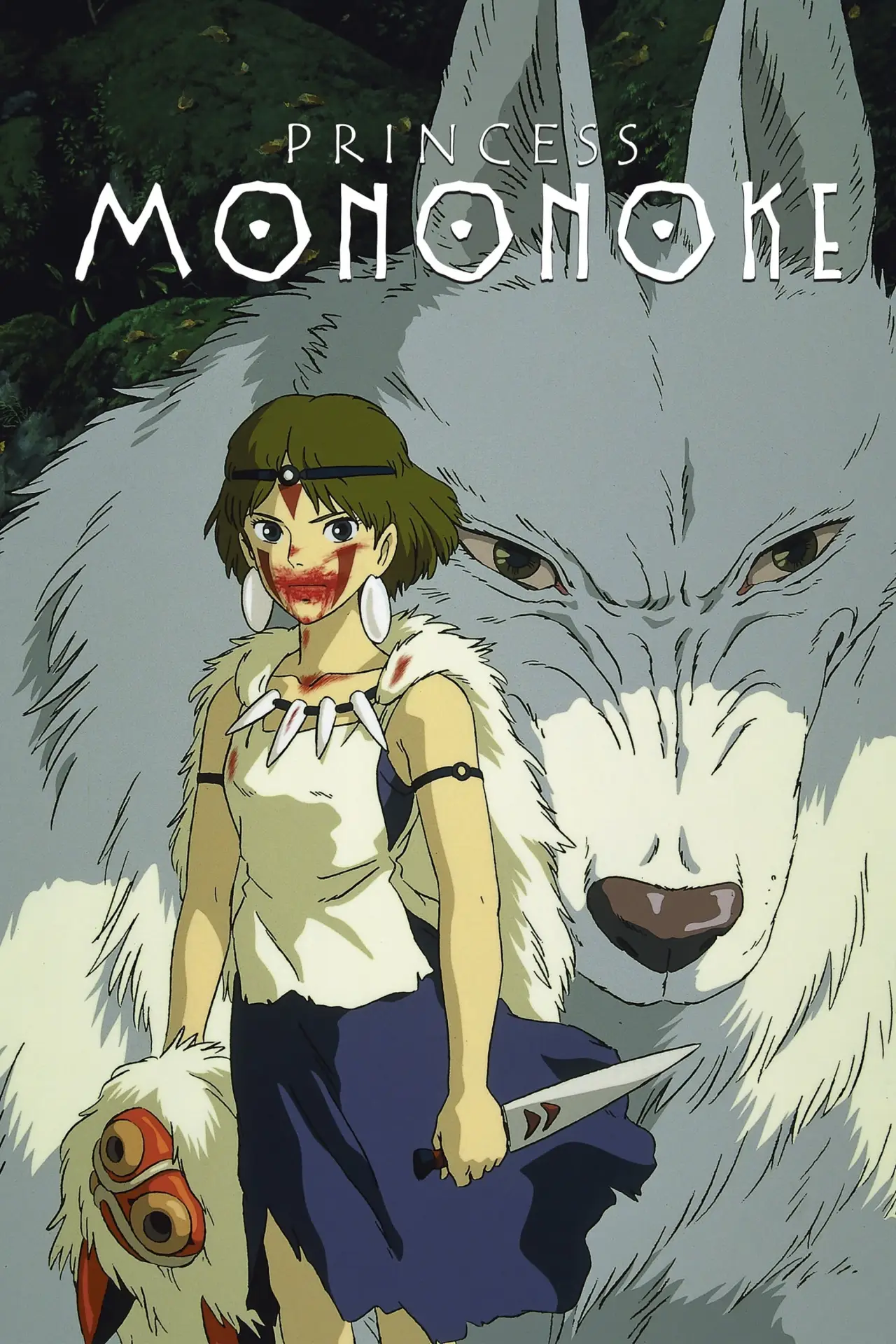
Princess Mononoke follows Ashitaka, a young prince of a dwindling people, who is struck by a deadly curse after a confrontation with a demonic boar. He travels westward in search of a cure and arrives in a region where a fortified mining settlement, led by Lady Eboshi, is cutting into a sacred forest. There he meets San, a young woman raised by wolves, who fights alongside the forest's animal gods against the settlement. Caught between the two sides, Ashitaka tries to find a way to end the conflict, and he and San form a bond. The film is set in Japan's early medieval period and was written and directed by Hayao Miyazaki.
Released in 1997, it is the ninth of the sixteen films Miyazaki has directed, coming after Chage & Aska: On Your Mark and before Spirited Away. Toshio Suzuki produced, and the voice cast includes Youji Matsuda as Ashitaka, Yuriko Ishida as San and Kaya, Yuko Tanaka as Eboshi Gozen, Kaoru Kobayashi as Jikobo, Masahiko Nishimura as Kouroku and Tsunehiko Kamijō as Gonza. Twenty-four cast members and seventy-one crew members are credited.
Made on a budget of about 24 million US dollars, the film took roughly 193 million dollars worldwide, a strong return for an animated release of its era. It holds an 8.3 rating on IMDb from around 480,000 votes and an 8.3 on TMDB from over 9,000 votes, while critics gave it 8.6 from 123 reviews, placing critical appraisal slightly above the broad audience scores.
What's left behind the scenes
- Hayao Miyazaki preferred Japanese film and theater actors to professional voice actors (seiyuu) to avoid “stereotypical images.”
- Cutting one's hair in feudal Japan signified that the person was dead, so by cutting off his topknot, Ashitaka showed that he was dead to the people of his village and that he would never return.
- Production of the animated film began in July 1995. Miyazaki personally supervised each of the 144,000 frames in the film, and edited approximately 80,000 of them himself. Work on the film was finally completed just a few months before its Japanese premiere date.
- In fact, Moro has two tails. This can be seen in the moment the wolf attacks the caravan (two tails are clearly visible), and then when San strokes Moro's flank before jumping onto another wolf and saying, 'Run.'
- In May 1995, Hayao Miyazaki and animator Masashi Ando, along with a team of artists and digital animators, traveled to the ancient forests of Yakushima Island, located 60 km south of Kyushu Island, and then to the Shirakami Mountains in northern Honshu for inspiration in creating the landscapes, as was the case with the film “Nausicaä of the Valley of the Wind.”
- Two titles for the film were initially proposed. One of them, which was ultimately chosen, and the other – “The Legend of Ashitaka.”
- The names of the goddess-wolf Moro’s other two children are not mentioned. However, the name San means “Three,” which suggests that the names of the wolves may be “Ichi” and “Ni” – “One” and “Two.” “Mononoke” can be translated as “vengeful spirit.”
- The film was largely drawn by hand, but includes some moments using computer animation (a total of five minutes of footage). Another 10 minutes is taken up by digital painting, which was used in all subsequent films by Studio Ghibli.
- The samurai who attacked Ashitaka mistook him for a high-ranking warrior because only they were allowed to wear helmets, and Ashitaka's hood resembled a helmet.
- The girl in Ashitaka's village was not his sister. Calling him 'Older Brother' was a sign of respect.
- Lady Eboshi’s cloak is a garment worn by men, not a kimono; the cloak demonstrates Lady Eboshi’s rank and importance.
- To express his disagreement with attempts to cut the American release of the film, Hayao Miyazaki sent Disney a bloodstained sword with the words “do not cut” written on it.
- Roger Ebert placed “Princess Mononoke” sixth on his list of the ten best films of 1999.
Similar movies


 Auditions in India
 Casting calls in USA
 Castingi w Polsce
 Кастинги в Україні
