Haytarma
The story of one of the people



Production
Budget
$1 500 000
Director
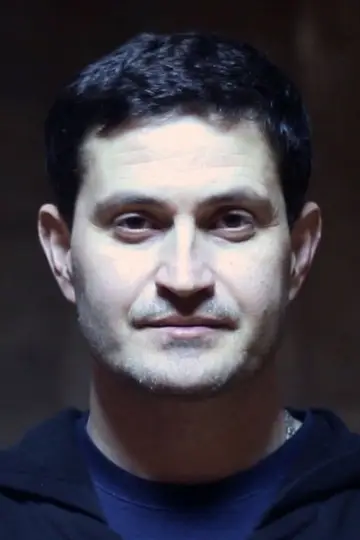
Akhtem Seitablaiev
Scenario
Mykola Rybalka
Composer
Dzhemil Karikov
Producer
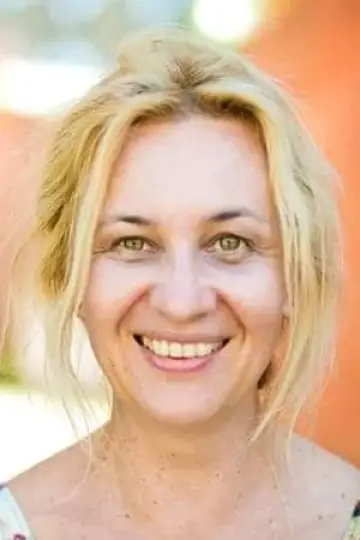
Ivanna Diadiura
Actors
Akhtem Seitablaiev
Amet-khan Sultan
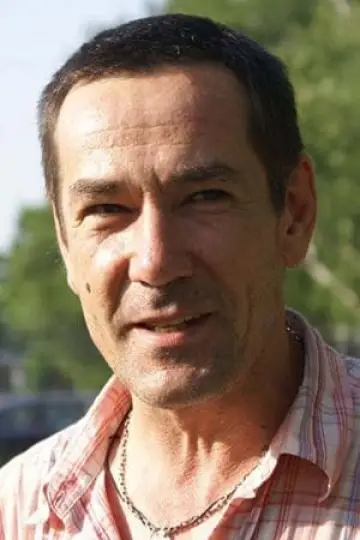
Oleksiy Horbunov
NKVD Major Krotov

Andrii Mostrenko
François de Geoffre
Usnie Khalilova
Amethan's Mother
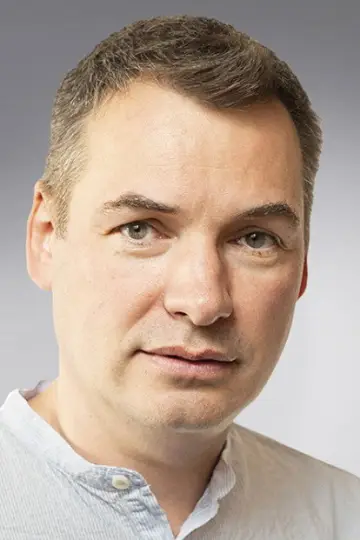
Andrii Saminin
Vladimir Norishkin
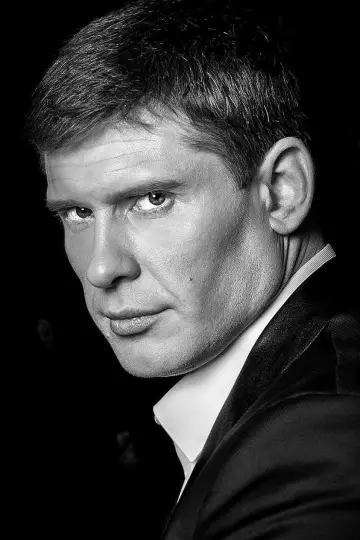
Oleksii Trytenko
Mechanic Vanya
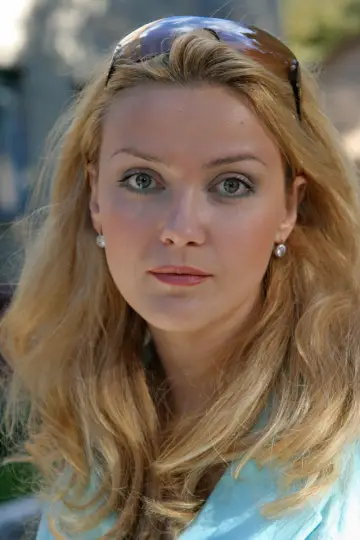
Lesia Samaieva
Neighbor Nadya
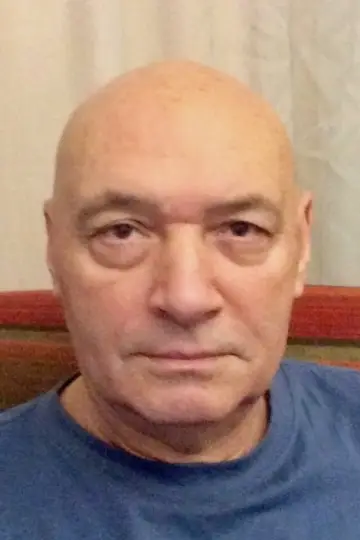
Yuriy Tsurilo
NKVD General Vasilyev
Short description
The film tells about the tragic date in the history of the Crimean Tatar people — May 18, 1944 — Stalin’s deportation of the Crimean Tatars. The plot of the film — a pilot, twice Hero of the Soviet Union, Amet-khan Sultan. In May, 1944, a year after the liberation of Sevastopol, Amet-khan goes on vacation to his native town Alupka. On May 18 his eyes witness the beginning of the deportation of the Crimean Tatars.
What's left behind the scenes
- People stood under artificial rain for seven hours with their grandchildren… At one point, the director simply started shouting and ordering them to leave because he realized it was a health hazard. Either the clothes had to be changed, but there was no time for that, or the people had to be replaced. There were 500 people, and a significant amount needed to be filmed. But neither the children nor the adults left the set. This was the ultimate demonstration of self-sacrifice. Very often, the elderly would stop the director and plead, 'Don't make us leave.'
- Khaitarma is the name of a national dance that symbolizes return.
- Initially, the filmmakers hoped to secure funding in Turkey, but after reviewing the script, the Turkish representatives refused. Then, in 2012, Russian businessman Lenur Islyamov came to the aid of the creative team. According to Akhtem Seitablaev, Lenur Islyamov had a dream of making a film about the deportation.
- Lenur Islyamov provided the extras, weapons, trains, cars, and aircraft of that era, investing approximately 1.5 million dollars. Large wartime sets were constructed in Bakhchysarai. The most expensive elements were the computer graphics and the technical equipment for the shoot. Timur Bekmambetov's 'Night Watch' team worked on the battle scenes.
- The film was shot in 2012 in Alupka and Sudak. Scenes at the airfield were filmed at the entrance to Bakhchysarai, where a plywood aircraft was placed for the battle scenes; it was later transferred to the Amet-Khan Sultan museum in Alupka. The night scene of loading people into railway cars was filmed on the 9th auxiliary track of the Bakhchysarai railway station, near the Syuren station, where the actual events of May 1944 took place. More than three thousand people from all over Crimea participated in the mass scenes of the Crimean Tatar deportation, about 700 of whom had personally experienced this tragedy. In particular, Rasim Yunusov, an actor from the Crimean Tatar theater, played a character almost identical to his own grandfather—an old water carrier. In the deportation scene, one of the old men carries a sewing machine on his shoulder amidst the chaos—the very one his mother managed to grab at the last moment in 1944, which saved their family from starvation in Uzbekistan.
- The film 'Khaitarma' became the first feature film to shed light on the history of the Crimean Tatar people.
- Military pilots and comrades-in-arms of Amet-Khan Sultan, twice Hero of the Soviet Union, were invited from Moscow as guests of honor to the premiere.
- The premiere screening of the feature film 'Khaitarma' began immediately with a scandal: security at the Cosmos cinema in Simferopol refused entry to representatives of the 'Milli Firka' Tatar public organization, which was opposed to the Mejlis. It then emerged that some guests from Moscow did not attend the screening, having changed their minds after a conversation at the Russian Consulate General in Simferopol, where it was strongly advised that they not do so. Consul General Vladimir Andreev, who had not seen the film himself, stated that the events in the movie were presented one-sidedly and that the reasons for the Soviet leadership's decision to deport the people were not addressed at all. This statement provoked sharp criticism from several media outlets, the Mejlis, and Ukrainian political figures. The Russian Ministry of Foreign Affairs also supported the criticism of Consul General Vladimir Andreev, admitting that the diplomat's phrasing had been 'incorrect' and that he had spoken 'without due consideration for the sensitivity of the issue.' On May 24, without waiting for a recall, he resigned of his own accord, disagreeing with the position of his superiors. The film's director, Akhtem Seitablaev, noted with regret that Vladimir Andreev 'condemned the film without knowing the subject of the conversation,' but on the other hand, expressed that he was 'grateful for the incredible PR he gave our picture.'
- There were several tragicomic moments during the filming of the episode in the square in Alupka, where an NKVD officer speaks about the Crimean Tatars being traitors. After the first take, one of the women approached the director and asked, 'Why are we listening to him? He's a scoundrel!' He asked, 'What do you want to do to him?' She replied, 'Did our grandfathers really just stand there and listen?' The director didn't know exactly how it had been, but based on the eyewitness accounts he had personally read—yes, they did. So, the director asked Dmitry Surzhikov (who played the NKVD officer) to fire a shot toward the crowd without warning before he began reading. Naturally, the rounds were blanks. When they yelled 'action,' the officer fired... and a dead silence fell. The director stopped the filming, approached the group of people, and asked them, 'Why are we standing here? Why aren't we heading for the barricades?' The eldest among them said, 'We understand everything now.' Back then, they didn't fire into the air. Back then, they fired at people.
- During the filming of a romantic scene where the main character was supposed to propose to his beloved while on horseback, the animal threw Akhtem Seitablaev, resulting in a severe clavicle injury—his 11th filming injury to date. Due to this incident, the love story between Amet-Khan and Feride had to be significantly shortened.



 Auditions in India
 Casting calls in USA
 Castingi w Polsce
 Кастинги в Україні

