Ironclad



All team (72)
Short description
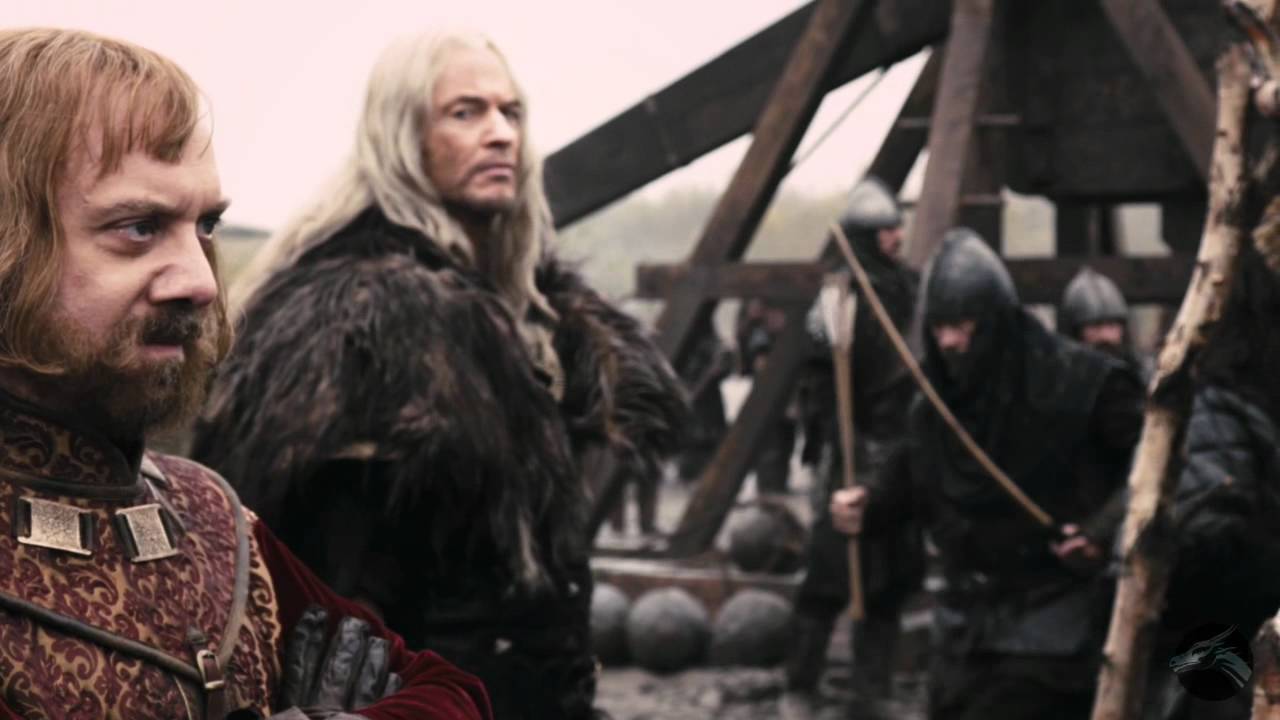
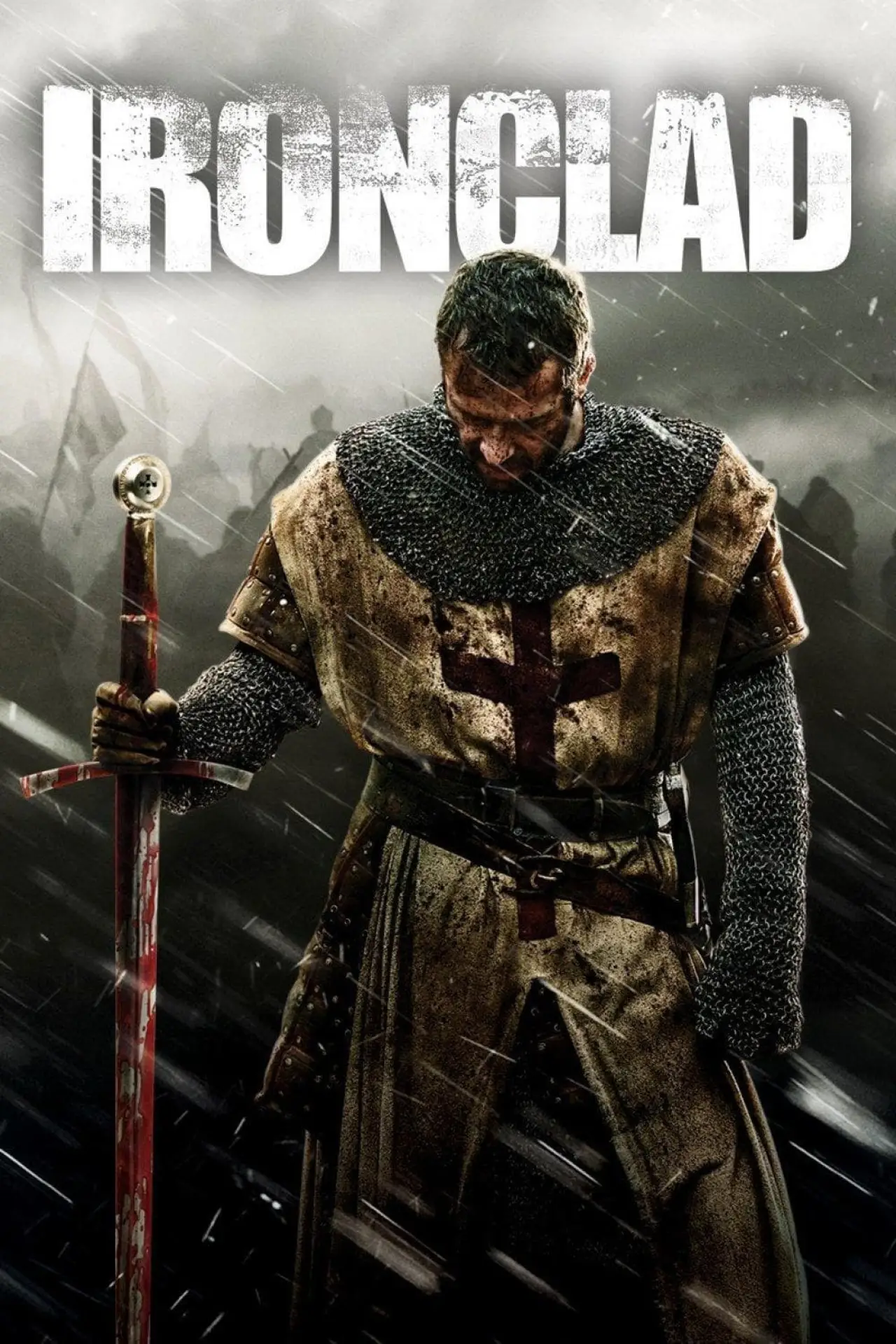
Set in thirteenth-century England, Ironclad dramatises the conflict that followed King John's signing of the Magna Carta. The charter, forced on him by rebellious barons, placed limits on royal power, but John soon repudiated it and raised an army of mercenaries to bring the country back under his control. Standing between him and London is Rochester Castle, held by a small garrison of rebels and Knights Templar under the command of Thomas Marshall. Their resistance turns the castle into the centre of the barons' struggle, with both sides prepared to fight for control of it.
The film is directed by Jonathan English, whose previous feature was Minotaur in 2006; he also produced it, with Erick Kastel writing the screenplay. James Purefoy leads the cast as Marshall, alongside Kate Mara, Jason Flemyng, Brian Cox and Derek Jacobi, with Paul Giamatti as King John, the role the marketing chiefly turned on. The production had a substantial budget of around 25 million dollars, but its worldwide box office return of about 5 million dollars was modest by comparison. Reception was middling: on IMDb the film sits at 6.1 from roughly 45,000 votes, and on TMDB at 6.2 from far fewer, while the critics' rating of 5.2 from 54 reviews is lower than both audience scores.
What's left behind the scenes
- Although a small part of Scandinavians in the early 13th century still retained pagan customs, the vast majority of Danes were Catholic by that time.
- Among the mercenaries hired by King John, the majority were not Danes, but Normans, Flemings, and Gascons.
- In the early 13th century, two-handed swords like the one used by Templar Thomas Marshall were not used in hand-to-hand combat.
- Siege engines in the form of trebuchets with a fixed counterweight, used by besiegers, were brought to England by the French prince Louis, who arrived on the island several months after the siege ended.
- Due to a lack of necessary financial support, the film's budget was significantly reduced in 2009. This led to a near-complete replacement of all the supporting actors who had already signed on to the project.
- At the time, 86-year-old patriarch of British cinema, Richard Attenborough, was to play one of the roles in the film, but he was forced to decline due to health reasons.
- The name Tiberius, borne by the mercenary captain, is clearly borrowed from Ridley Scott's 'Kingdom of Heaven' and is completely atypical for 13th-century Northern Europe, with no record of it in historical sources.
- The great helm worn by Thomas Marshall before the decisive battle dates to a later period – the first half of the 14th century.
- At an early stage of the project's development, Megan Fox was attached to it. She was later replaced by Kate Mara.
- Historical weapon studies do not recognize double-bladed axes similar to the one used in the film by Tiberius. Those found in frescoes, book miniatures, and the like are much smaller and have a different blade shape.
- The actual historical siege of Rochester Castle was brief, lasting from October 11th to November 30th, 1215. After the besiegers managed to breach the outer wall, and on November 25th successfully undermined the southeastern part of the keep, the defenders retreated into its inner section, protected by a cross wall, and continued to defend themselves for some time. But soon, deprived of food and water supplies, they surrendered to the mercy of the victors.
- The French Prince Louis arrived in England several months after the siege of the castle, already in the new year of 1216. He was indeed proclaimed King of England in London, but was never crowned in Canterbury, as custom dictated, and in the following year of 1217 returned to France.
- A highly realistic replica of Rochester Castle was created on the grounds of Dragon International Film Studios in Wales for the film's shooting.
- The real historical leader of King John's mercenaries was the Gascon Savaric de Mauleon.
- Rochester Castle is located in the city of the same name in the county of Kent. It is one of the first stone castles in England and the tallest of them. Rochester guards the route to London from the south and, along with Windsor and Berkhamsted, is one of the fortified nodes on the distant approaches to London.
- After the surrender of Rochester, King John, enraged by the stubborn resistance of the defenders, ordered them all to be hanged. However, yielding to the persuasion of the mercenary captain Savaric de Mauleon, he hanged only one of the defenders; the rest were imprisoned in other castles of England.
- The castle garrison consisted of about 100 knights and several dozen crossbowmen and armed servants, not 20 people as depicted in the film, and there were no Templars among the besieged.
Similar movies






 Auditions in India
 Casting calls in USA
 Castingi w Polsce
 Кастинги в Україні
