Hugo








Short description
In 1930s Paris, a young orphan named Hugo Cabret lives hidden inside a bustling train station, where he keeps the clocks running in place of his missing uncle. His father, a clockmaker, left him a broken mechanical man and a notebook of drawings, and Hugo is determined to repair the automaton. To get the parts he needs, he takes tools from a toy seller's stall and is caught. The encounter costs him his father's notebook and draws him into the life of the old merchant, whose past proves stranger than Hugo expects. With help from the man's goddaughter, Isabelle, Hugo tries to unlock the secret of the machine and to find somewhere he belongs.
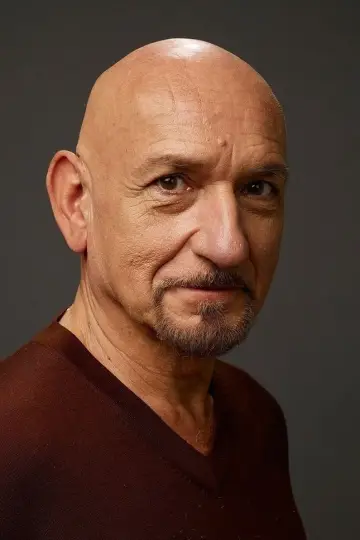
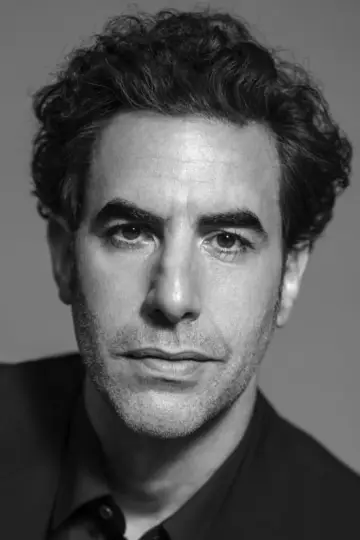
Martin Scorsese directed this adaptation of Brian Selznick's book, working from a screenplay by John Logan and Selznick. It came after Shutter Island and was the twenty-sixth of the thirty-eight features he has directed in chronological order. Asa Butterfield plays Hugo, with Ben Kingsley as Georges Méliès, Chloë Grace Moretz as Isabelle, Sacha Baron Cohen as the station inspector, and Ray Winstone and Emily Mortimer in supporting roles.
The production, made across the United Kingdom, the United States and France, carried a budget of 170 million US dollars and returned 186 million US dollars worldwide. On IMDb it holds 7.5 out of 10 from around 348,000 votes, and on TMDB 7.2 out of 10 from 7,827 votes. A film critics' rating of 8.3 out of 10 from 232 reviews places critical opinion noticeably above the audience scores.
What's left behind the scenes
- The film partially describes the biography of Georges Méliès.
- The hero's name is pronounced Hugo in French. But even more interesting is the fact that the name could have been given to the boy in honor of the French writer Victor Hugo (we have become fixed on an incorrect pronunciation of his surname).
- At the moment when the protagonist dreams of seeing a heart-shaped key on the rails, one can notice the boy looking at the key lying near a rail tie, but when he goes down to pick up the key, Hugo picks it up directly from the tie itself.
- The image of the guitarist who appeared at the beginning of the film and at Georges Méliès’ party is based on the famous musician Django Reinhardt. The actor even copied Django’s playing style, who, due to a fire, had only three working fingers on his left hand – thumb, index, and middle.
- Flashbacks show Georges Méliès filming his movies with lavish costumes and sets. In reality, however, everything in his films was tinted in muted tones, as films at that time were black and white. The printed film was then hand-colored.
- The driving force behind the project was Francesca, Martin Scorsese's daughter, who once gave him Brian Selznick's 2007 book 'The Invention of Hugo Cabret' for his birthday in the hope that he would one day make a film based on it. It was she who suggested presenting the film in 3D. Scorsese, special effects supervisor Robert Legato, and cinematographer Robert Richardson filmed the movie in 3D. Scorsese worked by attaching 3D lenses to his traditional glasses.
- The train crash scene from Hugo's dream actually occurred on October 22, 1895, at the Montparnasse station in Paris. On that day, a severely delayed train failed to brake on a slope, broke through the track bumper, ran onto the platform, crashed through a building wall, and collapsed from the second floor onto the street. As a result, five people were injured, and a newspaper kiosk vendor was killed by a piece of the wall falling on the kiosk.
- At the moment when Hugo starts the automaton, there is no sheet of paper in front of the robot; however, when the automaton starts working, a sheet appears there.
- The prototypes for the automaton used in the film are the robot created by the Jaquet-Droz family, as well as the automaton made by Swiss watchmaker Henri Maillardet, which Brian Selznick saw at the Franklin Institute in Philadelphia.
- When Martin Scorsese decided to make this film, he knew from the very beginning that he would offer the role of Georges Méliès to Ben Kingsley.
- The film is based on Brian Selznick's children's novel 'The Invention of Hugo Cabret'.






 Auditions in India
 Casting calls in USA
 Castingi w Polsce
 Кастинги в Україні

