Einstein and Eddington



All actors and roles (10)
All team (30)
Short description
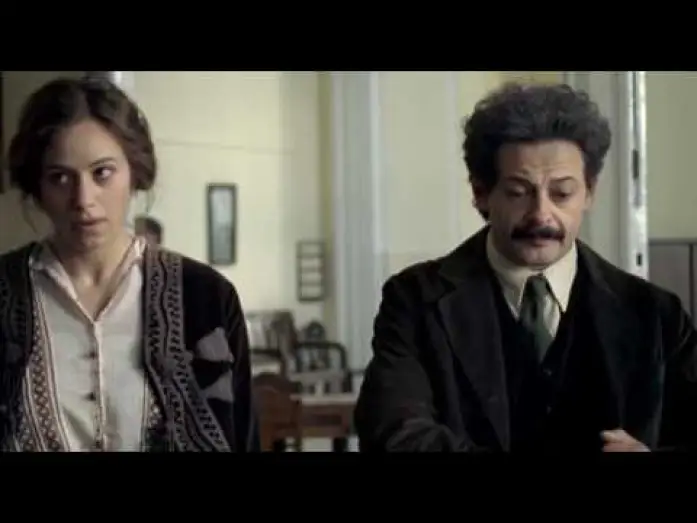
Einstein and Eddington is a British television drama about the relationship between Albert Einstein, a German physicist still largely unknown at the outbreak of the First World War, and Arthur Eddington, the British astrophysicist who recognized the importance of his ideas. Eddington has recently been appointed director of the Cambridge observatory and is asked by Sir Oliver Lodge to study the work of a German scientist whose theories challenge Newton's long-established account of gravity. Despite the hostility between their countries, the two men begin an exchange of letters, and Eddington comes to see Einstein's work as a new way of understanding space and time. The film moves toward the 1919 solar eclipse, when Eddington leads an expedition to the island of Príncipe off the West African coast to test the theory through observation.
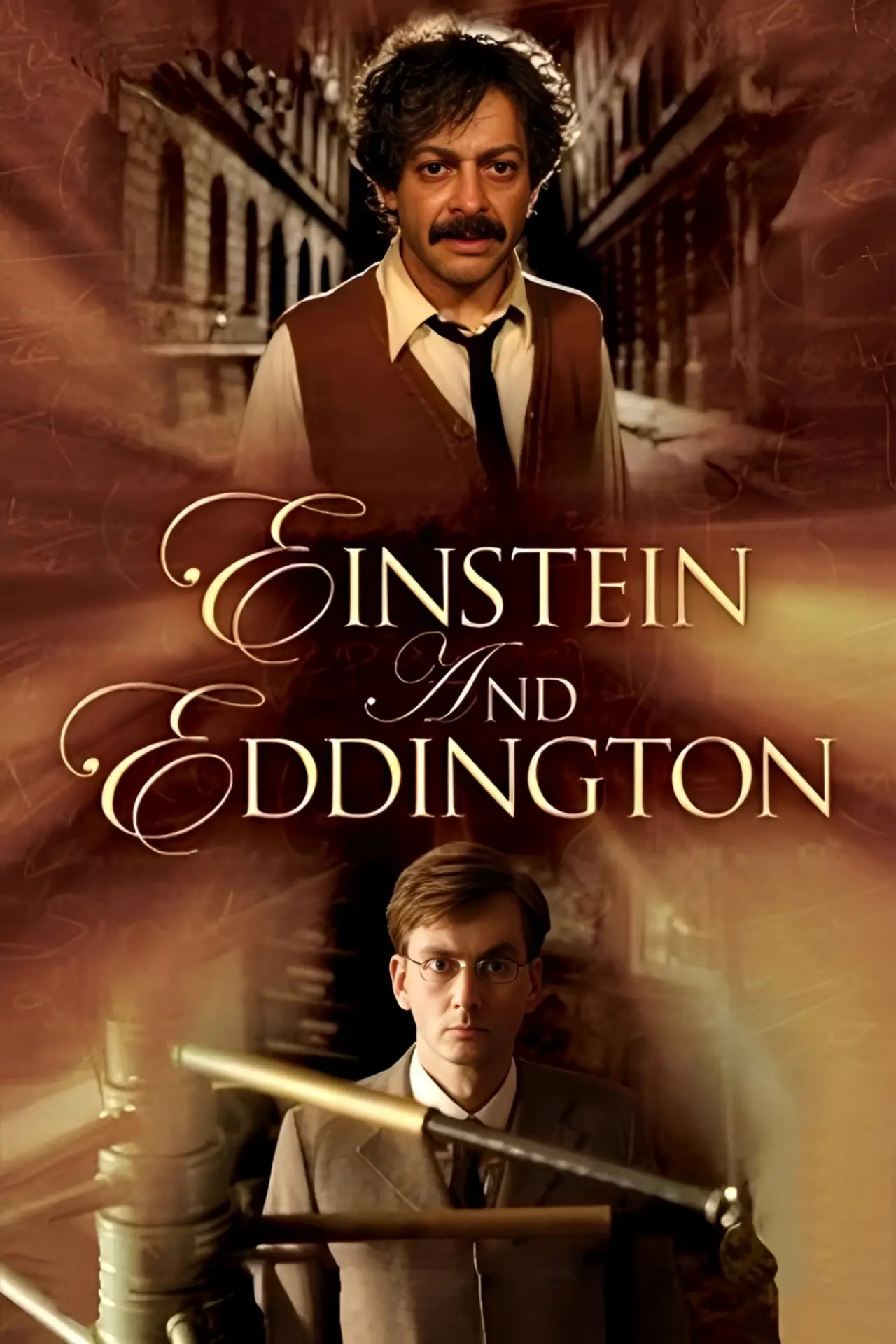
Philip Martin directed the film, which followed his 2004 drama Hawking and preceded Mo, The Forger and Scoop. Peter Moffat wrote the screenplay, and the cast includes Andy Serkis as Einstein, David Tennant as Eddington, Rebecca Hall as Eddington's sister Winnie, Jim Broadbent as Sir Oliver Lodge, Richard McCabe and Patrick Kennedy. It is a co-production between HBO Films and British companies, made for television rather than cinemas, and runs 93 minutes.
The film received a positive but not unanimous response. On IMDb it holds a rating of 7.2 from around 8,500 votes, while on TMDB the rating is 6.8 from a much smaller number of 163 votes. The gap between the two reflects the limited size of the TMDB sample more than a clear difference in reception.
What's left behind the scenes
- At the end of the film, they show Einstein being photographed with his tongue sticking out. In reality, this happened at a different point in his life. On Einstein's 72nd birthday, photographer Arthur Sasse repeatedly asked the physicist to smile for the camera, and Einstein, who had already smiled for photographers several times that day, stuck his tongue out instead of smiling.
- Oliver Lodge's son, Raymond, did indeed die in the Battle of Ypres, but from shrapnel, not from gas poisoning, and this happened almost five months after the first use of chemical weapons. And he served not in the Cambridgeshire Regiment, but in the Lancashire Regiment.
- In a Berlin café, German officers are shown wearing forage caps and helmets, which was forbidden by regulations. Moreover, wearing headgear indoors was considered bad form in almost all of Europe.
- Elsa Einstein is portrayed as much younger than her husband in the film, although in reality she was three years older.
- The night before the solar eclipse, the moon is shown as full. This is impossible, as solar eclipses only occur during a new moon.
- At one point, Albert Einstein (1879-1955) walks past black-red-gold German flags. This flag was only adopted in 1919, while at the beginning of World War I, the German flag consisted of black, white, and red horizontal stripes.
Similar movies



 Auditions in India
 Casting calls in USA
 Castingi w Polsce
 Кастинги в Україні
