The Hateful Eight
No one comes up here without a damn good reason.



Country
Production
Budget
$44 000 000
Revenue
$155 760 117
Director
Actors
Scenario
Producer
Stacey Sher, Richard N. Gladstein, Shannon McIntosh, Bob Weinstein, Harvey Weinstein, Georgia Kacandes
Operator
Composer
Artist
Yohei Taneda, Kil Won Yu
Audition
Editing
Short description
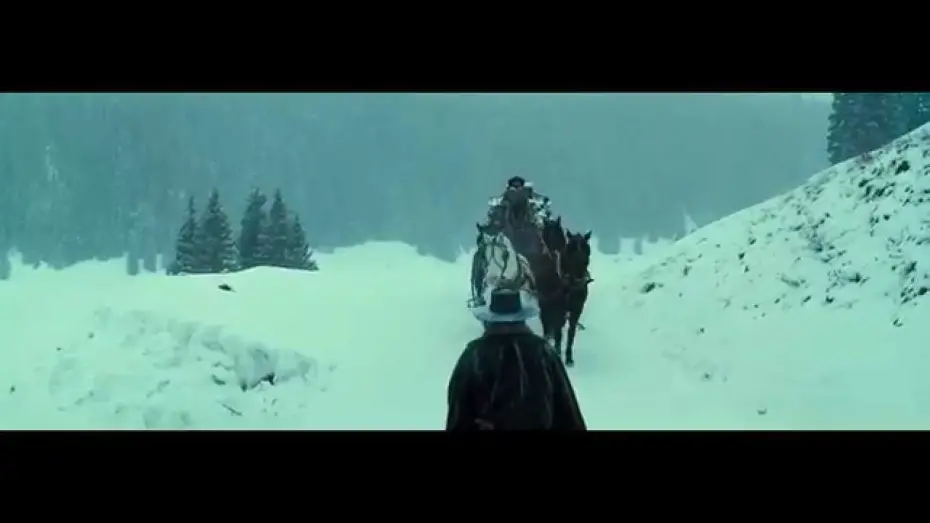
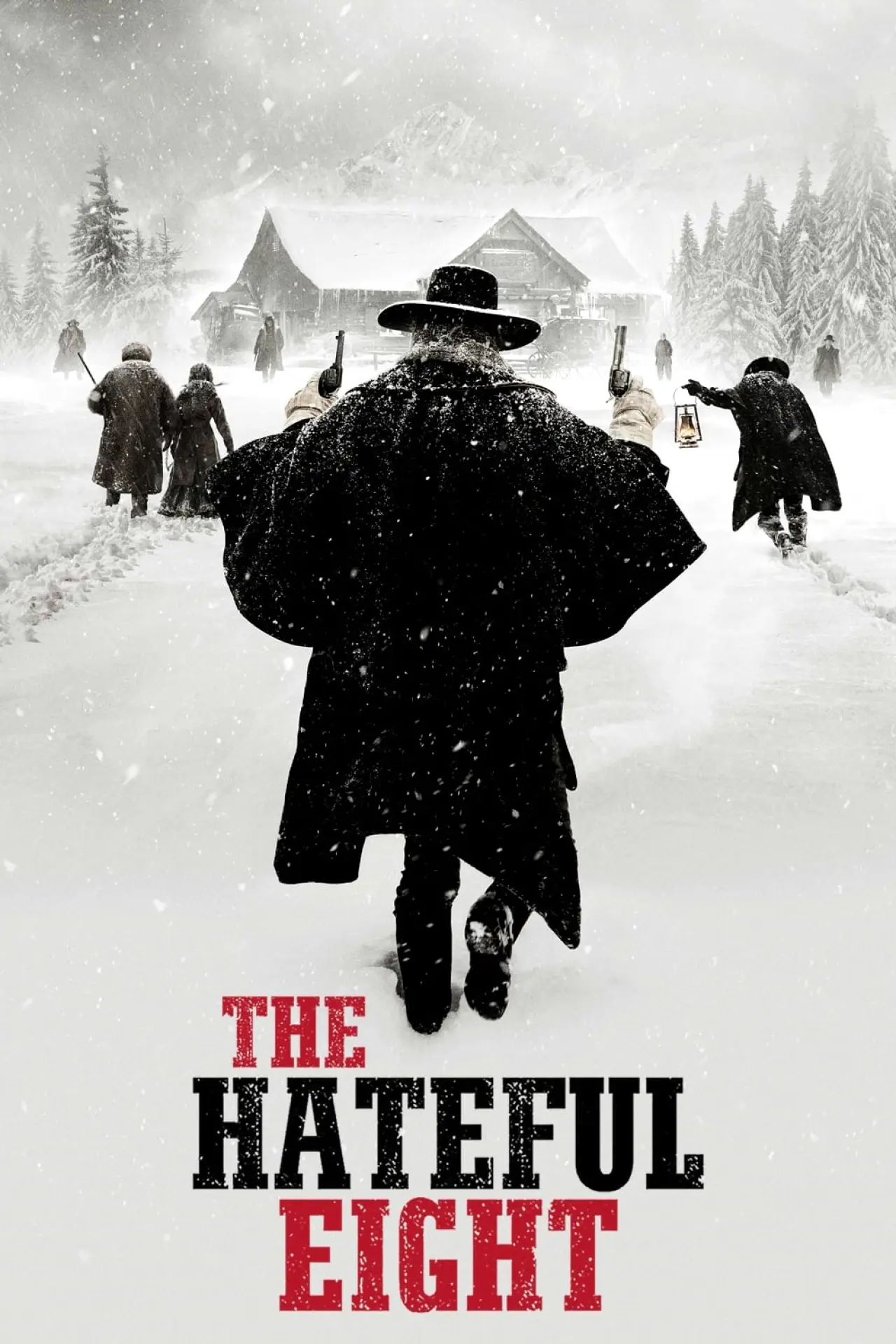
Bounty hunters seek shelter from a raging blizzard and get caught up in a plot of betrayal and deception.
What's left behind the scenes
- A zero temperature was specifically maintained on the set.
- Quentin Tarantino refused to continue working on the film when the script fell into the hands of the press. After reading the script in Los Angeles, all the actors became so enthusiastic about completing the film that Tarantino, under their pressure and especially under the pressure of Samuel L. Jackson, agreed to return to filming.
- The film is set during a terrible blizzard several years after the American Civil War. It is quite likely that Tarantino was referring to the Great Blizzard of 1888. It was one of the strongest blizzards in the country's history, which swept across the northern states and cost the lives of hundreds of people, including military personnel from privates to generals.
- The role ultimately played by Jennifer Jason Leigh was initially offered to Katie Sackhoff. Sackhoff even rehearsed it with the director. It was believed she would get the part, but the filmmakers decided she was too young to convincingly play Daisy Domergue.
- Of the entire cast, only Jennifer Jason Leigh, Demian Bichir, Jean Jones, and Channing Tatum had never worked with Quentin Tarantino before.
- The film's plot provides a fairly accurate depiction of life in the years following the Civil War and the realities of that era. In particular, the film shows the animosity and constant rivalry between Federalists and Confederates, their differing attitudes towards the abolition of slavery and the granting of rights to Black people on par with whites, the economic problems of the Southern states, and the assassination of Abraham Lincoln.
- On September 26, 2014, officials in the state of Colorado signed documents allocating $5 million for the production of the film. Filming was to take place in the southwestern part of the state. A plateau ranch and 900 acres of adjacent land were allocated as a filming location. On October 16, a meeting was held with the county planning commission, and a decision was made to set up a temporary film set. Filming began on December 8, 2014, at the Schmid Ranch near Telluride, Colorado.
- Viggo Mortensen was in negotiations to appear in the film (he was intended for the role of Jody Domergue), but commitments to other projects prevented the actor from working with Tarantino.
- In the final script that was leaked to the press, all the characters in the film were either already dead or on the verge of death. During a public reading of the script, Quentin Tarantino stated that the ending would be rewritten.
- This is the first film since the release of 'Jihad' (1966) to be shot using Ultra Panavision 70 technology (65mm film, anamorphic format, aspect ratio of 2.76:1), developed over half a century ago. The same format was used in filming some films in the 1950s and 1960s, in particular 'Raintree County' (1957), 'Ben-Hur' (1959), 'Mutiny on the Bounty' (1962), 'It's a Mad, Mad, Mad, Mad World' (1963) and 'The Greatest Story Ever Told' (1965). In addition, 'The Hateful Eight' will be the second Tarantino film after 'Jackie Brown' (1997) not shot in 2.35 format.
- The film is set in the same universe as the plot of 'Django Unchained', however, these two films are not connected to each other.
- This is the sixth film that Quentin Tarantino and Samuel L. Jackson have worked on together. Jackson appeared in a cameo role in the second part of "Kill Bill", and his voice was heard off-screen in "Inglourious Basterds".
- This is director Quentin Tarantino's eighth film, and the number "8" is present in its title. Similarly, Federico Fellini's famous film "8½" was named in honor of being his "eighth and a half" film (before that, Fellini had directed 6 feature films, 2 short films, and one film jointly with Alberto Lattuada). Thus, Tarantino pays tribute to the film by the great director. This trend can also be seen in Tarantino's previous works, for example, in "Pulp Fiction" (1994).
- Samuel L. Jackson and Tim Roth starred in Tarantino’s “Pulp Fiction” (1994). Roth and Michael Madsen starred together in “Reservoir Dogs” (1992), and Madsen and Jackson – in the second part of “Kill Bill” (2004). Before “The Hateful Eight”, Jackson had appeared in five Tarantino films, while Roth and Madsen had each appeared in three. These are Quentin Tarantino's three favorite actors, however, “The Hateful Eight” is the first film where all three play together.
- Samuel L. Jackson's character, "Major Marquis Warren," is named after director Charles Marquis Warren.
- “The Hateful Eight” (2015) brought Kurt Russell and Jennifer Jason Leigh together on set for the first time since the release of “Highway 61” (1991).
- On the shelves of Minnie's shop, you can find Red Apple cigarettes – a brand invented by Quentin Tarantino many years ago as a protest against advertising in cinema. Red Apple cigarettes are smoked by characters in his films “Pulp Fiction”, “Kill Bill”, and “Inglourious Basterds”, as well as characters in Robert Rodriguez’s films “From Dusk Till Dawn” and “Planet Terror”.
- Tim Roth confirmed in an interview that his character – the hangman Oswaldo Mobrey – is an ancestor of Archie Hicox, the British lieutenant from Tarantino’s film “Inglourious Basterds”. Hicox was also originally supposed to be played by Roth, but due to his prior commitments, the role went to Michael Fassbender.
- The word “nigger” is spoken 58 times in the theatrical version of the film and 65 times in the extended version, which includes one additional scene. Michael Madsen is the only member of the main cast who does not utter this word once in the film.
- The music used in the film was originally composed by Ennio Morricone for the film “The Thing” (1982).
- According to Quentin Tarantino himself, the idea for the film was inspired by television westerns such as “Bonanza” (1959), “The Virginian” (1962), and “High Chaparral” (1967). Tarantino said: “A couple of times a season, these series would invariably include an episode where bandits take one of the main characters hostage. What I like about westerns is that you can watch half of a series before you realize whether a character is good or bad. It only becomes clear from their past. For example, when several villains gather in one place and start telling stories about their past. And how are you supposed to tell if it's true or not? But if you lock such guys somewhere, while a snowstorm rages outside, and give them weapons, it will be interesting to see what happens.”
Similar movies
8.4/10
8.2/10
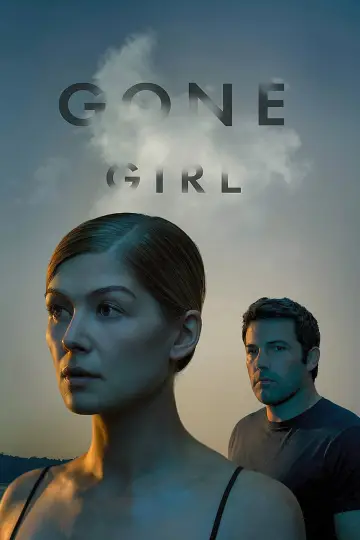
8/10
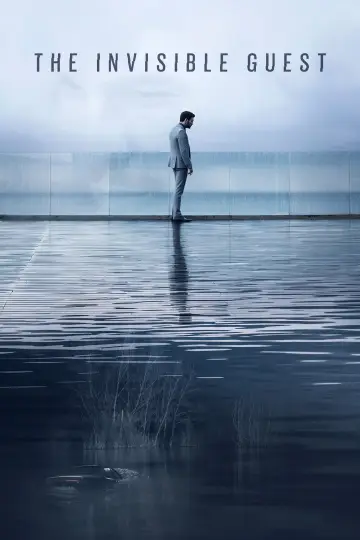
7.9/10
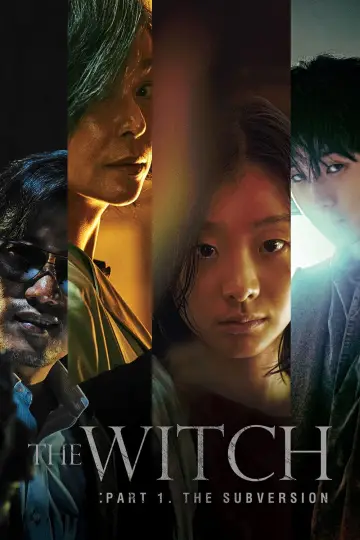
7.9/10
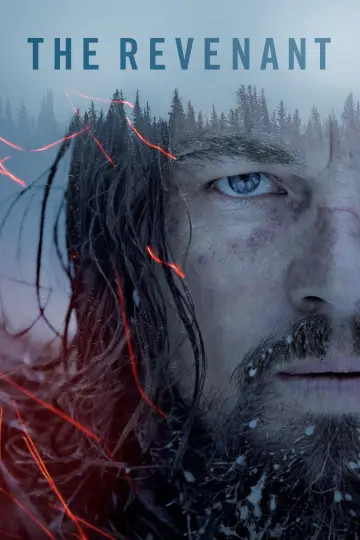
7.9/10
7.9/10
7.8/10
7.8/10
7.8/10


 Auditions in India
 Casting calls in USA
 Castingi w Polsce
 Кастинги в Україні
